Showing posts with label Nature/National Parks. Show all posts

Friday, August 4, 2017

Swinging Flix from '66

-->
For this weekend’s blogathon on films of the UK, I wanted to concentrate on 1966, a turning point in that country’s cinematic culture, and specifically on a quartet of films that became quintessential examinations of the Swinging London mindset.  Of course, films ranging from the kitchen sink dramas of Lindsay Anderson & Tony Richardson to the electric A Hard Day’s Night (Lester, 1964) and stylish social commentary of Darling (Schlesinger, 1965) paved the way for that year’s set of films.  But it still represents a telling chronological marker of how content, character, and craft all made a significant step to a more recognizably modern world.

Alfie (Gilbert, 1966) chronicles the caddish exploits of a profligate womanizer (Michael Caine in a game-changing part) living a libertine lifestyle with little concern for commitment or accountability but who is forced to learn some harsh lessons that chip away at the state of denial he values so highly.  The revolutionary conceit of the film is Alfie narrating his own tale by breaking the fourth wall and addressing the camera directly.  Of course, this wasn’t unheard of as the occasional comic aside by Groucho Marx or Bob Hope, but to have the whole movie built around this form of internal monologue, with him making constant casual asides to the audience right in the middle of the action with his fellow characters unawares, was very new in its intimacy.

From a psychological perspective, it’s also a way to provide a window into his web of justifications in what amounts to a romantic laissez-faire worldview.  He seduces a slew of women (married and otherwise) but never makes his nature or intentions a secret.  They’re ostensibly free to do what they want, but his emotional game of coercion is effective in its simplicity: upfront, charming and full of sexual confidence.  And his monologues craftily perform double duty as both a vehicle for viewer complicity (since we’re identifying with him through his story) and confessional, since he lays out his entire outlook on life with brutal, boyish candor.  We see Alfie do some distasteful things, but it’s tough not to fall under his spell, from his flirtatious introduction through his brazen honesty and up to his final moments of gradual self-awareness.  We never ally with his position, but we’re grateful for his progress.

It makes one wonder what Georgy Girl (Narizzano, 1966) would be like if the filmmakers took the same approach to Georgy’s callow roommate Meredith (a young and exquisite Charlotte Rampling), a perfect promiscuous counterpart to Alfie.  Rampling makes a singularly unsympathetic character rich with complexity and opaqueness and the movie is clear-eyed in depicting the double standard women face trying to live an Alfie lifestyle.  Like Alfie, the movie is remarkable for its time in accepting abortion as an everyday reality (though not without its stigmas and legal repercussions).  And while “plain Jane” Georgy (a wonderful Lynn Redgrave) pursues love in unexpected places, her final choice is a bittersweet one, borne out of compromise, insecurity, and an acceptance of the limited choices working class women have.

Michelangelo Antonioni’s Blow-Up is the first film he made outside of Italy, and London brings a new sensibility to his filmmaking, taking his trademark theme of alienation and transposing it to the modern youth scene.  The result is a film full of coiled energy, stark compositions, and bursts of vivid color, and while his previous films were often about seething passions muffled by societal restraint, Blow-Up dives deep into a sensualist landscape where everyone is getting off but no one seems to be having much fun (best exemplified by the most ennui-tinged rock concert ever, courtesy of The Yardbirds). 

The central driving force of the film is photographer Thomas (David Hemmings) investigating what he thinks is a murder he’s captured on film in a fit of voyeurism, and the methodical series of darkroom enlargements is a masterclass of construction by Antonioni, all in the service of a mystery that’s ultimately peeling an onion.  For unlike Rear Window or The Conversation or Blow Out (all classic cinematic exercises in forensic sleuthing), the evidence in Blow-Up evaporates—or perhaps was all just a figment of Thomas's restless imagination—and the mystery becomes just another fleeting moment for him.  From the shocking (at the time) full female frontal nudity to the final enigmatic tennis game, Blow-Up shook the censors and the artistic establishment like few films had before, a perfect film to represent a generation undergoing a major tectonic shift.


Vanessa Redgrave is memorable as a femme fatale with a hidden agenda in Blow-Up, but she makes an even more substantial turn in Morgan! (Reisz, 1966).  In that, she plays divorcee Leonie trying to move on with her life despite the pervasive meddling of her former husband Morgan (David Warner).  It’s often said that films from the sixties feel dated, but that’s often in reference to window dressing like fashion, music or lingo.  But of these four films, Morgan! (subtitled A Suitable Case for Treatment) feels the most dated because of the prevailing attitudes that now feel so clichéd of that time: the enormous sense of male-entitlement, the knee-jerk embracing of radical leftism (in this case, Trotsky), the romantic metaphor of mental illness as a middle finger to the square status quo.  It's a hipster film, mostly full of empty posturing and zany swagger.

Certainly, romantic comedy in film has a rich tradition of former lovers entangling themselves in their ex’s love life (Cary Grant practically made a cottage industry out of it), but their tactics were usually a fine balance of suave and sympathetic.  But Morgan is just a self-absorbed cretin and like other charmless films of the 60s (Kiss Me Stupid, Irma la Douce), Jealousy is fawningly used as a toxic yardstick for Love. It’s a testament to Redgrave’s talents that she makes her conflicting feelings (but never her resolve) fluid and ambiguous, a study in how letting go may be essential but is never easy.  The most effective moments in Morgan! come late in the game, when Reisz projects us into Morgan’s mind where he reenacts the fantasy jungle worlds of King Kong and Johnny Weissmuller’s Tarzan, though that hardly helps the case of a man who wants to live outside even the most considerate norms of civilization.

These four films combined earned 13 Oscar nominations, including Best Picture (Alfie), Director (Antonioni) and lead acting nods (Caine and both Redgraves).  Of course, the British film that swept the awards that year was a 16th-century period piece, far more the Academy’s speed.  And A Man for All Seasons (Zinnemann, 1966) is certainly a fine film, and one that’s worth revisiting these days since it talks about men of principle standing up to authoritarian heads of state and speaking truth to power, even at great personal cost.  But it’s still a staid movie, with great dialogue and memorable characters but quite stagy, lushly produced but devoid of any personality.  This quartet represented the future, and it’s fun seeing certain points of future convergence, like how Georgy co-stars Rampling and James Mason would reteam 16 years later for The Verdict, or how Alfie co-stars Caine and Denholm Elliiott would compete for an Oscar 20 years later --with future Hannah and Her Sisters and A Room with a View writing winners Woody Allen and Ruth Prawer Jhabvala fresh off What’s Up, Tiger Lily? and Shakespeare Wallah respectively back in 1966.

It’s funny to think about how people complain about franchises in the cinemas now when we see that there was a wealth of them from England in 1966.  Hammer had Christopher Lee reprising his Dracula and Fu Manchu roles, Caine was back as Harry Palmer in Funeral in Berlin, there were new installments in the long running Carry On! And St. Trinian’s comedy series, and TV’s Thunderbirds made their way to the big screen.   And like Antonioni, we saw high-profile directors from the continent making their way to their island neighbor: Francois Truffaut (Fahrenheit 451), Roman Polanski (Cul-de-Sac), and Vittorio De Sica (After the Fox) all had distinguished contributions in 1966.  And don’t forget the war movies of both colonial days (Khartoum) and WWII (The Blue Max), and new riffs on the spy genre (Modesty Blaise, The Quiller Memorandum) in the wake of the huge success of James Bond.  But perhaps my favorite British film made by an actual Brit in 1966 has Caine (in his third film of that year) heading a game cast in the very funny old-fashioned comedy The Wrong Box (my first exposure to a tontine), directed by Bryan Forbes.  And if you want to be a Caine completest, there’s also Gambit from that year, too.


My Top 10 favorite films of 1966

  1. The Battle of Algiers (Pontocorvo)
  2. Persona (Bergman)
  3. The Good, the Bad and the Ugly (Leone)
  4. Andrei Rublev (Tarkovsky)
  5. Daisies (Chytilova)
  6. Blow-Up (Antonioni)
  7. Black Girl (Sembene)
  8. Au Hasard Balthazar (Bresson)
  9. Seconds (Frankenheimer)
  10. Tokyo Drifter (Suzuki)


The Oscar de la Renta stamps from earlier this year (Scott #5173b, e, & i) worked perfectly with the fashion-based films of Blow-Up and Darling, the latter card being featured previously on this blog here.  The Gee’s Bend quilt is #4097, the Edgar Rice Burroughs stamp #4702, and the Year of the Monkey stamp #3895l.  William S. Hart is #4448, the Civil War centennial #1181, and the Bellatrix Lestrange stamp (from the Harry Potter issue) is #4844.  Last year gave us Carlsbad Cavern National Park (#5080e), corn lilies (#5042) and Halloween (#5137), plus this year had the WPA poster #5183. 

Monday, February 6, 2017

For E, Four-Oh


Awash with mutual affection, we walked up Filmore St. and had dinner at Florio, where we talked and ate pasta off each other's plates.  Then on the way back, she sang Thelonious Monk and Kurt Weill to me in that beautiful voice of hers.  And when I said good night to her, looking in her eyes there on the corner of Eddy & Steiner, I knew I had never loved anyone so much as I did her.

And still do.  If I could relive one hour of my life again over and over, forever, it would be that hour with her. 

She turns 40 today, and this card is for Her.

Starting at the top, Georgia O'Keefe (Scott #4748e) is one of four stamps on this card that were part of the Modern Art in America issue--the others being Arthur Dove (#4748l), Marsden Hartley (#4748d), and Marcel Duchamp (#4748k).  The first-day-of-issue postmark is for those stamps.

Moving on from there, the other stamps I featured are: Neysa McCain (#3502m), William M. Harnett (#1386), Folk Art tea caddy (#1776), Frida Kahlo (#3509), Love letter (#3551), Isamu Noguchi (#3859), Grandma Moses (#1370), Winslow Homer (#1207), John Sloan (#1433), Hawaii (#C84), Mary Cassatt (#1322), Fine Arts (#1259), guitar (#1613), Yosemite National Park (#740), Seattle (#1196), orchid (#2079), art glass (#3328), Edward Hopper (#3184n), and Louise Nevelson (#3383).


Monday, January 30, 2017

2016 Yearly Wrap

Parakeets, Scott #5124 - part of Pets issue

Shirley Temple, #5060

Sarah Vaughan, #5059 (w/Josh White #3215)

Mercury #5069 - part of The Planets issue

Everglades #5080l) - part of the National Park Service issue

Halloween Jack-o'-lantern #5140

Banana split #5095 - part of the Soda Fountain Favorites issue

Tulips #5049 - part of Botanical Art issue

Quilled Paper Heart, #5036


New Horizons probe #5078, part of the Pluto mini-sheet

Enterprise and planet #5134 - part of Star Trek issue

1953 Chevrolet #5102 - part of Pickup Truck issue (w/Hot Rod stamp #4909)


Wonder Woman (Bronze Age), #5150

Friday, January 20, 2017

D-Day


D is for Demagogue.  Despot.  Deceptive.  Delusional.  Diddler.  Dumbass.  And, of course, Donald. 
My Dad was a hardcore Republican (a picture of Barry Goldwater hung in his den in our home), and Ronald Reagan—our other celebrity-turned-president—was in office during my middle and high school years.  So I’m very familiar with the mindset and priorities of the voices across the aisle.  But this year’s election narrative couldn’t have been more surreal or sadly absurd if the Onion had been writing it.  I wonder what The Gipper would have thought about our new President being a Russian patsy, or if he, or my dad, would even recognize their GOP anymore.  Would they have seen through this charlatan, or ultimately toe the party line?
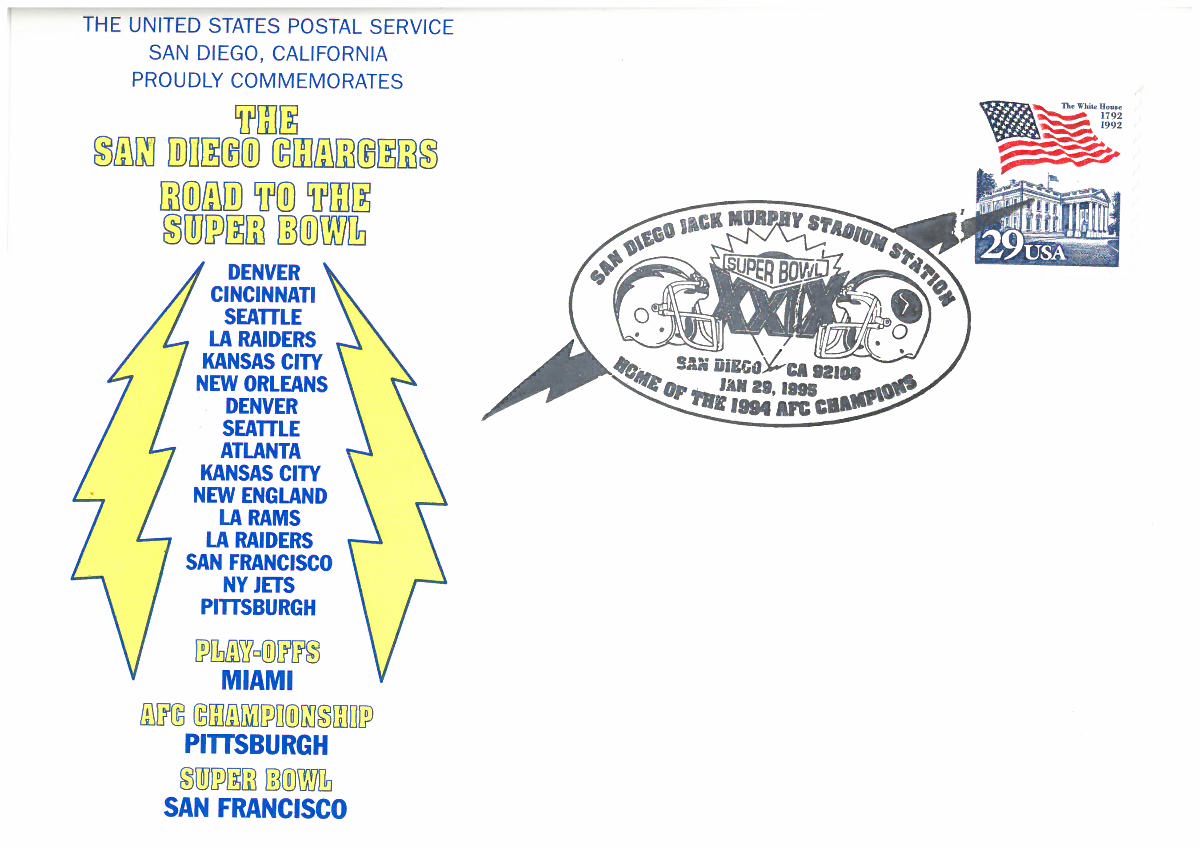
This past week, the San Diego Chargers, the football team I cheered for my entire life, announced that it’s packing its bags and moving to Los Angeles.  To many (including me), this sense of betrayal will mean the severing of all support or connection with that team.  But not everyone will.  Loyalty and identification are powerful things, feeling that you’re part of something bigger.   
What, I wonder then, would it take to sever one’s connection with your political party?  To put your country before your partisanship?  This year, we learned that for many millions of Republicans, electing a racist bully, an unapologetic lecher, an insecure authoritarian, and a profoundly selfish and un-Christian pathological liar and narcissist wasn’t enough to cut that cord.  Power trumped empathy and basic human decency.
I’m lucky.  I have a job I love in one of the most liberal districts in the country in a self-proclaimed sanctuary state.  But I worry for my country—not just for its institutions and the millions of lives who will be hurt and maligned by this new administration, but also for its larger sense of fairness, dignity and purpose.  I love my country, deeply, but the term “American Exceptionalism” is a bitter contradiction-in-terms when I see how susceptible it is to fear and bigotry and self-interest.
There’s absolutely no evidence to suggest that our new president is a good person.  He’s not a man of principle or character, just a cheat and vindictive opportunist.  And as president, he, like all presidents, will get a postage stamp when he dies.  What I’ve always liked about postage stamps is that they are meant to celebrate our culture, traditions, heroes, history.
But I can find no reason to celebrate today.
So now it’s a time for resolve and resistance.  Resist having our values further eroded.  Resist normalizing what was once horrid and unacceptable.  Resist complacency in the shadow of ignorance and spite.  Our country never stopped being great.  But can we as Americans, from the right and the left, make it exceptional again, rooted in compassion, wisdom, and generosity?  Yes we can.  

The kitten stamp from last year's Pets set is Scott #5111 and the spay/neuter stamp is #3670.  The Reagan stamp is #3897 and the US flag for veterans is #3331.  The White House and Capitol stamps are from 1950 (D.C.'s sesquicentennial) and are Scott #990 & 992 respectively.  The Child Labor Law stamp was part of the Celebrate the Century series, #3183o and the Kenilworth Park and Aquatic Gardens stamp is #5080j.  The two stamps from the Building a Nation set are Scott #4801d & e . 

Thursday, March 10, 2016

Desert Island 100

The challenge: Pick my favorite feature film each year from 1924-2015.  Add 8 more shorts spread out over that period to make an even 100.  Here's what I picked.  Links are to other blog entries on those films.  What would your list look like?

1924 Greed (von Stroheim)
1925 The Gold Rush (Chaplin)
1926 The General (Keaton/Bruckman)


1927 The Italian Straw Hat (Clair)
1928 The Wind (Sjostrom)
1929 Man with a Movie Camera (Vertov)
1930 The Blue Angel (Sternberg)
1931 M (Lang)
1932 I Was Born, But... (Ozu)
1933 Footlight Parade (Bacon)
1934 The Thin Man (Van Dyke)
1935 Bride of Frankenstein (Whale)

1936 The Crime of M. Lange (Renoir)
1937 Shall We Dance (Sandrich)
1938 Bringing Up Baby (Hawks)
1939 Only Angels Have Wings (Hawks)
1940 Pinocchio (Sharpsteen)
1941 The Lady Eve (Sturges)
1942 Casablanca (Curtiz)
1943 The Life and Death of Colonel Blimp (Powell/Pressburger)
1944 Meet Me in St. Louis (Minnelli)
1945 Children of Paradise (Carne)

1946 Belle et la Bete (Cocteau)
1947 Black Narcissus (Powell/Pressburger)
1948 Germany, Year Zero (Rossellini)
1949 Kind Hearts and Coronets (Hamer)
1950 Winchester '73 (A. Mann)

1951 On Dangerous Ground (N. Ray)
1952 Singin' in the Rain (Donen/Kelly)
1953 The Earrings of Madame de... (Ophuls)
1954 The Seven Samurai (Kurosawa)
1955 Night of the Hunter (Laughton)
1956 Forbidden Planet (Wilcox)
1957 Sweet Smell of Success (Mackendrick)
1958 Vertigo (Hitchcock)
1959 Some Like It Hot (Wilder)
1960 La Dolce Vita (Fellini)
1961 Last Year at Marienbad (Resnais)
1962 Cleo from 5 to 7 (Varda)
1963 The Leopard (Visconti)
1964 Dr. Strangelove, or How I Learned to Stop Worrying and Love the Bomb (Kubrick)
1965 Chimes at Midnight (Welles)
1966 The Battle of Algiers (Pontecorvo)
1967 Point Blank (Boorman)
1968 2001: A Space Odyssey (Kubrick)
1969 The Wild Bunch (Peckinpah)

1970 Days and Nights in the Forest (S. Ray)
1971 Walkabout (Roeg)
1972 The Bitter Tears of Petra van Kant (Fassbinder)
1973 The Spirit of the Beehive (Erice)
1974 Chinatown (Polanski)

1975 Monty Python and the Holy Grail (Gilliam/Jones)
1976 The Marquise of O (Rohmer)
1977 Close Encounters of the Third Kind (Spielberg)

1978 The Last Waltz (Scorsese)
1979 The Black Stallion (Ballard)
1980 The Empire Strikes Back (Kershner)
1981 Pennies from Heaven (Ross)
1982 Burden of Dreams (Blank)
1983 Zelig (Allen)
1984 The Terminator (Cameron)
1985 Come and See (Klimov)
1986 The Sacrifice (Tarkovsky)
1987 Wings of Desire (Wenders)

1988 Bull Durham (Shelton)
1989 Do the Right Thing (Lee)
1990 Miller's Crossing (Coen)
1991 The Double Life of Veronique (Kieslowski)
1992 The Last of the Mohicans (M. Mann)
1993 Groundhog Day (Ramis)
1994 Ed Wood (Burton)
1995 Underground (Kusturica)
1996 Lone Star (Sayles)
1997 A Taste of Cherry (Kiarostami)
1998 Out of Sight (Soderbergh)
1999 Topsy-Turvy (Leigh)
2000 In the Mood for Love (Wong)
2001 Mulholland Dr. (Lynch)
2002 Gerry (Van Sant)
2003 Master and Commander: The Far Side of the World (Weir)
2004 Eternal Sunshine of the Spotless Mind (Gondry)
2005 L'Enfant (Dardenne/Dardenne)
2006 Children of Men (Cuaron)
2007 Once (Carney)
2008 Man on Wire (Marsh)

2009 The White Ribbon (Haneke)
2010 Winter's Bone (Granick)
2011 The Tree of Life (Malick)
2012 Moonrise Kingdom (Anderson)
2013 Upstream Color (Carruth)
2014 Timbuktu (Sissako)
2015 Mustang (Erguven)

Shorts
1929 Un Chien Andalou (Bunuel)
1933 Snow White (Fleischer)
1949 Begone Dull Care (McLaren/Lambert)
1962 Cosmic Ray (Conner)
1968 Windy Day (Hubley/Hubley)
1993 The Wrong Trousers (Park)
2000 The Heart of the World (Maddin)
2013 Just Before Losing Everything (Legrand)

Here are the Scott #s for the stamps pictured:

Devil's Tower - 1084
Water conservation - 1150
Talking Pictures - 1727
Hudson's General - 2843
Frankenstein - 3170
Cinematography - 3772g
Luke Skywalker - 4143e
James Stewart - 4197
Wedding cake - 4398
William S. Hart - 4448
John Huston - 4671
Iron worker - 4801h
Circus clown - 4905
Martin Ramirez train - 4970


Monday, September 30, 2013

An Aloha State


I’ve been to Hawaii twice. 

The first time, my family took one of those island-hopping cruise ships—still the largest boat I’ve ever been on, but tiny compared to some of the mega-liners that exist now.  I was in the throes of puberty and its typical self-loathing, and there seemed to be plenty of things to do for adults or kids, but not much in that limbo range of early adolescence.  I don’t remember much about the boat except playing chess with my dad in one of the lounges, and spending a lot of time in the movie theater they had on board, in the bottom of the ship.

They would loop the same movie all day, a different movie each day.  Usually, it was a bad contemporary movie (City Heat with Burt & Clint, Oh God, You Devil with George Burns) but they also showed Blue Hawaii (1961), my first real exposure to Elvis, since we didn’t have any of his music in the house growing up.  Directed by Norman Taurog (the only Oscar-winner who would helm The King), it wasn’t very good but it was my first exposure to Angela Lansbury outside of Murder, She Wrote (a staple in our home) and the first time I ever heard “Can’t Help Falling in Love”, the only decent song in the film.

Love and Romance, back then, were just an abstraction—seemingly unattainable, completely alien to how I saw my life, myself.  But overflowing with hormones, I was still swept up with the longing of it, if not the hope.  That song, so simple, talks about Fate, the sheer inevitability of feeling that happens when your heart is affected.  There’s no reciprocation in the song, no relationship.  It is simply confessional, embracing the truth that at the right time, the heart knows what it wants.  Even if it keeps that truth to itself.  I had grown up along the Pacific, but it had never seemed so big than when I was on that boat.  And me, so small.

The second time I was in Hawaii, I was married.  A good friend was a pilot for the now-defunct Aloha airlines and we paid him and his girlfriend a visit.  My wife and I loved taking road trips so all we did in our free time there was circle Oahu by car, stopping every couple miles to visit one magnificent (and deserted) beach after another.  At one point along the drive, we encountered what looked like the remains of a terrible plane crash—except there were no emergency response vehicles, but a more sedate bustle and a road block that cut our excursion short.  It wouldn’t be until the following fall’s television season that this mysterious sight would be explained.  But mostly, the two of us just used paradise to escape, with the beauty of the island surrounding us.  Honolulu held little interest.  This was about exploring and getting Lost together.

I’m not married anymore, but no talk about my past travels is adequate without discussing my ex.  Like I’ve said before, we made a good team, and that was no truer than when we explored the world together.  We had different interests and tastes, but the pace at which we took things complemented each other perfectly, and the world seems, in a certain way, smaller without her.  Left to my own financial devices now, it’s certainly more inaccessible.  I’ve been to some truly amazing places, but there are many I’d still like to visit someday.  Perhaps I will.

When I first stepped foot on Kauai, it was literally the most beautiful place I’d ever been in my life.  But I’ve been to the islands twice now, and other places call to me far more.  But more than that, there is something unique about Hawaii for me.  Distinctive in its nature.  Whatever travels I see in my future, I foresee doing them alone.  And that’s ok—I love traveling, exploring, discovering by myself.  Which is why I probably will never go back to Hawaii. 

Because Hawaii is different.  Hawaii is for sharing.


Top 10 places I've been with her
1. Paris, France
2. The Galapagos Islands, Ecuador
3. Budapest, Hungary
4. Bryce Canyon, Utah
5. Kruger National Park & safari across South Africa
6. Venice, Italy
7. Tokyo, Japan
8. Coastline of Maine, north of Portland
9. Barcelona, Spain
10. Siena, Italy

Top 10 places I've been without her
1. Amazon rainforest, Ecuador
2. The Catacombs - Paris, France
3. The Library of Congress nitrate film vaults - Dayton, OH*
4. Edinburgh, Scotland
5. Savannah, Georgia
6. 80 corridor, Wyoming
7. Kauai, Hawaii
8. The Tate Modern - London
9. Arlington Cemetery, Virginia
10. The Cat Cabinet - Amsterdam

*since relocated

10 places I still hope to visit one day
1. Machu Picchu, Peru
2. Yellowstone National Park, Wyoming
3. Pyramids of Giza, Egypt
4. Angkor Wat, Cambodia
5. Musee d'Orsay - Paris, France
6. Pordenone Silent Film Festival, Italy
7. High Sierra Camps, Yosemite Nat'l Park, CA
8. Santorini, Greece
9. Antelope Canyon, AZ
10. MLB Hall of Fame, Cooperstown, NY


The Classic Elvis stamp (Scott #2721) is paired with a Hawaii statehood stamp (#4415).  The Steamboat Geyser stamp was part of the Wonders of America series (#4059), here paired with another Yellowstone geyser, Old Faithful (#1053) and one celebrating the park itself (#744).

Tuesday, July 19, 2011

Great Scott


It’s hard to believe that Thelma & Louise was released 20 years ago. I was in college at the time and remember all the controversy about feminist outrage and confronting misogyny (both overt and latent). I haven’t seen it again since—it’s not the type of film that gets replayed on TNT the way other “chicks with guns” films like Aliens and Terminator 2 are. But I remember that even back then, the Grand Canyon jump was a cheap and inauthentic end to two beautifully realized characters, with the final freeze frame of the car in the air a royal cop-out to an otherwise engaging movie.

What I liked about the film most, though (besides some terrific performances across the board) was that it was the only film that gave Ridley Scott visual breathing room. From Alien to Blade Runner to Black Rain, his films were suffused with imagery that was wet and dark and claustrophobic. But this film showed that he can handle sunshine and wide open spaces, that he had a directorial gift for American landscape as a complement to his heroines’ road trip. Sadly, even though subsequent efforts like Blackhawk Down and Gladiator take place largely outdoors, the style is still visually cluttered and oppressive. Thelma is a window into a career that might have been—a spare, linear, natural sensibility that allows for the fact that empty space need not be devoid of ideas.

I love to go camping and have been to the Grand Canyon, but never both together (nor have I explored farther than the south rim). Hopefully one day. The Grand Canyon stamp (Scott #4054) from the Wonders of America series gave me an opportunity to pull some older Grand Canyon stamps as well, the oldest of which is from 1934 (Scott #741) as part of a National Parks series. The other two are Scott #2512 & C135 (which designates an Air Mail stamp).

Sunday, March 1, 2009

Vertigo Redux

I just received back from the USPS one of my Vertigo postcards with a new FDC, so I thought I’d post it because it’s unique for a couple of reasons. I’ve already discussed my great love for the film, and while the one-sheet is the same as the previous post, the cancellations and stamp combinations are different.


First of all, this postcard has six different First-Day-of-Issue postmarks on a single card, as many as exist in my collection (in chronological order):

Alfred Hitchcock (Legends of Hollywood series; Scott #3226)
Bernard Herrmann (Film Composers issue; Scott #3341)
Film Directing (American Filmmaking issue; Scott #3772b)
The Coast Redwoods (Wonders of America issue; Scott #4063)
Jimmy Stewart (Legends of Hollywood series; Scott #4197)
And now, the Redwood Forest priority mail stamp (Scott #4378)

You can see by the dates that this spans 12 years from the first postmark to this most recent one.

This card also has the most stamps of any non-Disney postcard I have, for in addition to those listed, I also used four other stamps. The Golden Gate Bridge and Palace of Fine Arts stamps were featured in the previous Vertigo blog post, to which I’ve added the two oldest stamps on the postcard: Forest Conservation (1959; Scott #1122) and the bicentennial of the California settlement (1969; Scott #1373)


I used so many of the redwood tree stamps because of the visit Scottie and “Madeline” make to the redwood groves in the film. As big a movie buff as I am, I never quote movies in my everyday life, but if I’m ever in a museum or national park and encounter a large tree cross-section, I will always say, “Here I was born, and there I died. It was only a moment for you. You took no notice”. It’s a haunting moment in a haunting film.

As for the California stamp, nothing could be more perfect for the film than its depiction of a mission belltower, which, sadly, doesn’t really exist if you visit San Juan Bautista in real life. The mission is there but the tower in the film is a matte painting.

The dollar value of all the stamps is also by far the most of any in my collection, because this most recent postmark was for a priority mail stamp, putting the total face value of the card at $7.37.

I think this card is also ready for retirement. There’s very little real estate left to fit any other stamps, and I’m hard-pressed to think of anyone else associated with the production who will be recognized by the Postal Service. The film features Kim Novak’s best performance (Stewart’s too, incidentally), but I don’t see her ever getting a stamp. The brilliant Herrmann thankfully has already been acknowledged, and while Saul Bass (title credits), Robert Burks (cinematography) and George Tomasini (editing) also make invaluable contributions to this masterpiece, it seems likely that this will be about it--unless the film itself gets its own stamp one day. Who knows?

But I’m really happy how this one turned out—a real prize in my collection commemorating an even more special movie.