Showing posts with label Sports. Show all posts

Friday, January 20, 2017

D-Day


D is for Demagogue.  Despot.  Deceptive.  Delusional.  Diddler.  Dumbass.  And, of course, Donald. 
My Dad was a hardcore Republican (a picture of Barry Goldwater hung in his den in our home), and Ronald Reagan—our other celebrity-turned-president—was in office during my middle and high school years.  So I’m very familiar with the mindset and priorities of the voices across the aisle.  But this year’s election narrative couldn’t have been more surreal or sadly absurd if the Onion had been writing it.  I wonder what The Gipper would have thought about our new President being a Russian patsy, or if he, or my dad, would even recognize their GOP anymore.  Would they have seen through this charlatan, or ultimately toe the party line?
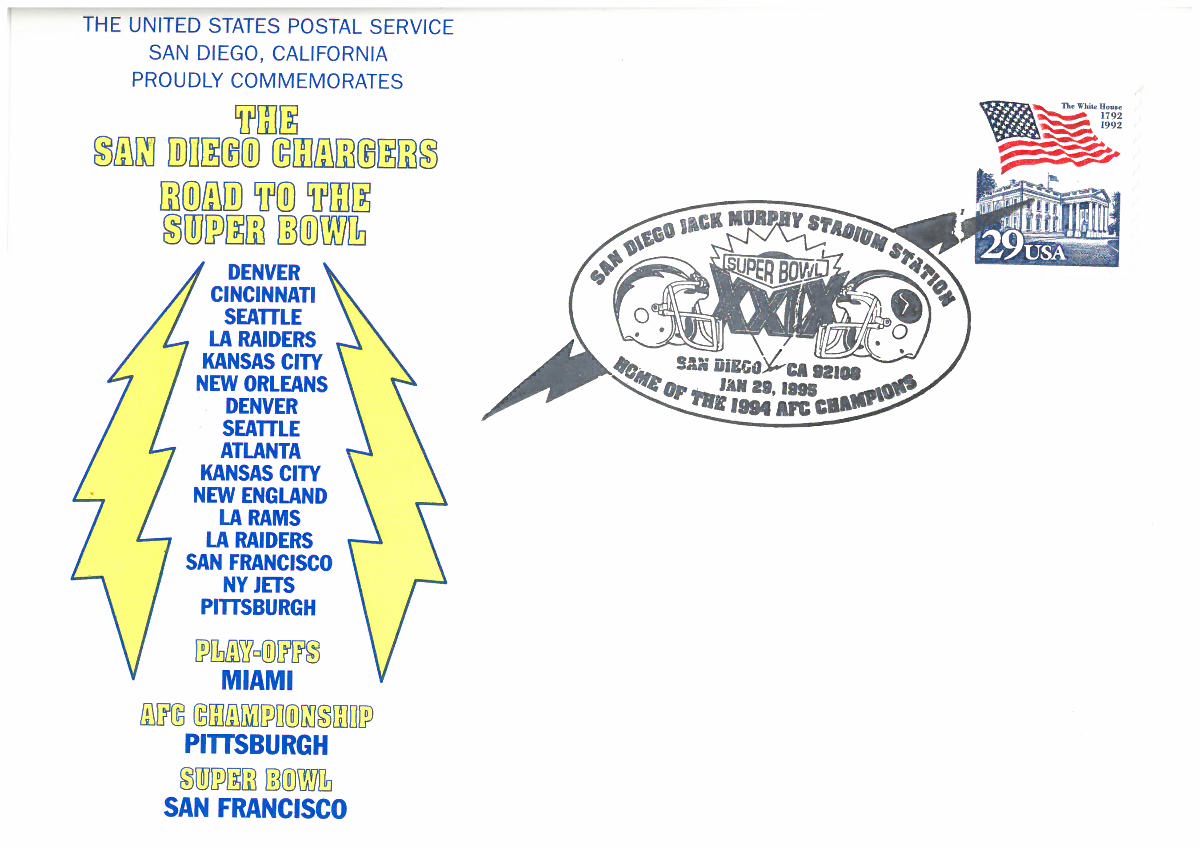
This past week, the San Diego Chargers, the football team I cheered for my entire life, announced that it’s packing its bags and moving to Los Angeles.  To many (including me), this sense of betrayal will mean the severing of all support or connection with that team.  But not everyone will.  Loyalty and identification are powerful things, feeling that you’re part of something bigger.   
What, I wonder then, would it take to sever one’s connection with your political party?  To put your country before your partisanship?  This year, we learned that for many millions of Republicans, electing a racist bully, an unapologetic lecher, an insecure authoritarian, and a profoundly selfish and un-Christian pathological liar and narcissist wasn’t enough to cut that cord.  Power trumped empathy and basic human decency.
I’m lucky.  I have a job I love in one of the most liberal districts in the country in a self-proclaimed sanctuary state.  But I worry for my country—not just for its institutions and the millions of lives who will be hurt and maligned by this new administration, but also for its larger sense of fairness, dignity and purpose.  I love my country, deeply, but the term “American Exceptionalism” is a bitter contradiction-in-terms when I see how susceptible it is to fear and bigotry and self-interest.
There’s absolutely no evidence to suggest that our new president is a good person.  He’s not a man of principle or character, just a cheat and vindictive opportunist.  And as president, he, like all presidents, will get a postage stamp when he dies.  What I’ve always liked about postage stamps is that they are meant to celebrate our culture, traditions, heroes, history.
But I can find no reason to celebrate today.
So now it’s a time for resolve and resistance.  Resist having our values further eroded.  Resist normalizing what was once horrid and unacceptable.  Resist complacency in the shadow of ignorance and spite.  Our country never stopped being great.  But can we as Americans, from the right and the left, make it exceptional again, rooted in compassion, wisdom, and generosity?  Yes we can.  

The kitten stamp from last year's Pets set is Scott #5111 and the spay/neuter stamp is #3670.  The Reagan stamp is #3897 and the US flag for veterans is #3331.  The White House and Capitol stamps are from 1950 (D.C.'s sesquicentennial) and are Scott #990 & 992 respectively.  The Child Labor Law stamp was part of the Celebrate the Century series, #3183o and the Kenilworth Park and Aquatic Gardens stamp is #5080j.  The two stamps from the Building a Nation set are Scott #4801d & e . 

Wednesday, August 3, 2016

Good as Gold

-->
I’ll admit it: Despite the waste and corruption that often go hand-and-hand with their undertaking, I am easily seduced by the Olympics.  Given that coverage (live or tape delayed) often occurs round-the-clock, the looming Summer Games in Rio de Janiero will prove to be an extraordinary temptation over the next 2 weeks, especially for this perpetual early riser.  Although I love watching the relatively obscure sports that are often broadcast in those pre-dawn hours, I’ll inevitably watch some track & field, too—races that often get front-and-center attention in the TV coverage, not only because the US always does very well in them, but because of the natural mythology around naming “The World’s Fastest Human” in the 100-meter dash.
Certainly, Track & Field has played a more prominent part in movies about the Summer Olympics than any other sport—most recently with the historical drama Race (Hopkins, 2016) about Jesse Owens in the 1936 games.  While not the first black athlete to medal in the 100m, his victory that year (exactly 80 years ago today) carried enormous symbolic weight because the games were held in Berlin under the shadow of Hitler and orchestrated by Joseph Goebbels and the propaganda arm of the Third Reich.  In defiance of the host country’s insistence that no Jewish or “Negro” athletes compete, Owens’ 4 gold medals struck a powerful blow against the dogma of racial superiority that was a driving engine of the Nazi Party.
The movie isn’t bad.  Stephan James is good in the lead role, and the story is an important one.  Predictably, the double meaning of the title is a prominent theme, since not only did Owens face systemic prejudice at Ohio State (where the movie begins), but he felt enormous pressure from the NAACP not to compete in Berlin as a gesture of protest against how African-Americans were still being oppressed in the US.  Although the horrific explicitness of that racism isn’t depicted as vividly as it was in 42, the movie follows many of the same beats as that recent (superior) Jackie Robinson film.  There’s even a scene where German runner Luz Long befriends Jesse in front of the entire stadium of Germans (and the Fuhrer) that echoes what southerner Pee Wee Reese would do with teammate Jackie in Cincinnati decades later.  Long’s scene with Owens in private after their race is perhaps the best in the film—two athletes with deep mutual respect acknowledging the role they’re each playing as propaganda tools of their governments.  But like many movies dedicated to recreating real events, the other characterizations are cookie-cutter and the final result is more of a history lesson than an emotionally engaging drama.
What’s interesting about the film, though, is that its story directly links to the two most celebrated films about the Summer Olympics: Leni Riefenstahl’s Olympia (1938) and Hugh Hudson’s Chariots of Fire (1981).  The connection with the former is obvious.  Riefenstahl (played by Black Book’s Carice van Houten) was perhaps the most prominent female film director in the world at the time and is an important character in the movie.  While commissioned by Goebbels as a tribute to the wonders of a modern Germany (we see the two of them watch rushes of her coverage), Riefenstahl went beyond that short-sighted mandate and redefined cinematic language when it came to form and athletics in ways that are now commonplace on ESPN and advertising today.  It’s still a problematic film, with the ever-present swastikas and the specter of the Holocaust around the corner, but it’s not a paean to National Socialism the way the country’s leaders might have hoped for.  Her eye transcends the politics of the piece, even if it can't divorce itself from it completely.  And she doesn’t give short shrift to Owens’ accomplishments either.  In a scene in Race where Riefenstahl asks Owens to help her shoot some pick-ups for his Gold medal Long Jump that would later be inserted into her film, they have this exchange:
Jesse: Isn’t that cheating?
Leni: Cheating?
Jesse: Yeah.  I’m just saying it’s not the actual jump I made.
Leni: You did make that jump.  We all saw it.  You made history out there.  All I’m doing is making sure years from now, those people who weren’t there can see it too.  ‘Cause they’ll never forget what you did.
And she did.  And we haven’t.  Riefenstahl is one of the most complex figures in movie history, and one of my favorite documentaries is about her: The Wonderful, Horrible Life of Leni Riefenstahl (Muller, 1993).  In it, the film doesn’t blink at the insidious contribution she made to the Nazis’ ascendancy through her notorious film The Triumph of the Will.  But it also shows in the many decades after WWII that she was smart, resourceful, innovative, gutsy, and supremely talented.  Perhaps the best you can say about her is that she was a fervid aesthetician who lived in denial about how her gifts were exploited for evil.  Other judgments, far harsher, would be equally fair.  But this exchange in the film also brings the conversation about myth-making in an ironic full circle, because Owens’ legacy is also helped immeasurably by her film.
The connective tissue between Race and Chariots of Fire is interesting, too.  Larry Snyder (SNL’s Jason Sudekis) was Owens’ coach at Ohio State, and also on the US Track & Field team that competed against Brits Harold Abrahams and Eric Liddell in the 1924 Paris games.  We even see a picture of Snyder with Charlie Paddock (played by Dennis Christopher In Chariots).  Sadly, Snyder was in a plane crash weeks before the games and never competed.  But he did go on to coach the US team in Helsinki (1952) and Rome (1960).
Abrahams, like Owens 12 years later, won the 100m (his time was 10.6 seconds; Owens, 10.3).  The film shows that he dedicated his athletic pursuits to fight the antisemitism he faced in the English establishment.  This resonates in Race because on the eve of the 100x4 relay in Berlin, the US benched its two Jewish runners out of deference to the Germans.  Owens ended up subbing in that race and there is a powerful scene where his teammates talk to him about what a victory would mean to them, watching from the sidelines.  They won, of course.  Although Chariots doesn’t depict it, Abrahams also won a medal in the 4x100 (a silver) in Paris.
I think Chariots often gets a bad rap.  It does have a bit of Masterpiece Theater stuffiness about it, but it also does address religion (Abraham’s Judaism and Liddell’s Christianity) in ways that you rarely see in mainstream movies anymore—with thoughtfulness, sincerity, and lack of piety.  Vangelis’ iconic synthesizer score manages to be anachronistic but still mines emotional depths.  It’s the only Oscar nomination Ian Holm has ever received (an oversight bordering on the criminal).  Its period details are meticulous (lacking starting blocks, the runners use small trowels to dig in footholds before the race, something we see Owens do in Race, too).  And with the recent Star Trek reboots, there’s a perverse delight in seeing Spock’s father (Ben Cross) and the Borg Queen (Alice Krige) fall in love.  Plus it was my first introduction, at 11 years old, to Scotland, and I’ll admit to thinking of Liddell training across the lush countryside when 20 years later, I hiked up to Arthur’s Seat, the mountain peak overlooking Edinburgh.  
There are also a couple of postage stamp references worth noting in Chariots.  When Abrahams is enrolled in Cambridge (somewhere I’ve also visited), we see him and future Olympian teammate Aubrey Montague signing up for various extra-curricular activities.

Harold (to Aubrey): “Rugby club, golfing society, tennis, squash club, flora and fauna!, philately—is that all?  You’re idle, man.  Idle!”

So stamp collecting was a viable academic pastime back then.  A few seconds later, we see a sign for another club: The Cinematic Club.  Given that the date is 1919, it strikes me as perhaps a little early for such a club, especially for a medium that was still associated with the lower classes at the time, not the halls of privilege.  Plus, even the most hardcore cinephile would be hard-pressed to name a notable British silent film up to that time (unlike other parts of Europe).
  
The second stamp reference comes a little later.  The film has already used Aubrey’s letters to his mother as a narrative framing device for the film.  Now, in Scotland, Sandy—a friend to the Liddells—makes a toast to the family, most of whom are returning to their missionary work in China, where Eric (Ian Charleson) was born.
Mrs. Liddell: I’m relying on you now to keep them all out of mischief.
Sandy: Oh, that I will, Mrs. L.  And if they do transgress, I’ll pop the details on a postcard and you can read all about it before you can say "Marco Polo".
Eric: Cost you a fortune in postage stamps.
Tragically, Ian Charleson and Brad Davis, who plays American Olympian Jackson Scholz, would be dead within a decade, both from AIDS.   
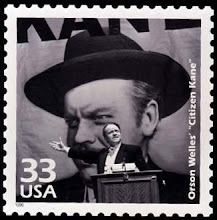
The Jesse Owens Olympic stamp is Scott # 2496.  He never competed in the hurdles in the Olympics, but the stamp commemorating his records set in the US, part of the Celebrate the Century series, is Scott # 3185j. 

Sunday, December 1, 2013

When we play our Charade

Charade (Donen, 1963) celebrates its 50th Anniversary this week, and over the years, it has earned a reputation, oft-repeated, as “the best Hitchcock film Hitchcock never made.”  Now, I love Charade, and not just because it’s the best postage stamp film ever.  It’s an irresistibly entertaining comedy-thriller, with wonderful Paris locations, great lines of dialogue, and a fizzy, playful tone, all fueled by incredible chemistry between Cary Grant & Audrey Hepburn (their only film together). 

But I’ve always hated that Hitchcock meme because it shows a fundamental failure to understand what the great Sir Alfred was all about.  For while Charade is enormous fun, it really isn’t about anything except thrills and laughs and clever reversals.  And while Hitch certainly employed all those things, he was far more reflective, and far more subversive.  His is the cinema of sex and psychology, of paranoia and pursuit, of fever dreams and salient nightmares.  His humor was darker, his action laced with malevolence.  He showed a real fear of institutions and a suspicion of normalcy, with his characters regularly haunted and hounded out of their routines.


Hitch lived with the moniker “The Master of Suspense”, which often served as a back-handed compliment, since it appreciated his technical craft while also relegating him to a genre hack, a niche and unserious talent.  He certainly made worse films than Charade, but I’m hard-pressed to think of many that were as lightweight.  Charade is a delicious soufflĂ©.  But Hitch was filet mignon.  So “the best Hitchcock film Hitchcock never made” should reflect his artistry and pathology, not just his deceptive smoke & mirrors.  Something by Chabrol, perhaps.  Or Polanski or Suzuki.

But we’re here about stamps, and the statute of limitations on spoilers is why I can call this marvelous confection the greatest postage stamp movie in history—because the big twist of the film is the fact that postage stamps play an important role at all.  Throughout the film, the key characters, good and bad, are looking for a missing $250,000 and the only clues to its whereabouts are the contents of a travel bag, which are itemized several times in the film

Police inspector: “One wallet, containing four thousand francs; one agenda...; one ticket of passage to South America; one letter, stamped but unsealed...; one key, to your apartment; one comb; one fountain pen; one toothbrush; one tin of tooth powder.  That is all.”
Of course, we eventually learn that the envelope actually contains three incredibly rare and valuable stamps, a discreet and portable way to move the fortune.  I won’t discuss the specifics around the stamps in question (which were conceived especially for the movie), primarily because I couldn’t do it any better than this detailed and illuminating blog post about philatelic values and the real-life counterparts to this narrative McGuffin.  Definitely check it out.
But the movie is very clever about disguising what is ultimately a preposterous resolution.  Early in the film, our damsel in distress Reggie (Hepburn) has the following chat with Jean-Louis, the young son of her friend Sylvie:
JL: When you get your divorce, are you going back to America?
R: Well, don’t you want me to stay?
JL: Yes, of course, but if you went back and then wrote me a letter...
R: ...You could have the stamps!  I’ll get you some here, ok?
JL: OK
 
This is before she learns her husband is dead or about the money and the bag, and it’s a throwaway exchange but a nice way to seed the idea of stamps being important later on when Jean-Louis goes to the stamp mart (which is obliquely mentioned in the agenda).
Similarly, the film is coy about how it shows the envelope, mixing it in among the other assorted items and, when more closely inventoried by Reggie and her mysterious ally (Cary Grant), dismissed quickly out of hand.  More emphasis is placed on the contents of the envelope, an innocuous letter to her, than the envelope itself—a sly little head fake by screenwriter Peter Stone.   We only get two brief looks at the stamps before the big reveal, one when baddies James Coburn & Ned Glass examine the bag's contents, and another when Audrey & Cary revisit the clues.

"Everybody and his Aunt Lillian’s been through that bag, including me...I’ve been into it at least once a day.  Somebody would have seen it."
"It’s there, Reggie.  We’re looking at it right now.  Something on that bed is worth a quarter of a million dollars."
Of course, it defies credulity that the French police, a member of the US treasury department, and 3 criminals (not to mention our heroine) would not notice that something was unusual about 3 stamps on a single envelope for a domestic mailing, or that none of the stamps are French and all are from different countries!  But that’s the genius of a McGuffin, which is simply a vehicle to keep the plot moving.  And one of the beauties of Charade is that it has terrific pacing while also allowing lots of room to let the romance breathe.  It’s also a very funny movie without ever losing its sense of genuine menace, and Cary’s allegiances are always jumping back and forth (hero or villain?) believably.  And of course, the stamps are a great 11th-hour twist, but not the only one.

So approaching the climax, the final entry in her husband’s agenda brings Cary & Audrey to the Jardin des Champs Elysees.  They don’t know what they’re looking for so they split up and Cary tails the last remaining heavy, Tex (Coburn) as he wanders among a cluster of vending stalls.  Suddenly, both he and Tex have a wordless epiphany, punctuated by lots of quick close-ups of stamps.  


As they both return to grab the stamps from the travel bag, we return to Audrey still at the garden, who runs into Sylvie.
R: Sylvie! What are you doing here?
S: I’m waiting for Jean-Louis. 
R: Oh, what’s he up to?
S: He was so excited when he got the stamps you gave him this morning.  He said he’d never seen any like them.
R: I’m glad.  What’s all this?
S: The stamp market.  It’s there every Thursday afternoon.  That’s where Jean-Louis trades his stamps.
R: Good Lord, where is he?
S: What’s the matter, Cherie?
R: The stamps!  They’re worth a fortune!
Having gone to quite a number of philatelic conventions in my time, all the production design and displays in this sequence are very convincing, so I suspect the stamp mart is a real thing (though one I've never sought out in the 3 times I've traveled to Paris).


 When they finally find Jean-Louis, it’s too late:


R: (taking a bag of stamps from him): What’s this?
JL: A man gave me all those for only three.
The vendor has closed his stall, so they find him in what appears to be his home (with philatelic items scattered everywhere)


Stamp Vendor: I was expecting you.  I know you would come.  Look at them, madame.  Have you ever in your entire life seen anything so beautiful?
Reggie: I’m sorry, I don’t know anything about stamps.
SV: I know them as one knows his own face, though I had never seen them.  This one, a Swedish four shilling called Da Gula Fyraskillingen, printed in 1854.
R: What is it worth?
SV: Oh, the money is unimportant. 
R: I’m afraid it’s very important.
SV: Well, in your money, perhaps $85,000.
R: And the blue one?
SV: Oh, it’s called the Hawaiian Blue.  In 1894, the owner was murdered by a rival collector who was obsessed to own it.
R: And what is its value today?
SV: $65,000.

SV: Ah, the best for last.  Le chef d’oeuvre de la collection.  The masterpiece.  The most valuable stamp in the world.  It’s called the Gazette Maldave.  It was printed by hand on colored paper and marked with the initials of the printer.  Today, it has a value of $100,000.  I’m not a thief, madame.  I knew there was some mistake.
R:  You gave the boy a great many stamps in return.  Are they for sale now?
SV: Let me see, 350 European, 200 Asian, 175 American, 100 African and 12 Princess Grace commemorative.  Which comes to 10 Francs.  And don’t forget these. (hands her the stamps from the envelope)
R: Thank you.  I’m sorry.
SV: Oh, no.  For a few minutes they were mine.  That is enough.

I’ve always loved this exchange for a number of reasons.  It shows a stamp enthusiast who is passionate and learned, but also has enormous integrity.  It views stamp collecting as a portal into history, intrigue, and craftsmanship.  And the cheap bag of stamps is a very familiar fixture at stamp stores, showing that it’s a hobby that’s accessible to even the most modest amateur and not just a pastime for the effete and elite.  

One other thing about the value of the stamps (beyond what the link above breaks down): Nothing is said about how sticking the stamps on the envelope potentially devalued them.  $250K may be the cumulative sales price, but would the US be able to recoup the money now that the stamps are affixed to something?  Or will some intern have to soak the envelope in water to slide the stamps off and allow them to carefully dry separately again?


Some other details: The stamp vendor mentions a Princess Grace commemorative stamp, and in the stamp montage, you can actually see one (from Monaco).  Other stamps on display include pictures of Lincoln & FDR, Charles De Gaulle & Louis XIV, and the 1960 Winter Olympics (in Squaw Valley, CA).  No US stamps are depicted, but there are ones from France, the Congo, Madagascar, French West Africa and French Equatorial Africa.  Incredibly, on display is even one stamp I’ve used in my own hobbying, an Eiffel Tower stamp from 1939, which I used to supplement this one-sheet for The Lavender Hill Mob (which is also one of Audrey Hepburn’s earliest film appearances).


Another thing I love about Charade is that it’s a film that loves the City of Lights without indulging in the stereotypical Paris porn like so many American movies do (Exhibit A: Donen & Hepburn’s previous collaboration, the musical Funny Face).  There's some wonderful Parisian street scenes and plenty of atmosphere without relying on the cliche locations.  Even when it does feature a tourist spot like Notre Dame (also visible in that stamp screen shot), it’s as a self-referential joke.

Donen is one of my favorite directors and has always had a wonderful eye for movement in his legendary musicals, and that skillset serves him well here, in a thrilling rooftop fight between Cary and a hook-handed George Kennedy, and also in the climax under the stage of the ComĂ©die-Française, a masterclass sequence of using sound and movement to enhance suspense.  All before that final surprise happy ending, and Cary's last line of the film: "Well, before we start that, may I have the stamps?"


Donen doesn’t have a stamp (yet), but Cary & Audrey both do.  They are Scott # 3692 and 3786 respectively.  The flavorful score is by Henry Mancini, whose stamp is Scott # 3839 (Charade is even mentioned on the stamp itself).  All 3 postmarks are on the reverse side of my one-sheet postcard that opened this article.  The Hitchcock stamp from the Legends of Hollywood series Is # 3226 and the one from the Golden Age of Television is # 4414o .  Obi-Wan Kenobi is Scott # 4143i from the Star Wars issue.


Monday, April 22, 2013

The Answer to Life, the Universe, and Everything


Every Douglas Addams aficionado knows what the title means: In The Hitchhiker’s Guide to the Galaxy, the number 42 is that (cryptic) answer.  And any baseball fan knows that 42 is perhaps the most important number in a sport unequaled in its love of stats and numerics.

I’m 42.  I have loved baseball for as long as I can remember.  I was a pretty good 3rd baseman and without a doubt the worst hitter our league had likely ever seen.  Our local team the Padres were hopeless cellar dwellers for most of my time living in San Diego.  But I didn’t care.  I collected the cards, followed the standings, fill out box scores at home watching televised games on Saturday afternoons.  A game that’s often mocked for its more boring attributes was one I found simple and meditative and beautiful.

Jackie Robinson was probably the first black person I ever read about, and likely the window into American racial politics for this middle-class kid in a lily-white suburb.  And it’s a tremendous story of bravery through stoicism, conviction, and alliance building, a model of living by example in the face of unthinkable pressure.

So while I’m not sure if the recently-released movie 42 (Helgeland) is great cinema, it is great baseball and, to these eyes, the best biopic of the sport ever made.  Fans might quickly jump to The Pride of the Yankees (1942, Wood) a film that, at every turn, tries to avoid baseball as much as possible.  Never for a second do I believe Lou Gehrig as a cornpone Mr. Deeds clone as Gary Cooper portrays him.  He talks about his love for the game the same way he does his love for his mother—in a way that reeks of Americana clichĂ©s but has no appreciation for the sport itself (the film rarely shows on-field action except in redundant montages).  Instead, the film concentrates on the marriage of the Gehrigs, reducing his story to that of a nice guy who gets very sick who happened to wear a Yankee uniform.


 I have a knee-jerk revulsion of films that treat historical anecdote as drama (Argo being the most recent well-lauded example).  Just because something “happened” doesn’t mean it’s inherently dramatic.  Drama at its best is not just suspenseful proceedings; it should shine a window into the human condition.  Yes, the last 3 minutes of The Pride of the Yankees are moving, but that can't erase the 2 hours of tedium and sentimentality that precedes it.  The film never tells us why Gehrig was great; it just assumes as much and is content to tell us its sad story.  True, in 1942, the sting of his death (only 4 years earlier) was still fresh and no doubt informed the praise it got at the time.  But the ongoing devotion the film has now is perplexing to me, because it’s not particularly good drama and it’s not good baseball.  Plus, it suffers from what I call “Chungking Express syndrome”—when a film plays a single song so incessantly, you hope you never hear it again as long as you live (in this case, Irving Berlin’s otherwise lovely “Always”).

42 has baseball chops and can be forgiven its hokier moments by convincingly portraying why Robinson mattered.  More than anyone, all baseball history can be divided into pre-and post-Jackie eras.  He is the sport’s emotional and moral pivot point, and the film is successful in not making him a saint nor diminishing his very substantial contribution either.  The cast is uniformly fine, with Chadwick Boseman and Nicole Beharie acquitting themselves very well in the thankless roles of the Robinsons.  Lucas Black makes a touching Pee Wee Reese, and his simple act of comraderie with Robinson in front of a stadium full of his fellow southerners is even more powerful than I had imagined it to be when reading about it 35 years ago.


But the real surprises are against-type portraits by Alan Tudyek and Harrison Ford.  This is Ford’s first big excursion into character actor territory, and he’s quite good, immersing himself into the unlikely role of Brooklyn Dodgers owner Branch Rickey, conveying both his practical savvy and passionate sensibility when it came to changing a game that he loved too much to see compromised by racism.  It would have been easy for the film to opaquely suggest the myriad of ways that Robinson was taunted and vilified by fans and players alike, but the showdown with Tudyek’s Ben Chapman (Philadelphia Phillies manager) pulls absolutely no punches.  It’s a horrifying, virulent scene of verbal abuse, painful to watch, especially when you remember that in baseball, you step up to the plate hundreds of times in a season.  Up until then, it’s a well-done but fairly standard film, but that scene conveys the emotional stakes of the story in stark relief, and the emotional toll it took on Robinson in a very real, unrelenting way.

Of course, this isn’t the first film about Robinson.  The Jackie Robinson Story (Green, 1950) told it previously, with Robinson himself in the lead.  It’s a low-budget affair, more thematically on-the-nose, leapfrogging from one incident to another, but it covers some territory 42 doesn’t (especially with his minor league vs. major league career) and is worth seeking out, if only for the curiosity factor of seeing a biopic with its star also its subject.  But 42 is more visceral, and more appreciative of the larger historical context conveyed.  

Because ultimately, 42 is not just a biopic about Robinson.  It’s a treatise on the sport itself, and the change one person can make.  I’ve never been to the MLB Hall of Fame, though I hope to one day.  But I have been to the Negro League Hall of Fame in Kansas City, and I found it a beautiful experience, in the memorializing of a separate, unequal institution and the personalities who excelled in it because they loved the game.  I have a hard time believing Cooperstown will be as moving.
When I was married, I had a falling away from baseball.  She had been a sports widow in her previous marriage, and there were some things that mattered more to me than indulging in a game, no matter how good-natured she might be about it.  I wanted her happy.  But now that I’m alone, I find myself back at the park again, when my Padres play the Giants.  I have no idea who any of the players are these days, and I don’t follow the standings or the careers the way I used to.  But I still love watching a game—its mechanics and its poetry.  It’s something I didn’t realize I’d missed so much.  And 42 came at the perfect time to remind me of that affection.

My Top 10 narrative team sport movies
1. Bull Durham (Shelton, 1988)
2. The Bad News Bears (Ritchie, 1976)
3. Slap Shot (Hill, 1977)
4. Lagaan: Once Upon a Time in India (Gowariker, 2001)
5. The Bingo Long Traveling All-Stars and Motor Kings (Badham, 1976)
6. Moneyball (Miller, 2011)
7. Friday Night Lights (Berg, 2004)
8. Miracle (O'Connor, 2004)
9. He Got Game (Lee, 1998)
10. A League of Their Own (Marshall, 1992)

Honorable mention: The football games in the last reel each of The Freshman (Newmeyer/Taylor, 1925), Horse Feathers (McLeod, 1932), and MASH (Altman, 1970)

This is flagged with a Bad Postmark label because you'll notice that the card at the top doesn't have one at all!  When the USPS issues a new stamp, you can either have a First-Day-of-Issue premade cover sent to you (a mass-produced envelope, typically), or you can create something yourself and send it in to have it hand-stamped--my M.O.  However, these two are often at completely different addresses!  So with the Take Me Out to the Ballgame issue (Scott #4341), I had the card ready to go, but sent it to the wrong Postmaster--so they sent everything back to me umarked.  By then, the deadline to resubmit them to the right location had passed, so now I have a lot of baseball postcards like the Ebbets Field card, waiting for another chance (and another stamp) but otherwise pristine and idle.

The Jackie Robinson stamp is #2013, while Lou Gehrig is #2417.  The Ebbets Field and Yankee Stadium stamps are Scott #3510 & 3513 respectively.  Gary Cooper is #4421 and Han Solo is #4143l.  The flag that constitutes the final FDC on the page is #4228.