Showing posts with label Non-cinema card. Show all posts

Friday, June 9, 2017

All the World Is Waiting for You


Despite the remarkable ascendancy, critically and commercially, of the Marvel Comics cinematic Universe in the last decade, there is no denying that it has largely been one big sausage party.  Growing up as a Marvel comics fan, this was also true of the publisher itself.  Women heroes, when represented, were usually part of a team (Sue Richards, Scarlet Witch, Jean Grey) and there weren’t any female icons with the heft to carry their own title in any significant way.  When the USPS released a set of Marvel stamps ten years ago, the interests of gender parity meant including marginal characters like Elektra and Spider-Woman over far more famous heroes like Thor and Daredevil.  This was because Marvel simply didn’t have any females as big as their counterparts at DC, Wonder Woman or Supergirl.
And so the films have followed-suit, with Scarlett Johansson’s Black Widow (incredible ass-kicker but essentially power-free) doing most of the heavy lifting across five appearances to date.  Even when staffed with Oscar-winners like Halle Berry, Jennifer Lawrence and Anna Paquin, the Marvel films have rarely known what to do with them.  In fact, the only female-driven Marvel film so far has been Elektra, Jennifer Garner’s incarnation who got her own movie after first being introduced as a secondary character in a film where Ben Affleck played an urban vigilante.  Sound familiar?
So Patty Jenkins’s Wonder Woman is far overdue, especially when you consider that her DC colleagues Superman and Batman have had a combined total of 16 appearances in films since Christopher Reeve first began the modern era of superhero movies almost 40 years ago.  That’s one every 2.5 years.  And that’s not even counting The LEGO Batman Movie (2017’s fifth highest money-maker currently).
They say to never let the perfect be the enemy of the good, and Wonder Woman is good.  The business on Exposition Island is clunky (most origin stories are) but rich with Amazon badassery.  There’s not enough of Etta Candy (Lucy Davis) or Antiope (Robin Wright), though there is something delicious about having Princess Buttercup unleash her inner warrior.  The third act reveal of Ares is smart and well-thought out, but what it means is that through most of the film, there really isn’t a truly menacing villain as counterpoint to Gal Gadot’s imposing presence.  Danny Huston was a bigger threat in the Wolverine offshoot movie as a mere mortal, and is definitely no Red Skull.
For of course, Captain America: The First Avenger (2011) is the obvious analogue to Wonder Woman, a pair of noble neophytes waging war in the German (or Belgian) woods via historical flashback.  But the film that Wonder Woman more closely resembles, and a comparison I haven’t seen anywhere yet, is Luc Besson’s The Fifth Element, celebrating its 20th anniversary this year.  For like Diana, Milla Jovovich’s Leeloo is fierce but gentle, naïve but strong-willed, and doesn’t need anyone’s help to take out a room full of assailants.
But more importantly, their arcs are similar because they are their own McGuffin.  Diana thinks she’s carrying the God-Killer (her sword), but she actually *is* the God Killer, just like Leeloo is herself the Fifth Element.  Both have, late in the game, serious bouts of disillusionment with mankind and its propensity for war and violence.  But both overcome this despondency and very explicitly choose to manifest Love—not merely Eros (the stock & trade of comic book fantasy), but Agape, a higher spiritual extension of compassion, generosity and self-sacrifice.
In this sense, I think it resembles Man of Steel (Snyder, 2013), a film I’ll still argue is--while also flawed--underrated and misunderstood.  Both heroes are not mere saviors, but also a means to inspire those around them.  But while that film is cloaked in a brooding melancholy, Wonder Woman has clear-eyed optimism, even in the face of man-made horrors.  After Chris Nolan’s excellent but dark Batman trilogy set the tone for DC’s moody temperament, WW is exactly the shot-in-the-arm this comic series needs.  Which is why I worry about the upcoming Justice League movie, which will depict Diana a hundred years later.  Will she be more jaded and cynical?  She was the best thing about the bad Batman v Superman because she brought warmth and sass and energy.  But as the new movie demonstrates, her real heroic power is Love.  How much of that will survive when she joins this Super Boys Club with a different director at the helm?
The same weekend I saw Wonder Woman, I attended the SF Silent Film Festival.  And it was a welcome reminder of how the movies weren’t afraid of strong women back then, even if the times were far more conservative.  In Filibus (Roncoroni, 1915), the title role is a female mastermind—exceptional thief, daring impostor, and the head of a motley crew of outlaws with gadgets that would make James Bond green with envy.  In Outside the Law (Browning, 1920), Lon Chaney may have two roles (one heroic, one villainous) but it’s Priscilla Dean who calls the shots when she inherits a criminal empire from her father.  She balances being a reformist and a resourceful crook with equal aplomb.
But the real eye-opener for me was The Dumb Girl of Portici (1916), a remarkable collaboration between famous Russian dancer Anna Pavlova and pioneering director Lois Weber.  The first American woman to direct a feature-length film, Weber had dozen of titles under her belt by this time, but she was still known for contemporary dramas and social issue pictures.  This was a film on a completely different level—an epic period piece with a higher budget and bigger scale than she’d ever worked with before.  It reminded me of the talk of giving Patty Jenkins such an expensive tentpole picture after just one feature (the Oscar-winning Monster) and some TV work.
The final result?  Portici is a glorious achievement, with incredible tableaus, jaw-dropping camera movement, and a wonderful sense of drama amidst the herculean (or perhaps, Amazonian?) task of managing so many moving parts within a single frame.  The film isn’t perfect (it still suffers from some stiff dramaturgy typical of the time), but the achievement is impressive: a gorgeous restoration of a film that deserves to be better-known.
Which got me thinking: Why isn’t there a US postage stamp of Weber?  Or of any woman filmmaker for that matter?  Body and Soul (1925) was also featured at the festival, and both Oscar Micheaux and Paul Robeson, the film’s director and star respectively, have well-deserved US postage stamps.  In fact, there’s a wonderful series of stamps commemorating Black Cinema and a handful of film directors have been honored on stamps starting with D.W. Griffith.
 
But the only women who have been honored from the American film industry have been actresses—amazing, powerful, influential actresses, but still ones who never really worked outside the confines of that craft.  No directors or producers, no screenwriters or below-the-line artists.  Douglas Fairbanks has a US stamp, but not his wife Mary Pickford, one of the biggest stars of the silent era and a co-founder of United Artists.
No Lois Weber or Mabel Normand or June Mathis.  No Maya Deren or Dorothy Arzner or Ida Lupino (as important a director as an actress).  Not yet, at least. 

But I’ll keep hoping that one day, I can add a Frances Marion stamp to my Anna Christie card (part of her prolific writing career) or an Edith Head stamp to my Roman Holiday card (one of over 400 films to her credit as costume designer).  Or any number of women who were essential in making the movies magic.  History was often not kind to their placement in the industry or the opportunities afforded them.  Which makes their achievements that much more worth celebrating.  Wonder Women all.
These are the Scott #s for the stamps pictured:  
The Wonder Woman stamp from the DC Comics issue (lower right on Lynda Carter card) is #4084c.  The three stamps from the Wonder Woman issue a decade later are #5149, 5150, & 5151.  The other stamps pictured from the DC Comics issue are Superman (#4084k), Green Lantern (#4084b), the Flash (#4084p), Green Arrow (#4084d) and Hawkman (#4084j).  The Batman stamp was from the issue for that character (#4934).  On the Justice League card, you can see all 3 different types of postmarks.
The two stamps pictured from the Marvel Comics issue are Captain America (#4159o) and Elektra (#4159i).  The movie stars pictured are Paul Robeson (#3834), Greta Garbo (#3943), Audrey Hepburn (#3786) and Gregory Peck (#4526).  Oscar Micheaux is #4464.  Mary Pickford's Canadian stamp was issued in 2006.
The stamp for Charles Demuth's painting "I Saw the Figure 5 in Gold" is #4748a.  The textile worker (#4801k) is from the Building America series.  The Field Day stamp (#5182) is part of the brand new WPA posters series.


Thursday, May 25, 2017

A Force to be Beckoned With


Growing up in San Diego, it was summer’s annual pilgrimage—waking up before dawn and piling in the car so we could arrive in Anaheim by the time the gates opened.  This was back in the time when you literally could do everything in one day, the era of “Mission to Mars”, the People Mover, Bear Country, and the E-ticket ride.  It was the "Happiest Place on Earth" and always represented not just one childhood siren song, but the whole Disney catalog we'd collected on LPs.  By the time I went to Disneyland for Grad Night (a tradition for SoCal high schools), all three Star Wars films had been released and the new ride at the Magic Kingdom was the motion simulator, Star Tours.  Little could I possibly know (or imagine) that 25 years later, I would be a fixture in the park myself, a minuscule part of these two pop culture legacies.

If you Google me, always one of the first things to pop up is my IMDB profile which includes one single acting credit: Rebel Pilot on Star Tours, The Adventures Continue (2011).  I’ve talked about my life on Skywalker Ranch before on this blog, and while many different highlights stand out (some of which I can talk about, some I can’t), that film credit is the one thing about me that the internet will likely remember the longest.  Today is the 40th anniversary of the release of the original Star Wars, so here are some thoughts on that day I spent on the green screen stages of “Kerner Optical” (ILM) in downtown San Rafael and the first time I saw the final product, many years later.

We were only given the sketchiest of outlines: we were in a hangar and we were welcoming back the patrons of the ride, who miraculously survived their thrilling adventure.  Because there were no corrective lenses “A Long Time Ago”, I had to hide my glasses inside my glove take after take, so I could only barely make out the camera as we all collectively whooped and hollered and applauded.  As is often reported, there’s a lot of down time on the set, so after multiple turns at that scene, we wore Hefty trash bag bibs while eating at the craft service tables (all our costumes were original artifacts from the first SW trilogy—see the Return of the Jedi still below).  Then there was lots of hangar B-roll footage: “I want you to walk from here across to there, but not in this area, because that’s where a big spaceship will be”, etc.  I also remember there was an actor from the prequels there (one of Padme’s guards) who had some lines to intro the ride, which we watched being filmed from the wings.  I asked if I could get a SAG card from my stint that day (I had no lines, so the answer was No) and then went back to my regular job the next day.


Years later, and just a few months after the ride opened, I left Lucasfilm.  And while the ride sounded cool (with its multiple randomizing elements, which made every experience a unique one), it hardly was convenient or practical to travel hundreds of miles to see myself for a whole 15 seconds.  But I’d hear from friends once in a while—none of whom had known I was on the new Star Tours but who could clearly pick me out among my rebel band.  I was intrigued but since the ride was in 3D, all the cel phone renditions that popped up on YouTube relegated me to a blur.  And that was part of my past anyway. Even when my mom asked to be taken to Disneyland one last time before leaving California for good, there were a lot of things I knew she wanted to do more (and with the randomizing element, there was no guarantee the herky-jerky ride which she wouldn’t enjoy would even pay off with an appearance from her son).

But then I heard there was going to be an expansion of Disneyland, which would include a huge new Star Wars section.  Would they move the ride?  It is just a flight simulator, easy to relocate.  Would it be closed for a while?  Would the now-expanding universe of new Star Wars films mean the need for constant revisions and updates?  I couldn’t be sure, but I knew I would feel like an idiot if I never saw myself on this thing.  The idea of going down seemed absurd since I had just been there recently (because a campus that big required me pushing her around in a wheelchair, Mom and I were able to go on everything she wanted).  But just around this time last year, I decided to drive down and go.

It only took two turns standing in line to see the module with me in it.  It’s a fun ride, cleverly done and entertaining.  No sign of any of the B-roll footage they shot; all the hangar footage on view as patrons wait in line is now much more CG-oriented.  No sign of Padme’s aide (C-3PO now took over hosting duties).  But sure enough, I was there in what one might call muted exuberance, welcoming myself home.  And the one module I'm in has my favorite music cue ("The Asteroid Field") from the entire series.  I found a single YouTube that shows all the original variations, so now I’m visible for the idly curious: my module (a hybrid of Eps 2 & 6) starts at timecode 19:51; I appear at 21:15.

And like I suspected, they had added a new module that included scenes from Episode 7: The Force Awakens.  Like George before it, the Mouse has the itch it can’t not scratch, this impulse to update, revise, and rebrand.  That’s particularly true of the park where I had so many childhood memories. I remember Nemo’s submarine ride when it was an homage to Jules Verne, Tarzan’s treehouse when it belonged to the Swiss Family Robinson, the Pirates ride before it was polluted by the movie’s score and uncanny valley Johnny Depp.  The reason I went in the spring was so I could ride the Haunted Mansion when it wasn’t taken over by The Nightmare Before Christmas (much as I love that film).  The one time I was on a ride that broke down and we all had to walk through it to exit outside, it was the now-long-gone miniaturization ride "Adventures thru Inner Space" which was in the same spot where Star Tours is now.

Another ride that’s no longer around is America Sings, this strange musical revue of early traditional American music, all performed by animatronic animal characters.  As it happens, most of those characters are now on Splash Mountain, in some ways an even stranger ride since it references a movie, The Song of the South (1946), that I’d wager few Disney visitors younger than I have ever seen.  There’s a perverse form of denial in the Mouse House about that controversial film since there’s no song you’ll hear more often in Disneyland than "Zip-a-Dee-Doo-Dah" (it is everywhere), but you won’t find the movie in their gift shops or the title referenced at all.  But it is a great ride and when I was on it, I had an epiphany: I’ll wager that Splash Mountain will be rebranded as a Zootopia variation at some point, since the rabbit and fox are already principal characters.  Plus, it's a safer, fresher property. Disney has little patience for the forgettable, so the regrettable seems even more likely to be casually swept away.

The one thing that made this Disneyland trip most unusual for me was that there was no urgency about lines or access or getting the most bang for my buck.  I had one mission, which I accomplished early, so the rest was active but oddly relaxing.  Some old favorites I revisited, but there was plenty of new stuff to discover: California Adventure is more serene, less congested.  The truly psychedelic Winnie-the-Pooh ride is audacious and bizarre, and the Monster’s Inc. and Little Mermaid rides are in the spirit of the old school Fantasyland storybook rides.  Cars-land is more entertaining than either of the actual movies.  I’m sure I would’ve enjoyed Toon Town as a kid (Who Framed Roger Rabbit? opened the same year as my grad night), but I did find this extraordinary little tidbit.  This is the mailbox outside Goofy's house.  Do you see the manila envelope?  Here's a close-up, upside down.
 
I love this inside joke.  The postmark date--July 17, 1955--was the date that the original park opened, back when Uncle Walt was alive.  And while we know a stork (voiced by one Sterling Holloway, a Disney regular) delivered the famous baby elephant in Dumbo, Roger Rabbit reminds us that in Toon Town, storks also deliver the mail.

 
Had any visitor even noticed that postmark before?  It’s the most incidental of grace notes.  But that’s what’s always been most amazing about the park: its meticulous attention-to-detail, embedding Easter eggs and hidden references everywhere—things you might never notice but whose cumulative impact is undeniable.  But I’ll admit it: it’s weird to be a childless single adult at the park.  It’s saturated In the cult of family and franchising and nostalgia and while it’s all impressive (almost to the point of overwhelming), I really have a hard time imagining myself ever going back.  I’ve seen everything there is to see, in some cases many times over.  Things will change, of course, but while I’ve been a lot of places across several continents, I hope to see much more out there before it’s all over.  The real world is my Tomorrowland.  And it’s even more true now than it was when I first heard the Sherman Brothers song: It is a Small World after all.  And an inviting one.

The day before I went to Disneyland, I hiked through Griffith Park and to the top of the Hollywood sign, something I’d always wanted to do.  I was in no rush, so it took a few hours of just me surrounded by nature, slowly working my way up to this gorgeous vista, a heavenly view of the City of Angels.  That hike was a bigger deal to me than what came the next day.  That was true magic. 
 

First, the Disney stamps.  You'll note the California Adventures card has all 5 different Mickeys (one per issue over 5 years).  Note that those postmarks are all Anaheim or Orlando (home of Disney World, which I've never visited).  To summarize:

Mickey, Donald, Goofy - Scott #3865
Bambi - #3866
Pinocchio - #3868
Mickey, Pluto - #3912
Alice in Wonderland - #3913
Snow White - #3915
Mickey, Minnie - #4025
Cinderella - #4026
Fantasia Mickey - #4192
Peter Pan - #4193
Dumbo - #4194
101 Dalmatians - #4342
Steamboat Willie - #4343
Sleeping Beauty - #4344

The two California statehood stamps are #997 and #3438.  The X-wing fighter is #4143m and the planet Neptune #5076.  Joel Chandler Harris wrote the Uncle Remus stories; his stamp (on the Splash Mountain card) is #980.  The Jack-o-Lantern is #5137.  

And at the time the Muppet stamps were released, they had a 3D show at California Adventure (though it's not there now).  The Scott #s are Jim Henson (#3944k), Kermit (#3944a), Fozzie (#3944b), Statler & Waldorf (#3944e), the Swedish Chef (#3944f), and Dr. Honeydew & Beaker (#3944h).


Monday, January 30, 2017

2016 Yearly Wrap

Parakeets, Scott #5124 - part of Pets issue

Shirley Temple, #5060

Sarah Vaughan, #5059 (w/Josh White #3215)

Mercury #5069 - part of The Planets issue

Everglades #5080l) - part of the National Park Service issue

Halloween Jack-o'-lantern #5140

Banana split #5095 - part of the Soda Fountain Favorites issue

Tulips #5049 - part of Botanical Art issue

Quilled Paper Heart, #5036


New Horizons probe #5078, part of the Pluto mini-sheet

Enterprise and planet #5134 - part of Star Trek issue

1953 Chevrolet #5102 - part of Pickup Truck issue (w/Hot Rod stamp #4909)


Wonder Woman (Bronze Age), #5150

Friday, January 20, 2017

D-Day


D is for Demagogue.  Despot.  Deceptive.  Delusional.  Diddler.  Dumbass.  And, of course, Donald. 
My Dad was a hardcore Republican (a picture of Barry Goldwater hung in his den in our home), and Ronald Reagan—our other celebrity-turned-president—was in office during my middle and high school years.  So I’m very familiar with the mindset and priorities of the voices across the aisle.  But this year’s election narrative couldn’t have been more surreal or sadly absurd if the Onion had been writing it.  I wonder what The Gipper would have thought about our new President being a Russian patsy, or if he, or my dad, would even recognize their GOP anymore.  Would they have seen through this charlatan, or ultimately toe the party line?
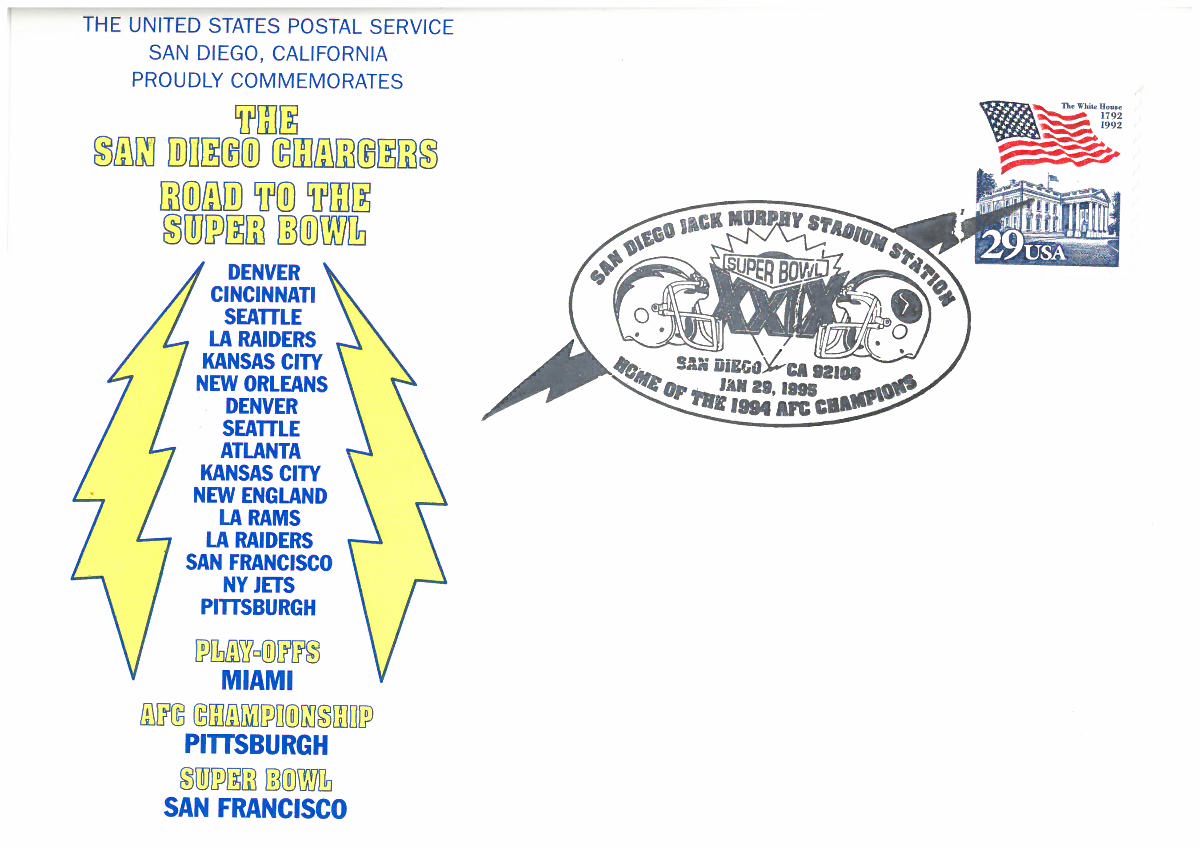
This past week, the San Diego Chargers, the football team I cheered for my entire life, announced that it’s packing its bags and moving to Los Angeles.  To many (including me), this sense of betrayal will mean the severing of all support or connection with that team.  But not everyone will.  Loyalty and identification are powerful things, feeling that you’re part of something bigger.   
What, I wonder then, would it take to sever one’s connection with your political party?  To put your country before your partisanship?  This year, we learned that for many millions of Republicans, electing a racist bully, an unapologetic lecher, an insecure authoritarian, and a profoundly selfish and un-Christian pathological liar and narcissist wasn’t enough to cut that cord.  Power trumped empathy and basic human decency.
I’m lucky.  I have a job I love in one of the most liberal districts in the country in a self-proclaimed sanctuary state.  But I worry for my country—not just for its institutions and the millions of lives who will be hurt and maligned by this new administration, but also for its larger sense of fairness, dignity and purpose.  I love my country, deeply, but the term “American Exceptionalism” is a bitter contradiction-in-terms when I see how susceptible it is to fear and bigotry and self-interest.
There’s absolutely no evidence to suggest that our new president is a good person.  He’s not a man of principle or character, just a cheat and vindictive opportunist.  And as president, he, like all presidents, will get a postage stamp when he dies.  What I’ve always liked about postage stamps is that they are meant to celebrate our culture, traditions, heroes, history.
But I can find no reason to celebrate today.
So now it’s a time for resolve and resistance.  Resist having our values further eroded.  Resist normalizing what was once horrid and unacceptable.  Resist complacency in the shadow of ignorance and spite.  Our country never stopped being great.  But can we as Americans, from the right and the left, make it exceptional again, rooted in compassion, wisdom, and generosity?  Yes we can.  

The kitten stamp from last year's Pets set is Scott #5111 and the spay/neuter stamp is #3670.  The Reagan stamp is #3897 and the US flag for veterans is #3331.  The White House and Capitol stamps are from 1950 (D.C.'s sesquicentennial) and are Scott #990 & 992 respectively.  The Child Labor Law stamp was part of the Celebrate the Century series, #3183o and the Kenilworth Park and Aquatic Gardens stamp is #5080j.  The two stamps from the Building a Nation set are Scott #4801d & e . 

Thursday, December 29, 2016

Luminous Beings


In what now seems a lifetime ago, I once had to go through tens of thousands of feet of 16mm behind-the-scenes footage from the original Star Wars trilogy.  Most of this was not shot on the set, but rather with the effects crew, model and creature shops, and other artists commonly known as “below the line” but critical to any movie’s success, especially those.  So you rarely saw much of the cast, but one memorable sequence was Carrie Fisher in her (in)famous slave bikini outfit from Return of the Jedi (1983, Marquand) sunbathing in the Arizona desert during a break, side by side with her similarly costumed stunt double.  And it was a jarring moment because you actually saw her interacting with another woman.

For let’s face it—the original three films are a sausage fest and Bechdel test nightmare.  There are only 3 female speaking parts in the whole trilogy—the short-lived Aunt Beru, the blink-and-you-miss her Mon Mothma (recently revived in the terrific Rogue One), and Princess Leia Organa.  So Carrie had to do the heavy-lifting for all 3 films when it came to female characterization, since she was both love interest and leader of the Rebellion.  Powerful, commanding, willing to stand toe-to-toe with anyone she came up against (Vader, Tarkin, Jabba) but also kind, caring, and authentic.  One of the highlights of Star Wars: The Force Awakens was seeing her back in action, still filled with authority and compassion.  The fact that the last two franchise films have had women at the center of the heroics is due in large part to her influence. 

Of course, since then she has also proven herself a witty writer and raconteur, smart aleck and cinematic sidekick, member of a vibrant-but-troubled Hollywood dynasty, an object lesson about addiction and an ambassador for destigmatizing mental health issues.  And she leaves us just a few months after her co-star Kenny Baker (who played R2-D2) and, tragically, one day before her mother Debbie Reynolds.

Just a month ago, I saw a sneak preview of Bright Lights (2016, Bloom/Stevens), a documentary about Carrie & Debbie.  It's a marvelous film in how it shows the once tumultuous mother-daughter relationship that evolved into one of deep love and support, but leavened with an enormous amount of playful ribbing, snark, and self-deprecation.  They had come to terms with the demons of the past and were both continuing to dive into creative pursuits fueled by wisdom and nostalgia.  So much of their personal bad luck and bad choices were scandal sheet fodder for so long, that there was little choice but to face the future with bravado and pluck.  The film follows each of them individually (Debbie rehearsing a one-woman show, Carrie attending a scifi convention), but the best parts are when they are together.  They come off as best of friends and savvy partners in crime, and it really did seem hard to imagine how one could exist without the other.  Both full of such indomitable spirit in the film, and both gone much too soon (Carrie at 60, Debbie at 84).
Another wonderful thing the film highlights is Debbie’s tireless campaign to save the artifacts of Hollywood history, particularly the costumes—not just of her films, but of films that predate her and that would have otherwise been thrown out by studio departments who were, back then, far less interested in preserving their past than making space for the latest productions.  Pieces that she purportedly saved over the years (through fundraising and her own backlot connections and initiative) include Charlie Chaplin’s bowler, Elizabeth Taylor’s Cleopatra headdress, Marilyn Monroe’s subway grate dress from The Seven Year Itch, and Judy Garland’s Oz ruby slippers.

One of my favorite songs is “Graceland” by Paul Simon, who was once married to Carrie, and whose relationship with her is documented in that song (among many others).  It’s a song about renewal and second chances, and when I drove across country last year, I listened to the whole Graceland album as I approached Memphis to visit Elvis’s legendary estate of the same name.  In the song, Simon writes about his ex:
She comes back to tell me she's gone
As if I didn't know that
As if I didn't know my own bed
As if I'd never noticed
The way she brushed her hair from her forehead
And she said losing love
Is like a window in your heart
Everybody sees you're blown apart
Everybody sees the wind blow
Life is a pilgrimage and we should all be so lucky as to have it filled with grace (in both the poetic and spiritual dimension).  Yoda says to Luke, “Luminous beings are we, not this crude matter.”  2016 was a rough year for a lot of people for a lot of reasons.  May the road we take in 2017, portentous clouds notwithstanding, be filled with the light, courage, good humor and fierce resolve that they both embodied so well.

Carrie and Kenny share a USPS stamp, essentially, from the Star Wars issue back in 2007.  That is Scott #4143f .  The X-wing fighter is #4143m.  The Wizard of Oz stamp is #2445, Judy Garland #4077, and Yip Harbug #3905.  The music stamp from the American Filmmaking series is #3772d.  And Elvis is #5009.  Incidentally, the first film poster on a postcard I ever owned was a gift from my high school girlfriend.  It was for Singin’ in the Rain, still one of my favorite films ever.  I’ve included it here, along with the inscription she wrote on the back, since this whole blog & collection originated, in a sense, with her.

My 10 favorite films featuring Debbie*, Carrie+, or Kenny#.
1. Singin’ in the Rain (1952, Donen/Kelly) *
2. The Empire Strikes Back (1980, Kershner) +#
3. Hannah and Her Sisters (1986, Allen) +
4. Time Bandits (1981, Gilliam) #
5. Kiki’s Delivery Service (1989, Miyazaki) *
6. The Elephant Man (1980, Lynch) #
7. When Harry Met Sally… (1989, Reiner) +
8. Mona Lisa (1986, Jordan) #
9. Star Wars (1977, Lucas) +#
10. The Blues Brothers  (1980, Landis) +


Sunday, December 20, 2015

Kringle All the Way

-->
My first associations with Fred Astaire were with Christmas.  One of the first films I remember him starring in was the family-friendly TV movie The Man in the Santa Claus Suit (1979), where he is an ever-present holiday sprite in NYC as three different men find unlikely solutions to their respective problems through a Santa suit they rent from Fred.  Of course, there was the ubiquitous Holiday Inn (Sandrich/1942), which first introduced the song "White Christmas" (sung by co-star Bing Crosby).  But the earliest thing I remember was the Rankin-Bass Christmas special Santa Claus Is Coming to Town, narrated by Fred, which first aired in 1970, the year I was born.

Rankin-Bass, of course, were the producing pair (Arthur Rankin Jr. & Jules Bass) who created a series of animation specials, mostly Yuletide but other holidays too, that were prevalent when I was growing up.  Quite a few used puppets and stop-motion, including the first, 1964’s Rudolph, the Red-Nosed Reindeer, which received a postage stamp issue last year.  That’s an origin story for Rudolph, with Santa an established character and Burl Ives (as a North Pole snowman) acting as singing narrator.  SCIC2T follows the same template, with Fred a mailman who uses the letters from Santa he encounters as a springboard to explain Kris Kringle’s backstory.  He makes a terrific storyteller and even sings the title tune, a bonus pleasure.

Like Gene Kelly, the other legendary male dancer from Hollywood’s Golden Age, Fred Astaire doesn’t have a US postage stamp yet.  It’s always curious how the decision-making process is conducted for which film stars get memorialized by the USPS, either in the Legends of Hollywood series or an offshoot issue.  Certainly, he’s a profoundly influential figure in popular culture, both as singer & dancer, and while Bing has a stamp, as do Fred’s co-stars of the classic musicals Easter Parade (Judy Garland) and Funny Face (Audrey Hepburn), he's still waiting for one.  Fred’s only Oscar nomination was for the very unmusical The Towering Inferno (Guillerman/1974) and his co-star there, Paul Newman, also has a stamp.
In fact, the closest thing to a postage stamp in the US that Fred has is actually in his Rankin-Bass Xmas special, where all the credits are formatted as postal letters, with the characters depicted as stamps.

Though no longer mainstays on network TV, these specials still get rotation in December on other cable channels, like ABC Family.  Perhaps their best facet were the songs, which had nice memorable little hooks.  But revisiting Santa with my mom recently, I noticed something unusual: they cut one of the tunes, and a rather central one, since it’s the musical motif for Santa himself (whose theme recurs throughout the show).  The internet being what it is, it was easy enough to find the missing song, which has the following lyric, sung by Kris: 

If you sit on my lap today,
A kiss, a toy is the price you pay.
When you sit on my left knee, don’t be stingy.
Be prepared to pay.

While the song itself is innocently karmic (the love you give comes back to you), the quid pro quo aspect of coercing affection with the promise of gifts sends a very different message these days.

It’s also interesting that Kris and the future Mrs. Claus (the gorgeous redheaded school marm, naturally) are also essentially a common law union, never getting legally married, but finding  their vows to each other sufficient in a ceremony that’s spiritual but not “religious”.  It’s a curiously progressive stance that’s perfectly in sync with Jessica’s surprisingly adult torch song of non-conformity and sensory awakening “My World Is Beginning Today” (which also indulges in some heavy abstract animation, very unusual for these kiddie specials).  Her voice was done by Robie Lester, who only has a handful of credits but, curiously enough, did provide the singing voice for both of Eva Gabor’s Disney flicks: The Aristocats (1970/Reitherman) and The Rescuers (1977).
I’ll admit that I liked the rudimentary but charming animation style as a kid, and it served as my first introduction to quite a few classic film stars: Jose Ferrer and Greer Garson (The Little Drummer Boy, 1968), Shirley Booth and Dick Shawn (the latter as the hilarious Snow Miser in The Year Without a Santa Claus, 1974), and Jimmy Durante (the cel animated Frosty the Snowman, 1969).  Mickey Rooney--another legend one suspects has a stamp in his future--played Santa in both SCIC2T and Year Without...

But even memories of some of the more obscure specials linger.  Nestor, the Long-Eared Donkey (essentially, a Biblical Rudolph from 1977) had a four-legged parental death that moved me far more than Bambi’s mom did.  Jack Frost (1979) was a primer in how a girl can say she loves you but not, you know, love-loves you (leaving the title character in a bittersweet frozen friendzone).  And the awkward, skeptical, bespectacled kid mouse in Twas the Night Before Christmas (1974) was easily relatable given what I saw in the mirror every day.
Perhaps the best loved holiday special is the one that got a stamp this year: A Charlie Brown Christmas (1965/Melendez), which is celebrating its 50th Anniversary.  The Charles Schulz museum in Santa Rosa, CA, isn't far from where I live and well worth the visit.  It always has wonderfully-curated collections that show how savvy he was in observing human behavior through these kids who always had childish impulses and very adult sensibilities.  The TV special is no different in its critique of commercialism at the expense of more simple and compassionate priorities (and all with a terrific Vince Guaraldi score).

Personally, my favorite remains How the Grinch Stole Christmas (1966 and my first exposure to Boris Karloff) so if these TV specials are a trend with the USPS, I hope it gets an issue next--though as you can see, Dr. Seuss has gotten a few stamps from them already.


Santa from the Rudolph issue is Scott #4948.  The original Peanuts stamp is #3507 while Charlie Brown w/his tree is #5021.  Dr. Seuss is #3585, "The Cat in the Hat" #3187h and "Fox in Socks" #3989.  Paul Newman is Scott #5020 and the skyskraper stamp (#4710n) is from the Earthscapes issue. 101 Dalmatians and Lady and the Tramp are #4342 and #4028 respectively.  And Elvis is Scott #5009.


My 10 Favorite Fred Astaire films

1. Shall We Dance (Sandrich, 1937)
2. Swing Time (Stevens, 1936)
3. You Were Never Lovelier (Seiter, 1942)
4. Top Hat (Sandrich, 1935)
5. The Band Wagon (Minnelli, 1953)
6. Easter Parade (Walters, 1948)
7. Follow the Fleet (Sandrich, 1936)
8. Royal Wedding (Donen, 1951)
9. Silk Stockings (Mamoulian, 1957)
10. Funny Face (Donen, 1957)