Showing posts with label Celebrate the Century. Show all posts

Friday, January 20, 2017

D-Day


D is for Demagogue.  Despot.  Deceptive.  Delusional.  Diddler.  Dumbass.  And, of course, Donald. 
My Dad was a hardcore Republican (a picture of Barry Goldwater hung in his den in our home), and Ronald Reagan—our other celebrity-turned-president—was in office during my middle and high school years.  So I’m very familiar with the mindset and priorities of the voices across the aisle.  But this year’s election narrative couldn’t have been more surreal or sadly absurd if the Onion had been writing it.  I wonder what The Gipper would have thought about our new President being a Russian patsy, or if he, or my dad, would even recognize their GOP anymore.  Would they have seen through this charlatan, or ultimately toe the party line?
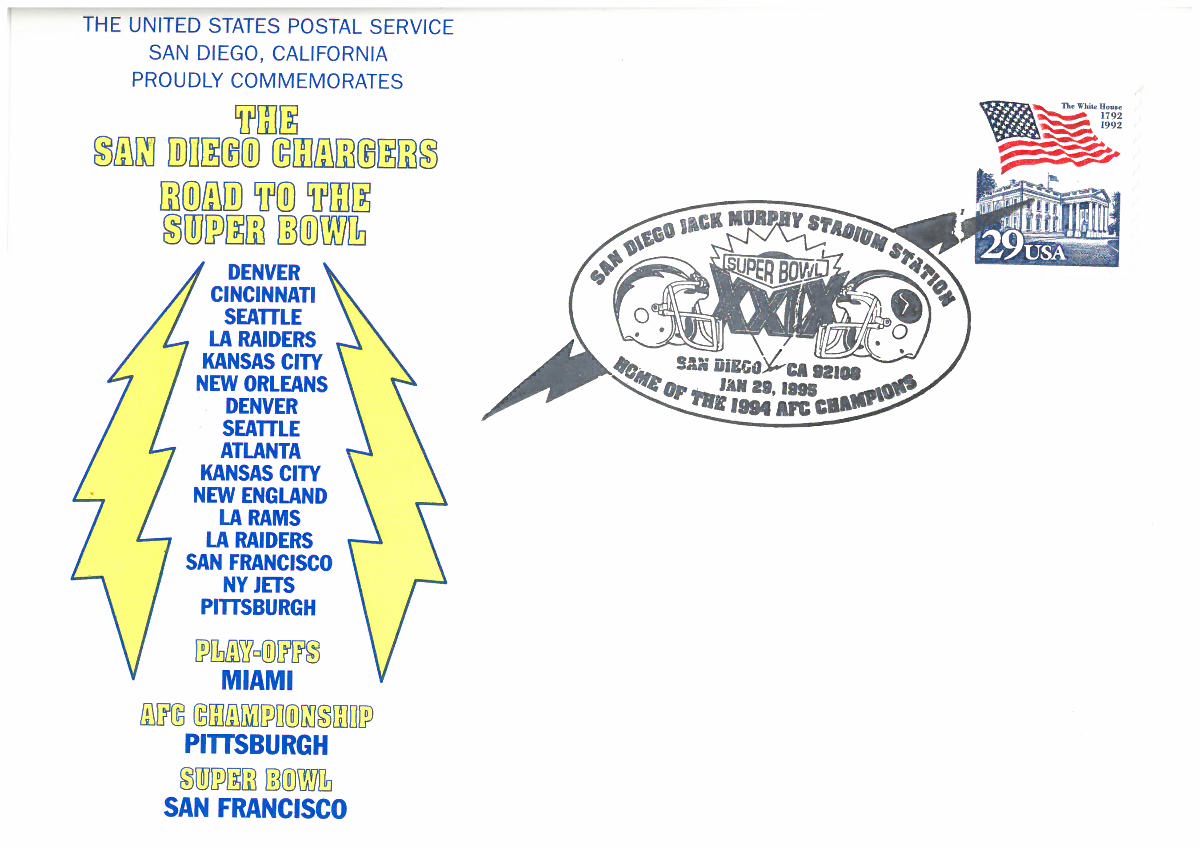
This past week, the San Diego Chargers, the football team I cheered for my entire life, announced that it’s packing its bags and moving to Los Angeles.  To many (including me), this sense of betrayal will mean the severing of all support or connection with that team.  But not everyone will.  Loyalty and identification are powerful things, feeling that you’re part of something bigger.   
What, I wonder then, would it take to sever one’s connection with your political party?  To put your country before your partisanship?  This year, we learned that for many millions of Republicans, electing a racist bully, an unapologetic lecher, an insecure authoritarian, and a profoundly selfish and un-Christian pathological liar and narcissist wasn’t enough to cut that cord.  Power trumped empathy and basic human decency.
I’m lucky.  I have a job I love in one of the most liberal districts in the country in a self-proclaimed sanctuary state.  But I worry for my country—not just for its institutions and the millions of lives who will be hurt and maligned by this new administration, but also for its larger sense of fairness, dignity and purpose.  I love my country, deeply, but the term “American Exceptionalism” is a bitter contradiction-in-terms when I see how susceptible it is to fear and bigotry and self-interest.
There’s absolutely no evidence to suggest that our new president is a good person.  He’s not a man of principle or character, just a cheat and vindictive opportunist.  And as president, he, like all presidents, will get a postage stamp when he dies.  What I’ve always liked about postage stamps is that they are meant to celebrate our culture, traditions, heroes, history.
But I can find no reason to celebrate today.
So now it’s a time for resolve and resistance.  Resist having our values further eroded.  Resist normalizing what was once horrid and unacceptable.  Resist complacency in the shadow of ignorance and spite.  Our country never stopped being great.  But can we as Americans, from the right and the left, make it exceptional again, rooted in compassion, wisdom, and generosity?  Yes we can.  

The kitten stamp from last year's Pets set is Scott #5111 and the spay/neuter stamp is #3670.  The Reagan stamp is #3897 and the US flag for veterans is #3331.  The White House and Capitol stamps are from 1950 (D.C.'s sesquicentennial) and are Scott #990 & 992 respectively.  The Child Labor Law stamp was part of the Celebrate the Century series, #3183o and the Kenilworth Park and Aquatic Gardens stamp is #5080j.  The two stamps from the Building a Nation set are Scott #4801d & e . 

Thursday, August 13, 2015

East Village People


I don’t really talk about my stamps much in real life.  People know about the blog (I’ll post a link periodically on Facebook or Twitter), but I don’t converse much about this pastime to friends nor volunteer that I have a blog--let alone what it’s about--in social situations.  The reason of course is that most people’s hobbies are not at all interesting to non-aficianados, and an innocent question in polite society could easily suck the unsuspecting down a vortex of hopeless minutae that one can instantly regret.
The perfect cinematic example of this is in Woody Allen’s very funny Manhattan Murder Mystery (1993), where a couple, Larry & Carol Lipton (Woody and Diane Keaton) slowly get embroiled in the possible murder plot of an unassuming neighbor, a passionate philatelist whose primary character trait is a gregarious eagerness to bore people with his collection, something Larry learns quickly when he and Carol first pay him and his wife a visit.
Paul (Jerry Adler): “Now let me show you a mint 1933 airmail—very rare and very beautiful.  Look at that.  And this plate block is quite unique because it has a flaw in the engraving.  See if you can see it.”
Larry: “It’s hard for me…”
Paul: “Give you a little hint, right down here in the corner.  Interesting.”
Larry: “That little tiny thing there?”
Paul: “That makes it quite valuable, you see.”
Larry: “Ah-ha.”
Paul: “And I just got in a commemorative set of issues that are going to be quite valuable, too.  Look at the color work there. Look at these presidentials.  Look at the color work.  Even the perforations are still intact.”

Of course, his hobby is open season for Woody’s commentary after their visit is over
Larry: “Jesus, couldn’t you keep the conversation going a little longer in there?  I was signaling you frantically.”
Carol: “I was just trying to be neighborly.”
Larry: “Neighborly?  If this guy showed me his stamp collection one more time…My favorite thing in life is to, you know, look at cancelled postage.”
 

Once the wife dies, supposedly of a heart attack, Carol’s suspicions are aroused, which are only fueled by a friend of theirs, Ted (Alan Alda):
Ted: “Maybe this guy killed her, you know?. Like he’s got like a young tootsie stashed someplace.”
Larry: “No, no, not this…you gotta, you gotta see this guy.  This guy gets his jollies from licking the back of postage stamps. He’s a boring, old…”
Ted: “I could see that.  Depending on whose picture is on the stamp.”
I suppose it’s a bizarre backhanded compliment to think that stamp collectors are so boring, we’re incapable of nefarious doings, but it turns out Ted is right, and along with the help of Woody’s client, writer Marcia Fox (Anjelica Huston), the unlikely foursome get to the bottom of some increasingly mysterious clues and developments, but not without some hilarious digressions along the way.
It may seem sacrilegious to say it, but I prefer this Manhattan to Woody’s more heralded Manhattan from 1979.  For me, that film, awash with Gershwin music and Gordon Willis’s B&W photography, has some marvelous elements but is less than the sum of its parts.  The film feels glossy, fabricated, with some good one-liners but dialogue that overall feels like it’s trying to one-up Annie Hall.  Everyone feels rooted in type and it never quite gels for me.  Plus, the most beautiful performance, Mariel Hemingway’s, is in the service of what still feels like a skeevy March-November romance.  It’s his most overrated movie, I think, and one that mostly inspires in me curiosity of what he could've done with Meryl Streep in more than just a bit part.


Mystery has modest intentions, but it actually does deliver on all cylinders.  The mystery is a good one, with the menace comic but also very real.  This is also probably Woody Allen’s least dysfunctional relationship depicted in film, with his reunion with Diane Keaton an effortless one.  Their dynamic of a married couple, still endlessly charmed by each other even though the irritations and restlessness of familiarity abound, is instantly believable.
It’s also a wonderful reassembling of two other major forces in Woody Allen’s best film, Crimes and Misdemeanors from four years earlier.  Here Alda still has that borderline-unctuous personality, but in a very likable way (think early MASH).  And Huston does a 180 from her ill-fated Dolores Paley.  She’s smart, fearless, stylish, and quick-witted.  In her career, she’s often traded on an ominous sensual presence in films like The Grifters or Prizzi’s Honor, but I think this is her sexiest role by far, and she’s fabulous.
It also is very knowing about the crime film, Woody being a voracious cinephile, and it upends the genre’s conventions at every turn.  There are few setpieces funnier in his films than the phone call with their suspect, each amateur sleuth armed with a tape player trying to keep a fabricated conversation on the rails.  And of course, the wry Lady of Shanghai climax is incredibly self-aware and undeniably perfect.  The film is a real gem.

Of course, we don’t actually see much of Paul’s collection, but that rare airmail stamp?  It’s gotta be this Century of Progress issue (Scott #C18).  Today’s mint value would be around $100, not bad but nothing compared to the Graf Zeppelin issues from just a few years earlier.  Then again, he does talk about an error on a plate block, so that would make things more, uh, interesting...
The New York stamp (Scott #3592) is from the Greetings from America issue, while the Cinematography stamp (#3772g) is from the American Filmmaking release.  George Gershwin is #1484, Glenn Miller #3098, and "Radio Entertains America" (#3184i) is from the Celebrate the Century series.  Marge Simpson (#4400) is voiced by Julie Kavner, who's appeared in 7 of Woody's projects, and Carrie Fisher (Princess Leia, #4143f) has appeared in just that one pictured.  As for the Martin Ramirez stamp from earlier this year (#4972)?  I thought it had a nice Art Deco vibe which suits that lovely period film nicely.


My 10 favorite Woody Allen films
  1. Crimes and Misdemeanors (1989)
  2. Zelig (1983)
  3. Midnight in Paris (2011)
  4. Annie Hall (1977)
  5. Bananas (1971)
  6. The Purple Rose of Cairo (1985)
  7. Hannah and Her Sisters (1986)
  8. Another Woman (1988)
  9. Manhattan Murder Mystery (1993)
  10. Sleeper (1973)

Thursday, July 10, 2014

Fab 50

 
When you see a lot of movies, it’s incredibly easy to take some for granted.  And so it’s been my whole life with Richard Lester’s A Hard Day’s Night (1964), the Beatles’ best movie and one I’ve seen plenty of times.  It’s smart, funny, loose & limber, and supremely enjoyable.
But until last Sunday, I’d never seen it on the big screen.  For how many surprises can a film you’ve seen over and over yield just from a change of venue?  As I’m repeatedly reminded, plenty.
My impression walking out of the film I thought I knew so well (in theaters again for its 50th anniversary) was of astonishment.  Wow.  From that first legendary chord, to the whirling chaos of the pursuit in the train station, and then from one song or setpiece to another, the sheer energy of the film—propulsive, buoyant, irreverent—is impossible to fully appreciate on the small screen, where many of the tropes that Night pioneered (the flurried editing, the hand-held mockumentary lensing, the music video pacing) have become a natural part of the visual language of TV.
But in the theater, where the immersive insanity (and dry whimsy) of the film are writ large, it’s another experience altogether.  Which is why, in a very real sense, as much as I love channels like TCM and the availability of older or obscure films on DVD, I don’t really consider ever having seen a movie until I’ve seen it in a cinema, the way it was meant to be seen.  It’s not just Bigger = Better; it’s that watching a film the way it was meant to be seen often completely changes your relationship with the way a shot is composed, the way the sound is designed, the way your attention can’t afford to drift.  In the movie house, the death of Frank Poole in 2001 in the vast silence of space is terrifying; at home, it’s like you left the Mute button on.
I remember the first time I truly was hit by this sledgehammer of truth.  I wrote my senior thesis in college on the films of David Cronenberg (this was right after Naked Lunch was released).  This meant watching The Brood (1979) countless times on my VHS player at home, until I thought I knew this nervy, bizarre movie inside and out.  But not long after, the Pacific Film Archive decided to program it, and so I went.   
And it devastated me.  The full spectrum of emotion that sometimes felt campy at home was now in its full, rich, grandiose power.  And the same goes Cronenberg's mise en scene.  There’s one shot, with two of the brood walking the lead’s daughter through the snow, all three in their colorful jumpers, that seemed little more than transitional in my living room, but was one of the most heart-breaking shots I’d ever seen sitting there in the dark.
This is why I see far more films in the theater every year (shorts and features) than I ever do at home.  I rarely buy DVDs and despise watching anything on the internet.  For movies, the cinema is their home and I’m lucky I live somewhere where the selection of films I can see that way is boundless.  But as the glorious rawness of this 1964 classic reminds me, I still have a lot of catching up to do.

It’s worth noting that in addition to the marvelous characterizations of the Fab Four, the wonderfully visualized songs (particularly “Can’t Buy Me Love”) and the anarchic hijinks, the film has a couple of postage stamp references as well.
Hanging out in their hotel room, their manager Shake brings in a batch of fan mail for Paul, John, and George--but not Ringo.  His bandmates playfully take the piss on their drummer until Shake returns with a batch twice as big just for Ringo himself.


Shake: “Hey, here”
John: “Are those yours?”
Shake: “No, they’re for Ringo”
John: “It must’ve cost you a fortune in stamps, Ringo”

Later, the boys visit a TV studio where they'll be performing at a broadcast.  Some dancing girls are rehearsing to an elevator-music version of "I Only Want to Dance with You".  As the practice ends, the Beatles' other manager Norm goes over their schedule:


Norm: “Now, you’ve got about an hour but don’t leave the theatre. Where are you going, John?”
John (with blonde): “She’s going to show me her stamp collection.”
Paul (grabbing brunette's hand): “So is mine”
Dancing girl: “But I haven’t got any stamps...”

The Beatles stamp (Scott #3188o) is from the Celebrate the Century series, while the Ed Sullivan stamp (#4414j) is from the Early TV Memories issue.


Top 10 Favorite Films of 1964

1. Dr. Strangelove (Kubrick)
2. Onibaba (Shindo)
3. The Umbrellas of Cherbourg (Demy)
4. A Hard Day's Night (Lester)
5. I Am Cuba (Kalatozov)
6. The Gospel According to St. Matthew (Pasolini)
7. The Naked Kiss (Fuller)
8. Man's Favorite Sport? (Hawks)
9. Woman in the Dunes (Teshigahara)
10. The Train (Frankenheimer) 

Top 10 Favorite Beatles songs
(note: none of them are from my favorite Beatles album, Revolver)

1. "Strawberry Fields Forever" 
2. "Here Comes the Sun"
3. "I Saw Her Standing There" 
4. "She's Leaving Home"
5. "Ticket to Ride" 
6. "Things We Said Today"*
7. "Hey Jude"
8. "I Feel Fine"
9. "While My Guitar Gently Weeps"
10. "In My Life"

*This is actually on the album A Hard Day's Night, but sadly not included in the movie itself.

Sunday, August 18, 2013

Jesus Christ Superman


I’ll admit it.  Reflecting back on the big tentpole pictures of the summer, even the ones I found enjoyable seemed to evaporate from memory quickly.  But while it’s far from perfect, Man of Steel (Snyder) still lingers.

I think what I like about the film is that it addresses something that the other films have largely avoided, or only given lip service to: That Supes is genuinely super-human.  Not just extra-powerful, but almost godlike in his abilities (on a relative scale).  The devastation of Metropolis at the end is exhausting, given the overall film’s running time, but essential in conveying how humanity is mere cannon fodder if two true Super Men were to do battle.

But the irony is that despite the acknowledgment of this fact, the film is the least messianic about Superman than any we’ve ever seen.  In the Christopher Reeve incarnation, man is essentially powerless, and Superman must come and save the day for the planet time and time again.  At the end of Kill Bill, Part 2, Bill has a monologue on how the persona of Clark Kent is Kal-El’s commentary on (and veiled contempt for) mankind.  It’s a patronizing position, but apt because in those films, he’s all-powerful, but man is also hopelessly impotent.  This is even taken to the extent that Earth gains an entitlement complex by the time we reach Superman 3, where our hero is criticized for not always being able to save everyone, all the time.

However, despite being more powerful than any Superman we've seen thus far, Man of Steel's Superman is still less god, and more man.  His search for answers to his own identity make him more accessible, and his dedication to being an example for Earth, not an answer to all its troubles, is not mere lip service, as we see in the moving sacrifice of Col. Hardy and Dr. Hamilton (Chris Meloni & Richard Schiff, respectively) in the destruction of the Earth Builder.  Earth’s rescue is a collaboration; Supes may be the architect, but mankind has a real stake in its own salvation.  And that’s something we’ve never seen before.

I liked this film because it also (intentionally or not) harkened back to one of my favorite sci-fi films of the 70s, God Told Me To (Cohen, 1976).  In it, a supernatural being here on Earth assumes upon himself his own personal God complex.  And who can blame him?  A miraculous birth, powers far beyond his peers, in a society steeped in religion but agnostic when it comes to life on other planets—what else is he supposed to conclude other than that he represents a spiritual Second Coming?  And when you are dealing with someone who not only believes he’s God but has the power to back it up, what then?  It is director Larry Cohen’s finest film (Andy Kaufman’s too, incidentally), and it takes perverse pleasure in merging and melding these myths and cultural tropes that cinematic sci-fi usually keeps quite separate.

There were other things I liked about Man of Steel, too.  Krypton was a real place, with a real culture and history, not just a sound stage.  Zod is not just power mad; he’s a totalitarian on a genocidal mission, which makes him more believable and more horrifying.  True, Kevin Costner’s death is stupid and doesn’t have the poignancy of Glenn Ford's in the 1978 version, and the romance with Lois needed time to breathe.  It’s too fast, too sudden.  But Diane Lane, as Ma Kent, picks up the emotional slack and you see how the Kents would’ve raised their son with a stalwart code of values.  

But in the end, the film tries to explain Superman, not just accept him on faith.  In the original Superman, he just…shows up one day, out of the blue.  His appearance to humanity is completely arbitrary (unless it’s to save Lois’s life).  But here, Kal-El is forced to make a choice that redefines his purpose, and the planet’s own self-awareness, too.  His search for this purpose ends up bringing the Kryptonians to Earth.  His sense of responsibility is why he reveals himself, at long last.  Call it The Last Temptation of Clark.  Until now, the cinematic Superman was always one-dimensional, a goody-two shoes.  That’s what made him truly alien.  He isn’t even known by his superhero moniker here.  This is not just a reboot, but a new conception of the character altogether.  I’m curious to see where it goes.

Of course, my favorite silver screen Superman is still the one conceived by the Fleischer brothers in their marvelous cartoon shorts of the 40s.  Here's one gem from 1942.


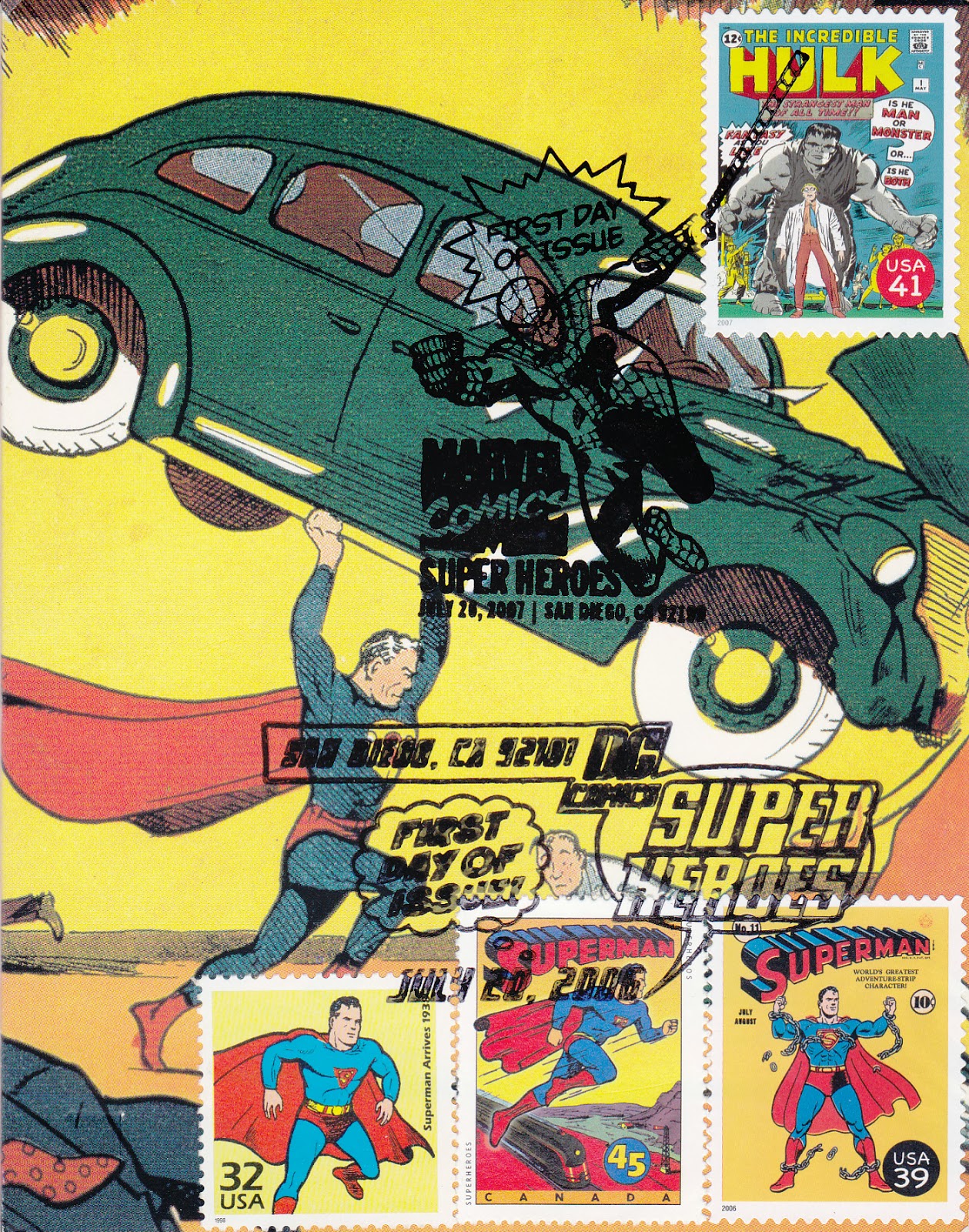
The first card (a greeting card, actually) has a Superman stamp issued as part of the DC comic book series (Scott #4084k) and is paired up with the Superman stamp that was part of the Celebrate the Century series (#3185f).  And Canada had a Superman stamp too, from 1995.  The other Superman stamp (#4084a) and FDC from that DC comic series is on the other card (a postcard), along with Supergirl (#4084i) from the same series.  As a concession to possible comic collectors, I also added a Marvel stamp on each of these cards from a subsequent release, too--hence The Hulk (#4159l) and Captain America (#4159e).

Sunday, November 11, 2012

Premium Rush


Amidst all the big comic book adaptations and massive action tentpole films this last summer, the most exciting time I had in the theater was with a lean, modest movie about bike couriers called Premium Rush.

Confession: I don’t know how to ride a bike.  This surprises a lot of people, since learning to do so seems a ubiquitous part of growing up.  I guess I don’t have much of an explanation for it, except that there didn’t seem much point to when I was little.  I didn’t have any friends who lived near me.  In the suburban wasteland of San Diego, there was nowhere I wanted to go.  That I was nonathletic, physically uncoordinated didn’t help either.  I’m not sure how my younger sister learned, because the only advice my dad ever gave was “Don’t do that.”  But she wanted a paper route.  She was motivated, and I really didn’t care.

Then, as you get older, it becomes more embarrassing not knowing.  And more reasons come up to never learn.  I knew how to drive.  I moved to an urban center, where bicyclists appeared to take their lives into their own hands every day (when they weren’t having their bikes stolen).  I loved going for walks that went miles and miles.  Of course, as soon as someone would find out, they’d immediately offer to teach me, but that was usually just as quickly forgotten.  And the occasions to ride were so infrequent, it never really came up as an adult.  The one time I visited Amsterdam, the ideal place to make up for lost time, it was the middle of winter and completely iced over, so not even the most seasoned bicyclists were on the road.

So bike riding has an exotic allure for me that allows even simple movie scenes to have amazing power because of that visceral elusiveness.  The playfulness of Butch and Sundance.  The charming community of the Muppets on an outing together.  Or the excitement of Joseph Gordon-Levitt negotiating traffic, weaving around pedestrians, out-pedaling the bad guys with some McGuffin in his messenger bag.  Genuinely thrilling stuff.

This past summer was also the 30th anniversary of E.T.: The Extra-Terrestrial (Spielberg, 1982).  I remember the movie vividly growing up, because I was Elliott’s age, socially awkward and stuck in my own California suburban malaise.  I was enchanted by the film back then, even though I loved all kinds of movies and was the only kid I knew who already was familiar with The Quiet Man (the film ET watches when he and Elliott share their intoxicated, psychic connection).


So when it popped up on TV recently, I watched for a bit (it had been ages since I’d last seen it).  And while it may not have the epic scope or depth of feeling that Close Encounters does (to my mind, still Spielberg’s one masterpiece), I thought it still held up pretty well.  Until the famous bike chase.  As soon as Elliott, his brother and friends start barreling through backyards, evading the feds on their two-wheelers to John Williams’ propulsive music, I was completely enraptured, every nerve tingling.
For a kid at that age and that time, bikes were empowering.  Liberating.  Emotions I never really understood or experienced until I was much older, my suffocating adolescence behind me.  So this was my favorite part of the movie, maybe one of my favorite sequences in any 80s movie.  
Because it represented for me something both energizing and absent growing up.  It doesn't last long, but it's marvelous to watch.  And as soon as ET uses his alien mojo to send the bikes flying into the air, I changed the channel.  Because what made the movie special to me was over.

They say it’s never too late.  And I suppose that’s true.  But I have no bike, no helmet, no one to teach me, no easy means of learning, and no one to ride with.  The time and cost are real investments now.  And any recreational biking would still involve a lot of driving to get to where I can do so safely, which itself seems its own sort of vanity.  But that’s OK.  Not all bucket list items are meant to be checked off.  And I still have the movies, where even the most pedestrian fantasies can be brought to life.

E.T. was honored with a stamp in the Celebrate the Century 80s issue (Scott # 3190m) and specifically in the Special Effects stamp of the American Filmmaking series (Scott # 3772i).  A highlight of the film is the liberation of the frogs in the science class, and the Wonders of America series kindly obliged me a stamp (Scott # 4055), as did the residential subdivision in the Earthscapes issue (Scott # 4710k).  The E.T. stamp from the Republic of Tatarstan was issued in 2001.


Wednesday, July 4, 2012

Freedom


"Then last week, as it must to all men, death came to Charles Foster Kane."

It was over 10 years ago now, but I still remember the phone call vividly. Catching up with mom like I always did, the content of the conversation wasn’t any different than usual—she was fine and Dad (an invalid, bedridden, and suffering from dementia for years) was no better or worse.

But there was something about the tone in her voice that was unusual, though impossible to pin down. And even though I couldn’t put my finger on it (and didn’t even know if she realized she had sounded different), I knew what I had to do.

So within a few hours, I was on the road, driving the 500 miles overnight to head back to the house I grew up in, surprising her that following morning at the door. I spent an hour just holding his hand, and then took a quick nap. After waking up, I joined her again in his room, and with each of us by his side, clasped hands again, we watched him peacefully pass. He was 93.

The end was simple. No profound last words, like Kane’s “Rosebud”. No frogs from the sky (though Jason Robards’s incredibly moving portrayal in Magnolia often reminded me of Dad’s last moments of lucidity, before his mind disappeared beyond our grasp). It was death at its most quiet and solemn. And for my Mom, who was his caretaker for years, and for him, a shell of his former self, it was a freedom for which I had long prayed for. He had had a good run, but that day was painfully overdue.

I got my blue eyes from him. My love for tennis (watching and playing) and travel (he visited 60 countries over 40 years working in the U.S. state department). We went to the same alma mater, graduating 63 years apart. Most of the life he lead before my Mom he kept close to his vest. But I do know that when he was my age, his first marriage hadn’t failed yet (mom was his second, and last). So a belief in second chances is something I might slowly learn to embrace from his example, too. We had few things in common, but a need for redemption from past failures is one of them.

He was born on the 4th of July, just like the song's Yankee Doodle Dandy (Walter Huston’s final scene w/Cagney’s George M. Cohan, in the film of the same name, is another beautiful cinematic deathbed moment, father and son saying goodbye). So when I celebrated Independence Day, it really was more about my Father than our Founding ones. The fireworks were always for him in our eyes. And when he died, my interest in the holiday largely died with him. It was nice and musical and colorful, but just wasn’t the same.  And never will be.

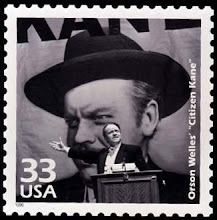
The 3 American flag stamps joining Captain America (Scott #4159e ) date back to 1957: Scott #’s 1094, 1132, and 1320. The US Citizen Kane stamp (Scott #3186o) I paired with one from Guyana. Bernard Herrmann’s first film score was for Kane, as was Orson Welles’s only Oscar (but for screenwriting, not directing).  The Scott #’s are 3341 & 3772b, respectively.

Sunday, March 20, 2011

Days of Future Past


2011 is the 10th Anniversary of an event that never happened, when the discovery of an alien monolith on the moon propelled astronaut Dave Bowman to Jupiter and beyond.

I have loved 2001: A Space Odyssey (Kubrick, 1968) for as long as I can remember.  There are movies I remember seeing earlier, as a kid, but not many.  It’s always been a part of my cultural memory (I was born two years after it was made), even though I’m not quite sure why—it’s exactly the kind of movie my parents would’ve frowned upon: opaque, irreligious, confusing, slow.

But for me, long before I ever remember stepping into a museum or being exposed to literature (and not just kid books), 2001 was my window into the world of Art.  Most of the movies I talked about were simply rundowns of things we loved, sensory highpoints and greatest hits.  But 2001 sparked debate between me and my nerdier classmates.  Was HAL evil?  What did the room where Dave ends up mean?  What was the Starchild?  Was the movie any good or not?

All films, all stories before 2001 had closure, clarity, unambiguous arcs.  Characters might’ve had complexity, but the final result was fairly clear cut.  But 2001 offered nothing conclusive, no easy answers.  This was a brave new world of observation, interpretation, nuance, and judgment.

My love for classical music started with 2001, and not just in the romantic sweep of the space ballet with Johann Strauss or the thunderous echo of anticipation from the other Strauss, Richard.  For there was nothing sadder than the heartbreaking loneliness of space through Khachaturian or more hypnotic than the atonal fusion of voices and discord as Ligeti took us into another dimension of time and distorted landscape, beyond the monolith.

The best Art changes, evolves with us, but remains both personal and universal.  That so many things about the world of 2001 didn’t come true (yet) is incidental.  For it is fixed neither in time nor location.  I get why not everyone will like it.  The best Art also refuses to placate when it would rather confront.  Some people are never satisfied unless there is an explanation, an answer.  But Art is like Life, and we make of it what we can and what we want.  

There came a tipping point with me quite early when I was OK with having 2001 (and by extension, many more subsequent books and movies and paintings) stay unresolved, even if I couldn’t fully articulate why.   All I knew was that, whatever the Starchild meant, or wanted, or was, it was a beautiful thing.  Transformative, and full of Hope.  Rebirth.  Renewal.  Promise.  An alien observer, it still spoke to the human condition and that’s what made it marvelous and momentous to me.


Years later, when I was in college, I saw 2001 for the first time on the big screen.  It became even more towering then.  The silence of space felt like the TV was on mute in my living room, but in the vastness of Berkeley’s UC Theater, it was unnerving, terrifying.  The most despondent of birthdays, the most clinical of murders, the saddest dirge of a dying computer all became bigger, epic, more visionary.  And that jump cut!  It still makes me gasp in amazement.

I am a theatrical fetishist.  I rarely rent videos and own far fewer DVDs than most people would expect.  I usually operate on the assumption that if I don’t catch a film in the theater, I’m unlikely to ever see it at all (or at least for many years until it migrates to cable).  But there are still my favorites that I return to as comfort food or as a reminder of things I love and care about, even if my cathode ray at home doesn’t do them full justice.

But not 2001.  That’s the one film I never watch at home.  It is not necessarily my favorite film, but it is bigger than life to me, so every time it pops up in a revival theater here, I do my best to go see it.  Because it is the future and the past, man and machine, history and possibility mingling together to sift and to embrace.  There are few things in this world that make me happier.

The X-wing fighter from the Star Wars issue (Scott #4143m) is paired with a spaceship from another scifi issue years earlier (Scott # 2744) and the Australia and Cuba stamps.  Pioneer and Jupiter had three stamps (Scott #s 1556, 2573, and 3189i, the last of which was part of the Celebrate the Century series).  2001 won an Oscar for Special Effects (Scott # 3772i) and the Sound stamp (# 3772j) is also part of the American Filmmaking series.  The Egg Nebula (Scott # 3887) was part of a larger astronomy issue.


My Top 10 Science Fiction films
1. 2001: A Space Odyssey (Kubrick, 1968)
2. Close Encounters of the Third Kind (Spielberg, 1977)
3. Bride of Frankenstein (Whale, 1935)
4. The City of Lost Children (Jeunet/Caro, 1995)
5. The Incredible Shrinking Man (Arnold, 1957)
6. Metropolis (Lang, 1926)
7. Forbidden Planet (Wilcox, 1956)
8. Eternal Sunshine of the Spotless Mind (Gondry, 2004)
9. The Terminator (Cameron, 1984)
10. The Thing (Carpenter, 1982)