Showing posts with label Jazz. Show all posts

Sunday, May 20, 2018

Praise Be


Of all the MGM musicals ever made, spanning over half-a-century, only 2 have been memorialized on a US postage stamp.  One is, unsurprisingly, The Wizard of Oz, which I have discussed on this blog before.  The other?  Not any of the usual suspects, like Singin’ in the Rain or The Band Wagon or Meet Me in St. Louis.  The only other film is King Vidor’s Hallelujah (1929).

That was part of a 5-item postal issue on early Black Cinema (also discussed in an earlier post) and Hallelujah is easily the most famous of the 5, and a seminal work in the genre because even with sound in the movies less than 2 years old, you can see Vidor pushing the aesthetic envelope.  There’s certainly a lot to dissect about the film, from its ground-breaking origins (it was one of the first Hollywood studio films with an all-black cast) to its troubled legacy because of the narrative it helped fuel about African-American stereotypes.

But something that makes this film stand out among musicals is also something it has in common with another all-black MGM musical 14 years later, Vincente Minnelli’s Cabin in the Sky (1943).  And that’s the unique role that religion plays in both films.  For integral to both films’ messages is the ways church and God, music and ritual are hard-wired into black culture.

Hallelujah is about a sharecropping family whose eldest son Ezekiel (Daniel L. Haynes) gets lured into assorted temptations (gambling, women) and it’s his religious rise as a rabble-rousing pastor and eventual fall from grace, a victim of his vices, that comprise the backbone of the film.  Throughout, we see that singing—in the cotton fields, with neighbors, in church and nightclubs—is an important part of the family’s life.  Musicals have often been criticized for being “unrealistic” in having their characters spontaneously burst out in song, but in Hallelujah, it feels completely normal because song and community are intimately entwined.  Music brings people together, providing inspiration and comfort in a hard-scrabble life and so all the music numbers have an almost naturalistic feel—both the traditional spirituals but also the ones written for the film (most notably “Waiting at the End of the Road”, by Irving Berlin).

Cabin in the Sky is actually pretty similar in that Joe (Eddie “Rochester” Anderson) has his soul fought over by competing angels and demons as he is also tempted by gambling and women and faces a troubled path toward redemption that isn’t without its own pitfalls and distractions.  While Hallelujah is presented as melodrama and cautionary tale, Cabin is played for laughs and uplift, but it also has musical numbers that take place in the wide array of African-American centers of community: church, juke joints, backyards and work gangs.  Here, the musical heavy lifting is done by the marvelous Ethel Waters, who sings the title tune as well as the Oscar-nominated “Happiness Is a Thing Called Joe” (by Harold Arlen and E.Y. “Yip” Harburg).  But she gets tons of great support by Lena Horne and cameos from Louis Armstrong (as a demon) and Duke Ellington.

But it’s interesting that when you look at the films, the churches act as spiritual centers and this is in sharp contrast to decades of mainstream Hollywood musicals that rarely use churches as much more than narrative devices.  Ezekiel whips his camp meeting congregation into a religious fervor, and while his personal story is one of backsliding and hypocrisy, the message of love and confession is one that touches a nerve in his flock (and which is upheld without irony by the rest of his revivalist family).  Joe’s afterlife in eternity is genuinely at stake and fidelity and responsibility are depicted as paths toward a better marriage and better living.  The square Rev. Green (Kenneth Spencer) may not be nearly as fun as Rex Ingram’s hilarious Lucifer, Jr., but he has Joe’s best interests at heart—not just to follow a set of prescribed rules but to improve Joe’s relationship with the devoted Petunia (Waters).

I’m hard pressed to think of many examples of the great canon of American musicals pre-1970 that touch on central religious themes that way.  Sure, churches are abundant for social gatherings or weddings (“What a Lovely Day for a Wedding” from Royal Wedding or “Get Me to the Church on Time” from My Fair Lady).  Bible stories are alluded to in song lyrics, from Seven Brides for Seven Brothers’ “Sobbin’ Women” to Elvis singing “Hard Headed Woman” in King Creole.  But they’re little more than plot points, without any larger thematic resonance.  Heck, even Bing Crosby as a priest in Going My Way is rarely a fount of theological insight but rather a source of warm, friendly, homespun advice.  Ditto the nuns in The Sound of Music.

Which make Cabin and Hallelujah interesting to me, since they aren’t afraid to immerse themselves in the middle of a part of the American social fabric that most musicals are reluctant to touch.  Those other films may implicitly embrace what some might consider religious “values”, but Hallelujah explores the complex relationship between faith and character, and Cabin finds joy in spaces that can be both reverent and rambunctious.  Once the 70s kick in, we see stage adaptations like Fiddler on the Roof or Jesus Christ Superstar that more explicitly examine (and question) beliefs and traditions, but these early MGM musicals not only paved the way in bringing African-American casts and culture front-and-center to white audiences, but its worship sensibility, too.

Now, I did mention that only 2 MGM musicals have been depicted on a USPS stamp, but I should make a technical concession to Show Boat (1951, Sidney) for while the film itself is not on a stamp, the original Broadway musical is.

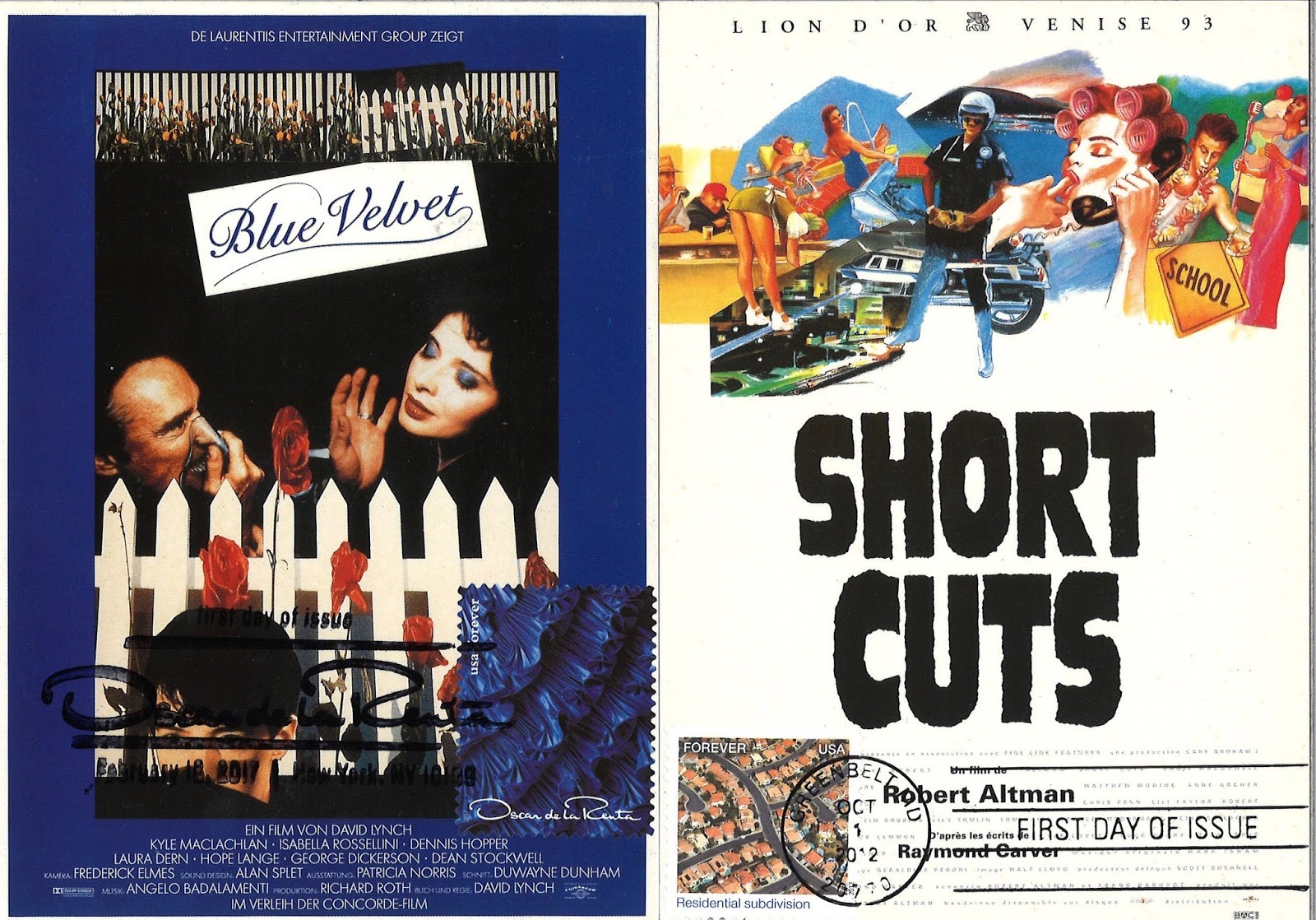
Hallelujah was released in time for the 2nd annual Academy Awards, and it was King Vidor’s second Best Director nomination.  He would earn five in his career—a record number in that category for someone who would never earn a competitive one.  He did receive an Honorary Oscar in 1978.  His nomination for Hallelujah is unusual in that the director nomination was the only one the film received.  This has only happened a handful of other times since: The Inn of the Sixth Happiness, Alice’s Restaurant, Blue Velvet, The Last Temptation of Christ, Short Cuts and Mulholland Dr.
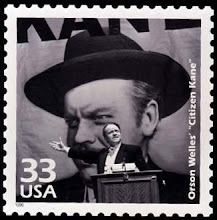
Cabin was Minnelli's first feature film, and he would go on to helm two Best Picture winners that were MGM musicals: An American in Paris and Gigi, the latter earning him a Best Director statue, too.

For more entries in this weekend’s MGM musical blogathon, go here.


-->

Wednesday, February 6, 2013

Holiday


Given that he’s made nothing but crappy movies for the last 15 years or so, it’s easy to forget that Steve Martin used to be a small, cinematic treasure.  And revisiting The Jerk (C.Reiner, 1979) again, with its goofy unevenness, brought back to me a scene I had completely forgotten about: Navin and Marie (Bernadette Peters) singing the tender, poignant "Tonight You Belong to Me" on the beach, by firelight.

I’ve been told more than once that when it comes to music, I was born too late.  I don’t mind modern music, but the truth is that since I left college two decades ago, I’m exposed to it very little so don’t indulge in it much.  My heart truly belongs to the Great American Songbook and the great jazz singers of a bygone era.

But there’s something very curious about those songs that I love by Cole Porter and the Gershwins, Walter Donaldson and Rodgers & Hart.  I adore listening to them (and do so constantly), but never feel compelled to sing along to them.  My favorite sing-along album is We Shall Overcome, Bruce Springsteen’s covers of Pete Seeger songs, and if I ever do provide vocal accompaniment in my car, it’s usually to Johnny Cash or Marty Robbins. So the domain of classic folk and country are fertile territory for my (limited) vocal range.  But those jazz standards occupy a special place where I don’t feel entitled to tread.  

The USPS just announced that Cash will be getting his own postal issue this year.  And while many singing legends (Ella, Dinah, Frank, Patsy) got their own stamps years ago, it’s a tribute to his longevity that Cash was only recently eligible for the honor.  And while there are some legends of that time whom I’ve seen in concert (Blossom Dearie, Tony Bennett, Willie Nelson), I’ve always regretted never going to see him perform live.

We all, in our own ways, find connection and belonging through music, though most of what I listen to was made long before I was born.  Maybe that’s why one of my favorite musicals is Pennies from Heaven (Ross, 1981), also with Martin and Peters, because its entire soundtrack is full of these vintage beauties.  But as far as great musicals go, the film is still unusual because it inhabits the gulf between the fantasy life which music provides and the real life we actually face.  Throughout the film, nobody sings; rather, they all lip synch to those classics from the 20s and 30s.  But they never do these mimes as performers in the story.  What they do is lip synch in their own fantasy dreamscapes, psychologically allowing the songs to fill the ache, the emotional void that we feel every day but keep hidden.

As a result, I know of no other musical which is as heart-breaking, not because of the tragic things that happen in the plot, but because the movie reminds us how fundamental music can be to buoy our spirits and provide an escape valve for the darker truths that our choices and damaged lives represent.  I guess that’s why I never sing to those songs.  Because I’m too busy listening, inhabiting, breathing them in.  

But I love hearing them and have a sense of awe for people, professional or otherwise, who can sing them with such affection.  Singing in front of people solo is something I’ve never done (never even privately, one-on-one).  I always find safety in large numbers.  Church?  Fine.  Karaoke?  I’ve been tempted, but have never summoned up the courage.  Even the thought of such a simple duet as the one in The Jerk unnerves me—not  because I’m a bad singer (I’m not), but because it means opening up to something vulnerable (be it raw or playful) in myself.  That's something I rarely do.  Public speaking in front of large crowds scares some people but it’s never bothered me one bit.  But to sing is something different.  More naked.  Exposed.  Which is also why I admire people who can do it with joy and fearlessness.


But while solo singing might fill me with deep trepidation, there is something else that fills me with actual fear—and that’s the dentist.  I won’t go into the childhood trauma I had that’s resonated with me since I was very young.  My dentist at the time was not a sadist (unlike the musical Steve Martin from Little Shop of Horrors), but what happened still had an effect on me like few other moments in my life.  Even now, the closest I’ve ever had to a full-scale emotional meltdown as an adult was because of that chair.

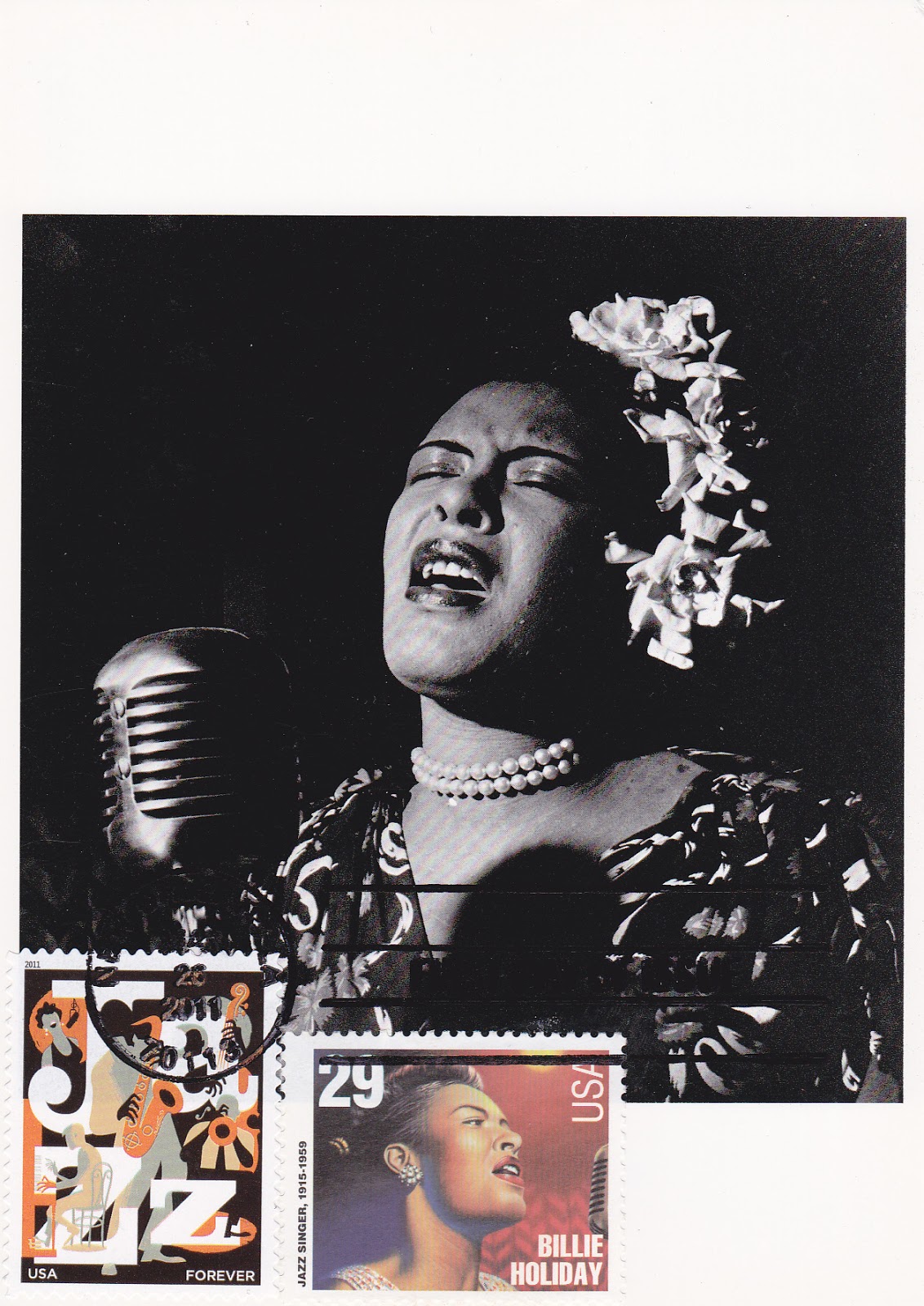
But that fear has been tempered by one simple thing, and this, again, is where music sustains me.  For of all the singers I love, there’s one I never actually listen to for fun.  And that’s Billie Holiday.  I own her CDs, and while a jazz compilation may bring up a song of hers periodically, I never sit down for an hour of her music like I can do effortlessly with, say, Nina Simone.  And that’s because whenever I go to the dentist, it’s a Billie CD I listen to.  I discovered quickly that Ella’s warmth, Blossom’s flirtations, Nina’s soulfulness aren’t what work for me at that moment of dread.  Maybe that’s because they represent my own aural dreamscape of what I long to be and feel.

But Billie’s sadness, even in the face of love and redemption, have always spoken to me in a special way—not in how I long to feel, but how I usually do every day already.  And so that’s why I cherish her and secrete that voice away in my heart and head.  Because like anything that sweet and precious, I only bring her out at those times when I need to be so fortified and comforted.  So in that chair is when I need her the baddest, and treasure her the most.  Her blues are my solace and in her voice, my fear doesn't just take leave, but evaporates altogether.  Without fail.  There may be singers I love more, but none whom I rely on so fervently.  Fine and Mellow indeed.

The Billie Holiday stamp is Scott # 2856, Nat King Cole # 2852, Ella Fitzgerald # 4120.  The Jazz stamp is Scott # 4503.

If I had to list 10 songs from that school of songwriting which I revisit most regularly, I suppose I might pick these:

* "Ain't Nobody Here But Us Chickens" (Kramer/Whitney) - Louis Jordan
* "Do You Know What It Means to Miss New Orleans?" (DeLange/Alter) - Billie Holiday
* "I Loves You, Porgy" (Gershwin/Gershwin) - Nina Simone
* "If I Had a Ribbon Bow" (Prince/Singer) - Maxine Sullivan
* "Mr. Meadowlark" (Donaldson/Mercer) - Bing Crosby & Johnny Mercer
* "Shine On Harvest Moon" (Bayes/Norwoth) - Betty Carter
* "St. James Infirmary Blues" (Primrose) - Cab Calloway
* "Stardust" (Carmichael) - Nat King Cole
* "They Say It's Spring" (Clark/Haymes) - Blossom Dearie
* "What'll I Do?" (Berlin) - Johnny Mathis


Wednesday, December 5, 2012

Overkill


Now here’s an example of the bad postmark being 100% my fault.  You may remember the Toy Story card I had discussed earlier.  I really loved this assembly, since the Gene Autry stamp and the earlier science fiction stamp matched Woody and Buzz Lightyear perfectly.


I was incredibly surprised when the USPS issued two sets of Pixar stamps, though.  And when the first set came out with a set of 5 that included Buzz but not Woody, I knew Woody would be in the subsequent year’s issue.  So, now was an opportunity to get both on the face of the postcard, too!
Big Mistake.  As you can see, what was previously a wonderful looking postcard now is now an ugly, cluttered mess.  Part of the reason is the trend of the USPS of having their illustrated postmarks be much wider and denser with the ink.  

But the larger failing was mine.  The card would’ve been much better with the two separate Pixar cancellations on the back of the card, but the thought of having them both on the front was too irresistible, and what resulted in the long run is a big old garbled mess.  You can still make the images out, but the impact of the first combo of stamps is now mostly lost.

Here’s an example of one issue that I did right.


When the Quilts of Gee’s Bend issue came out, this stamp worked uncannily well.  Using it was a no-brainer.  So when Sinatra came out two years later, where should I put it?  Logic dictated the front but I couldn’t think of anywhere it could go without losing the effect from the previous stamp.  So I did this instead:


Putting the Sinatra stamp on the back meant I could add the drug abuse stamp without it cluttering things up further (Otto Preminger’s 1955 film was one of the first major Hollywood productions to deal with the subject).  Later, when the Jazz stamp came out, I added it to the reverse, too.  
 
I’ve made other similar judgment calls on both sides, but while I’m glad I have a scan of what it looked like before, the Toy Story example is the one I still regret the most.  

Buzz and Woody are Scott #s  4555 and 4680 respectively.  Sinatra is Scott # 4265, the Prevent Drug Abuse stamp is # 1428, and the Jazz stamp # 4503.

Friday, March 2, 2012

2011 Yearly Wrap


Gregory Peck, Scott # 4526


Pixar issue, including WALL-E, Scott # 4557


Jazz, Scott # 4503, here with Bing Crosby, #2850