Showing posts with label Animals. Show all posts

Monday, January 30, 2017

2016 Yearly Wrap

Parakeets, Scott #5124 - part of Pets issue

Shirley Temple, #5060

Sarah Vaughan, #5059 (w/Josh White #3215)

Mercury #5069 - part of The Planets issue

Everglades #5080l) - part of the National Park Service issue

Halloween Jack-o'-lantern #5140

Banana split #5095 - part of the Soda Fountain Favorites issue

Tulips #5049 - part of Botanical Art issue

Quilled Paper Heart, #5036


New Horizons probe #5078, part of the Pluto mini-sheet

Enterprise and planet #5134 - part of Star Trek issue

1953 Chevrolet #5102 - part of Pickup Truck issue (w/Hot Rod stamp #4909)


Wonder Woman (Bronze Age), #5150

Wednesday, January 25, 2017

I Only Have Four Eyes

-->
My friend Brian does the “I Only Have Two Eyes” series annually on his blog (the title of which I’ve revised for my bespectacled self), about the best of archival screenings in the Bay Area.  And since 2016 was the first year in ages that I actually logged every film I saw in a theater (final tally: 229 features & 256 shorts), it made compiling a list of my own 10 indelible experiences much easier to do.


We’ll start with Dumbo (Sharpsteen, 1941) at the Paramount in Oakland, on absolutely stunning 35mm.  Although the emcee called it original (which it couldn’t have been, because that would have meant nitrate stock), it certainly was a crisply struck print that had not seen much circulation.  Combine the divine “Pink Elephants on Parade” sequence with the most gorgeous Art Deco palace in the Bay Area, and it was a great way to start the year.


Also in January were some memorable titles at Noir City at the Castro, and for me, the highlight was a first viewing of Mickey One (Penn, 1965), a glorious jazz-tinged fever dream of a film, with an assist from legend Stan Getz.  Disjointed, bizarre, singularly unique and punctuated by a live dance routine from burlesque goddess Evie Lovelle.


Soon after, the PFA had an excellent Maurice Pialat series, but I suspect that the power of his Under the Sun of Satan (1987) was magnified by it being bookended (quite by coincidence) with two other contemporary films I saw the same week that also explore religious faith, fanaticism and hypocrisy: Pablo Larrain’s The Club and Avishai Sivan’s Tikkun.  In Pialat’s fantasy-fueled acid bath Passion Play, he posits the possibility that religion may be the most oppressive to the truly devout.  Overall, a provocative accidental trilogy.


Some fun Gothic films ran their course at the Yerba Buena Arts Center that summer, and the highlight was my first time seeing The Beguiled (1971) on the big screen.  Still Don Siegel’s best, Clint Eastwood plays a Yankee fox trying to subvert and seduce a Dixie henhouse.  The thick hothouse atmosphere and sexual tension played beautifully through Siegel's lighting and the insidious plotting and character power plays.  Still a remarkable film (soon to be remade by Sofia Coppola).


Though a relatively recent movie, I have to include the Triplets of Belleville (Chomet, 2003) screening at the Taube Atrium in the SF Opera House because Benoît Charest was there with a jazz combo to perform his exquisite score live, including saws, bikes, and trashcans as percussion instruments.  A terrific experience.


2016 was the first year the Alamo Drafthouse in the Mission was open, and the best part of their programming is the late night Mon-Wed screenings.  My first dip into that pool was a packed show of Two-Lane Blacktop (Hellman, 1971), which I’ve seen several times in the theater, but never tire of the gearhead culture, the meditative structure and lack of urgency (for a racing film!) and Warren Oates’s phenomenal turn as GTO.  My year was relatively short on roadtrips but this went some way to sating my wanderlust.


In my backyard at the Parkway, there was an irresistible double bill of the cuckoo-bananas conspiracy theory documentary Room 237 (Ascher, 2012) followed by a screening of the focus of its subject, The Shining (Kubrick, 1980) itself.  Rarely does a year go by when I don’t see some Kubrick on screen (I also revisited Paths of Glory and Spartacus at the Smith Rafael Film Center for Kirk Douglas’s 100th birthday), but a bonus this year was an excellent exhibit on Kubrick at the Contemporary Jewish Museum in SF with some amazing artifacts from his career, including the typewriter and hedge maze model from this film.


Also at the Smith Rafael was a Sam Fuller weekend (with his widow and daughter in attendance), where the biggest revelation for me was his Tokyo noir House of Bamboo (1955), a beautifully stylized genre piece whose gangster trappings and compositions appeared to anticipate the marvelous Seijun Suzuki, whose career was starting around the exact same time.  As you’d expect, Robert Ryan is in top form and the climax on a rooftop amusement park is a standout.


And finally, two silent films, both firsts for me.  At the Silent Film Festival at the Castro, Destiny (1921), the earliest film I’ve seen by Fritz Lang and a glorious anthology of stories where Love must face down Death.  It was wonderful seeing Lang’s visual imagination in bloom, anticipating the superb special FX and supernatural wonders of his next few years in Germany.  Months later, over at the Niles Essanay Film Museum, the buoyant energy of underrated actress Bebe Daniels was on full display in the fizzy comedy Feel My Pulse (La Cava, 1928), about a hypochondriac heiress looking for rest at a health sanitarium which is actually acting as a front for bootleggers (led by a very young William Powell).  A hilarious comedy and secret gem.


So that’s 10 features, but since I saw over 60 archival shorts in the theater last year, I’ll give an honorable mention to two with Buster Keaton, still silent in the autumn of his career.  I saw The Railrodder (Potterton, 1965) at an Oddball Film Archive screening, featuring Buster traveling across Canada on an open-air mini-railcar, a playful reminder of his other great train film The General, but in sumptuous color.  And around the same time, the Smith Rafael Film Center played Film (Schneider, 1965), one of Samuel Beckett’s few forays into film and a wonderful existential metaphor with Buster showing that age had not changed the expressiveness of his body in motion.  A sublime pairing.  Here’s looking forward to another year of familiar films and new discoveries.


The Walt Disney stamp is Scott #1355 and Buster Keaton #2828. Dumbo is #4194 and Steamboat Willie #4343.  The Ringling Brothers stamps are #4901 & 4904 while the other circus stamps are, sequentially, #1309, 2750 & 2751.  The Pontiac GTO is #4744 and the Ford pickup #5104.


Friday, January 20, 2017

D-Day


D is for Demagogue.  Despot.  Deceptive.  Delusional.  Diddler.  Dumbass.  And, of course, Donald. 
My Dad was a hardcore Republican (a picture of Barry Goldwater hung in his den in our home), and Ronald Reagan—our other celebrity-turned-president—was in office during my middle and high school years.  So I’m very familiar with the mindset and priorities of the voices across the aisle.  But this year’s election narrative couldn’t have been more surreal or sadly absurd if the Onion had been writing it.  I wonder what The Gipper would have thought about our new President being a Russian patsy, or if he, or my dad, would even recognize their GOP anymore.  Would they have seen through this charlatan, or ultimately toe the party line?
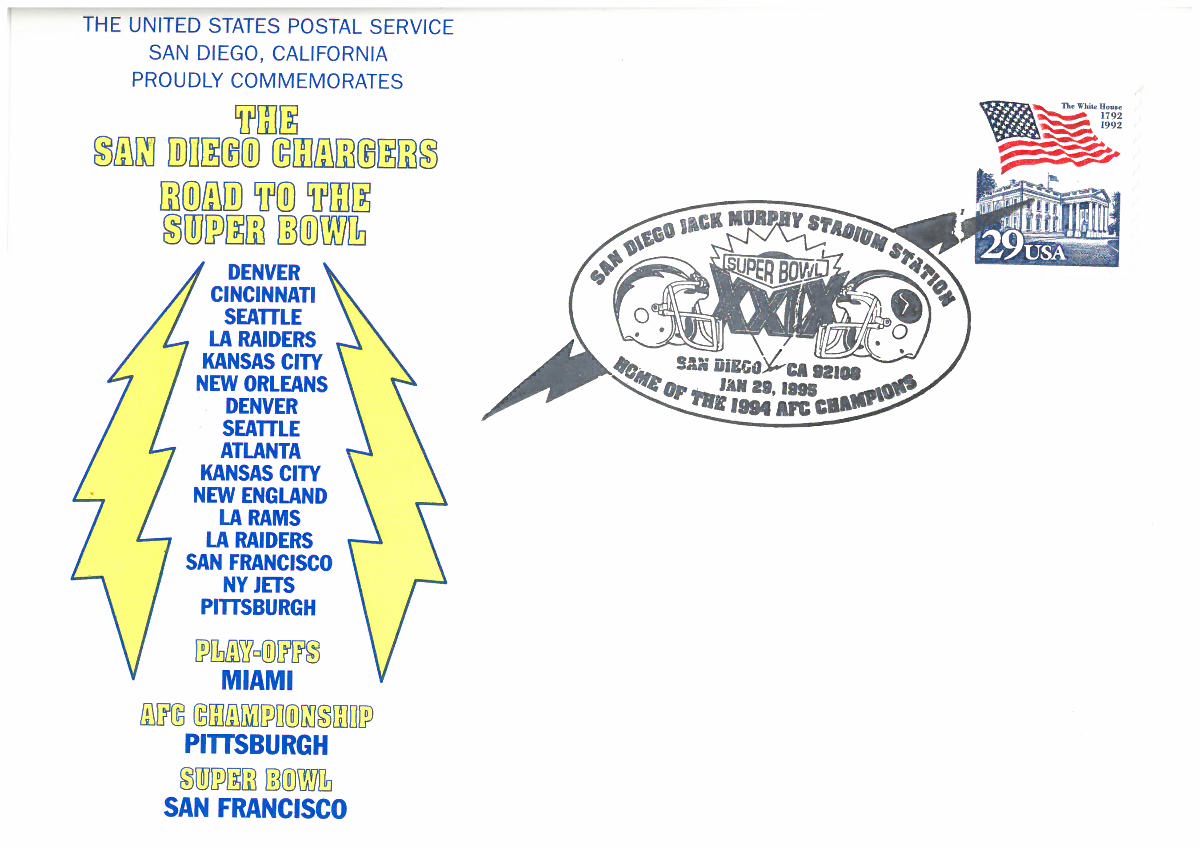
This past week, the San Diego Chargers, the football team I cheered for my entire life, announced that it’s packing its bags and moving to Los Angeles.  To many (including me), this sense of betrayal will mean the severing of all support or connection with that team.  But not everyone will.  Loyalty and identification are powerful things, feeling that you’re part of something bigger.   
What, I wonder then, would it take to sever one’s connection with your political party?  To put your country before your partisanship?  This year, we learned that for many millions of Republicans, electing a racist bully, an unapologetic lecher, an insecure authoritarian, and a profoundly selfish and un-Christian pathological liar and narcissist wasn’t enough to cut that cord.  Power trumped empathy and basic human decency.
I’m lucky.  I have a job I love in one of the most liberal districts in the country in a self-proclaimed sanctuary state.  But I worry for my country—not just for its institutions and the millions of lives who will be hurt and maligned by this new administration, but also for its larger sense of fairness, dignity and purpose.  I love my country, deeply, but the term “American Exceptionalism” is a bitter contradiction-in-terms when I see how susceptible it is to fear and bigotry and self-interest.
There’s absolutely no evidence to suggest that our new president is a good person.  He’s not a man of principle or character, just a cheat and vindictive opportunist.  And as president, he, like all presidents, will get a postage stamp when he dies.  What I’ve always liked about postage stamps is that they are meant to celebrate our culture, traditions, heroes, history.
But I can find no reason to celebrate today.
So now it’s a time for resolve and resistance.  Resist having our values further eroded.  Resist normalizing what was once horrid and unacceptable.  Resist complacency in the shadow of ignorance and spite.  Our country never stopped being great.  But can we as Americans, from the right and the left, make it exceptional again, rooted in compassion, wisdom, and generosity?  Yes we can.  

The kitten stamp from last year's Pets set is Scott #5111 and the spay/neuter stamp is #3670.  The Reagan stamp is #3897 and the US flag for veterans is #3331.  The White House and Capitol stamps are from 1950 (D.C.'s sesquicentennial) and are Scott #990 & 992 respectively.  The Child Labor Law stamp was part of the Celebrate the Century series, #3183o and the Kenilworth Park and Aquatic Gardens stamp is #5080j.  The two stamps from the Building a Nation set are Scott #4801d & e . 

Friday, December 9, 2016

One Kool Kat

-->
Kirk Douglas was never really known for comedy.  Brawler, tough guy, a hero who was often tortured, if not physically (which was often), then psychologically—his films are typically serious stuff.  When he did smile, it was often wolfish, or as if the cat ate the canary.  What humor he showed in his characters would often be wry, acerbic, cynical.  The most playful he ever got—his Ned Land in 20,000 Leagues Under the Sea (1954)—was in a fantasy adventure, but even his films that had a comedic bent (There Was A Crooked Man... (1970), for example) would have a dark undercurrent.  While this changed towards the end of his career (1980 and beyond), it was mostly in the service of forgettable films, the best of which was Tough Guys (1986), his final pairing with long-time screen partner Burt Lancaster—another actor, in fact, who rarely did comedies, though his screen charisma had far greater natural buoyancy.  Even when Kirk wasn’t fighting, he was always like a coiled spring, ready to pounce at any time.  It’s what made him a great villain in his early years and such a suitable anti-hero as his career blossomed, this authentic intensity.

But we know from various interviews he’s done that he is a funny, warm, charming guy in real life—a trait that didn’t fade an iota even after his debilitating stroke in January 1996.  So on the occasion of his 100th birthday, I thought we’d talk about the best, overtly funny thing he was ever in, his guest appearance on The Simpsons which aired just a few months after the stroke: “The Day the Violence Died.”


In it, the famous Itchy & Scratchy cartoon pair are celebrating their 75th anniversary, commemorated by a parade through downtown Springfield.  It’s here that Bart meets the bum Chester J. Lampwick (Douglas), who claims to have created Itchy, only to have it stolen by Roger Meyers Sr. (a Walt Disney proxy in the world of the Simpsons).  The ensuing court case and rags-to-riches storyline for Chester is packed with a ton of fun references to animation tropes from a variety of decades.


Of course, Kirk is no stranger to exposés on the cutthroat character of Tinseltown.  He played a merciless producer in The Bad and the Beautiful (1952) and a washed-up actor in Two Weeks in Another Town (1962), and his real-life political courage in the face of enormous industry pressure during the Blacklist era is the stuff of legend (his Spartacus storyline is the best thing about the otherwise tedious Trumbo).


So it’s fun to see his irascible Chester go up against the craven, money-grubbing system.  But Chester doesn’t care about art.  He only cares about restitution.  So It’s no skin off his nose when the studio goes bankrupt.  In this way, he’s a kindred spirit to Grandpa Simpson (one of the most reliably hilarious characters on the show).  A funny running gag is that various Springfield characters have a history with Chester, contracting him to do odd jobs he never completed for food he insists was terrible.  Invariably, each of these ends in a roll-on-the-floor fist fight.  He’s a crank, and the tough guy hasn’t softened a bit with age, though he also plays a good piano accompaniment to his silent short.  Throughout, Douglas plays it straight, but still sounds like he's having fun.  And in the end, he gets his just reward: his solid gold house and rocket car.  And eventually, the studio finds an unexpected cash flow, so that means for the last 20 seasons, Chester has been getting residuals on all the new Itchy & Scratchy cartoons that are made.  A suitable happy ending.


What is the origin of Itchy & Scratchy?  Certainly the most famous cat vs. mouse dynamic in film history is Tom & Jerry, a pair that has yet to earn a USPS stamp but which earned more Oscars for their shorts than either Mickey Mouse or Bugs Bunny.  But a more obvious progenitor is Krazy Kat by George Herriman, most famously a comic strip for over 30 years but also the subject of some very early animation efforts.  In the strip, Krazy Kat is a soft-hearted character who is constantly trying to woo Ignatz the mouse.  The latter always responded by throwing bricks at Krazy’s head.  Similarly, Scratchy is always depicted as a sweet or sentimental soul, with Itchy the brutal aggressor, blessed with a limitless imagination when it comes to inventive ways to murder his nemesis.  Chester also says, "Before I came along, all cartoon animals did was play the ukelele."  One of Krazy's signature traits was strumming a makeshift guitar or banjo.  So even though Krazy Kat is hardly known at all anymore, it holds striking similarities with the Simpsons’ incarnation.


In the show, we learn that Chester first created Itchy back in 1919, long before his “official” debut in 1928’s Steamboat Itchy.  The first Krazy Kat cartoon was in 1916, and while I’ve never heard any allegations to Disney using Krazy Kat as a model for Mickey, it’s a different story with the design elements of his famous mouse and Felix the Cat (also stampless) who debuted in 1919 in Feline Follies and became incredibly popular thereafter, with more than 150 shorts between 1919 and 1928.  When we see footage of Itchy’s debut Manhattan Madness, it’s a fun lampoon of the visual style of the time, as well as a satire of the unfortunate tendency to use ethnic or racial stereotypes back then.


Other animation references in this episode:

·       Mickey’s Steamboat Willie (also 1928), of course, as well as Roger Meyers Jr. no longer being able to afford the cryogenic chamber where his father was being stored (another allusion to one of the dafter Walt Disney rumors).

·       Chester’s last name Lampwick is also the name of Pinocchio’s juvenile delinquent friend in the 1940 Disney feature.  His terrifying transformation into a donkey (fated for a life of animal servitude) remains one of the most horrific moments in the studio’s history.


·       The unnamed Itchy & Scratchy cartoon featured at the end has the familiar southwest landscapes used in all the Warner Bros. roadrunner cartoons, as well as the rocket skates by Acme (Wile E. Coyote’s favorite brand).


·       Itchy & Scratchy Meet Fritz the Cat, another animated feline, this time created by R. Crumb and featured by Ralph Bakshi in his infamous 1972 feature film.


·       Perhaps the most blistering lampoon is that of Schoolhouse Rock, with the Amendment-To-Be song that acts as a gross perversion of the original Saturday morning civics lessons.  They even got Jack Sheldon (who sang the original “I'm Just a Bill”) to perform this number.  Check it out.


At 100, Kirk has had a wonderful run, and he’s managed to outlive several of the other guest actors from his episode.  Terrible lawyer Lionel Hutz (who actually manages to win his case here) was played by frequent guest, the late Phil Hartman.  And Alex Rocco did recurring bits as Roger Meyers, Jr. on the show before passing away last year.  At least Sheldon and other guest actor Suzanne Somers are still with us.


One other bit that makes this a particular favorite episode for film buffs: When Bart uses the school projector to screen Chester’s copy of Manhattan Madness, the film catches fire and incinerates just like a movie made from the old nitrate film stock would.  The former film archivist in me values this moment a great deal (though the less said about how much I resemble Milhouse at that age, the better).  And the philatelist in me appreciates how the Itchy & Scratchy studio becomes solvent again once it’s revealed the United States Postal Service plagiarized Roger Meyers with its Mr. Zip icon (a real cartoon brand in the 1960s, used to publicize the importance of the newly introduced Zip Codes).


One other bit of Simpsons trivia.  At exactly 100, Kirk still isn’t the longest-living person to appear at one time on the show.  Bob Hope lived to 100 years, 2 months.  So it won’t take long to beat that record.   Another curiosity: Even though the Stanley Kubrick references are prolific throughout the series's lifetime, there has never been a Spartacus spoof, unusual for a film with such iconic possibilities.  Maybe one day.  But Kirk's legacy on the show is secure.  Look at the postcard below and you’ll see Chester in the upper left-hand corner, nestled between Dr. Nick and Nelson Muntz.


Kirk isn’t eligible for a USPS stamp yet (thank goodness) but he has appeared in stamps from other countries, like the Mali one depicted at the top.  The Walt Disney stamp is Scott # 1355.  Other Scott #s for the Disney issues: Mickey w/friends (3865), Pinocchio (3868), Mickey & Pluto (3912), Mickey & Minnie (4025), Dumbo (4194), Fantasia (4192) Steamboat Willie (4343).  Homer, Bart, and Lisa Simpson are Scott #s 4399, 4401, and 4402 respectively.  The cartoon cat stamp on the Fritz the Cat poster is part of the Bright Eyes series, Scott # 3232.  The Stanley Steamer stamp is Scott # 2132, Krazy Kat # 3000e, and Roadrunner # 3391.  And the pet stamps from this year included cat (# 5122) and mouse (# 5117). 
For more entries in the Kirk Douglas Centennial Blogathon, go here

       My Top 10 Kirk Douglas films
  • 1. Paths of Glory (Kubrick, 1957)
  • 2. Out of the Past (Tourneur, 1947)
  • 3. Seven Days in May (Frankenheimer, 1964)
  • 4. Champion (Robson, 1949)
  • 5. Lonely Are the Brave (D.Miller, 1962)
  • 6. Spartacus (Kubrick, 1960)
  • 7. Detective Story (Wyler, 1951)
  • 8. The Man from Snowy River (G.Miller, 1982)
  • 9. Lust for Life (Minnelli, 1956)
  • 10. A Letter to Three Wives (Mankiewicz, 1949)


Sunday, July 17, 2016

Boy Story


It certainly resides outside of popular opinion, but I liked Pixar’s latest, Finding Dory (Stanton/MacLane) much more than I did Finding Nemo.  I think that certainly has to do in part with how much I didn’t like the original, though the sequel brought some new insights into much sharper relief for me.  I remember my first impression about Nemo was how loud a movie it was. Headache-inducing loud. For a medium that conducts sound faster than air, it seems everyone still has to yell underwater.  Because everyone in Nemo yells.  A lot. I don’t remember modern submarine movies like U-571 or The Hunt for Red October being so loud, because while they may have huge explosions like Nemo does, they don’t have fish that shout constantly.
But watching Dory, I realized that the thing I really didn’t like about Nemo was Marlin.  In fact, all the parts of the first movie with “Sharkbait” and his aquarium comrades are a lot of fun.  And this has nothing to do with Albert Brooks, who is a terrific comedian and has been one of the best voiceover contributors to The Simpsons over the years (his Hank Scorpio is legendary).  I just couldn’t stand Marlin, just like I quickly grew to hate Harold Perrineau’s character (whose incessant cries of “Walt!” became a running joke for fans) on TV’s Lost.  Or how, as much as I love the actor Glenn Ford, I grew increasingly irritated with him in Vincente Minnelli’s film The Courtship of Eddie’s Father.
Now, I am not a parent.  And for reasons both social and biological, it’s almost a near certainty that I never will be one.  So I can’t relate to having kids and don’t presume to even come close to understanding the bond and attachment that grows out of raising and loving and nurturing children.  To whatever extent I can project or conjure those kinds of emotions, I also know they are almost certainly a pale shadow of the real thing.
So I don’t know what it’s like to be responsible for another human life like that.  But I do know what it’s like to live with parents who are overly-protective, highly reactive, incredibly judgmental, and obsessive glass-is-always-half-empty worriers.  This is not something I feel I can complain about, because it was always completely motivated by love, for which I’m deeply grateful.  But it is still also why I couldn’t wait to leave home and why I’m rarely nostalgic about anything in my childhood, because it was usually defined by things I couldn’t or shouldn’t do.
So I have a visceral reaction to Marlin which may be disproportionate but is still very real to me.  A lot of other parents I’ve known had one Marlin and one Dory—one person who was the practical, grounded, slightly fussy one while the other was the more fanciful, adventurous, slightly scattered one.  They would balance each other out and that’s why Dory is the best thing about Nemo and the corrective figure that Marlin badly needs.
Furthermore, I could identify with Finding Dory in a way I couldn’t with Nemo because it is a tale of misfits and outsiders: Hank the septopus (a sly shoutout to Loren Bouchard’s Home Movies), Destiny the whale shark and Bailey the beluga are all welcome additions to the maritime version of the Island of Misfit Toys.  They’re characterizations that are funny and touching, as are Dory’s parents, who worry but trust and empower, not smother.  And of course, Dory is at the center, a jewel among Pixar’s stellar assortment of wonderful characters, largely due to Ellen DeGeneres’s phenomenal performances across both films.  I’ve seen Nemo several times since (TV mercifully has a volume button) but I already know that Dory is one I’ll be revisiting even more.  I loved it.
Which is what makes the USPS issues of Pixar stamps a few years back even more frustrating since Dory was one of the few compelling female characters in the first 15 years of Pixar features, but she (and other women ) were slighted in what was already a highly boy-oriented landscape.
Here is the breakdown of boy vs girl characters depicted on the 10 Pixar stamps:
M: Bullseye, Buzz Lightyear, Carl Frederickson, Dash, Dug, Flik, Lightning McQueen, Linguini, Mater, Mike Wazowski, Mr. Incredible, Nemo, Remy, Squirt, Sulley, Wall-E, Woody (17)
F: Boo, Dot, Jessie (3)
Ouch.  No Dory, no Eva, no Elastigirl.  Heck, Bonnie Hunt has provided character voices in 3 different Pixar franchises and none of her incarnations are referenced either.  Up doesn’t have any women at all (who survive the opening montage) and Cars and Ratatouille both have single token females.  And the other features from that era aren't much better (A Bug's Life having the best assortment, via Hunt, Julia Louis-Dreyfus, Madeline Kahn, Phyllis Diller, and others).

The studio has gotten better with Brave and the exceptional Inside Out, both of which were made after the USPS stamp issue.  But the omissions still feel glaring and another release that includes Merida and Hope & Sadness along with those already MIA would be most welcome. 

By contrast, here is the breakdown by gender of the 5 years of Disney stamps (excluding Mickey, who appears once each year)
M: Aladdin, Baloo, Bambi, Beast, Donald Duck, Dopey, Dumbo, Flounder, Genie, Goofy, Jiminy Cricket, Mad Hatter, Lucky, Mowgli, Mustafa, Peter Pan, Pinocchio, Pluto, Pongo, Prince Charming, Simba, Thumper, Timothy the Mouse, Tramp (24)
F: Alice, Ariel, Aurora, Belle, Cinderella, Fauna, Flora, Lady, Merryweather, Minnie Mouse, Snow White, Tinkerbell (12)
So not great, but far better than a 1:6 ratio.  So why not another issue from Disney too, with Anna & Elsa, Lilo, Miss Bianca, Mulan, Pocahontas, Rapunzel, Tiana, and Vanellope von Schweetz to level the playing field a little?  Seems fair to me.
The Scott #s for the pictures Pixar stamps: Buzz (4555), Wall-E (4557), Bug's Life (4677), Nemo (4679), Woody (4680) & Monsters (4681).  The Disney stamps pictured are Little Mermaid (3914), Peter Pan (4193), Aladdin (4194), Sleeping Beauty (4344) & Jungle Book (4345) .  Elektra was part of the Marvel Comics series (4159i), Where the Wild Things Are part of the children's books issue (3992) and Barnum & Bailey part of the circus poster release (4903).  Sweet corn was #5005 and the tropical fish stamps are #3831f (taken from the Pacific Coral Reef sheet) , 2866, & 3320 respectively.
My Top 10 favorite Pixar movies
  1. Toy Story (1995, Lasseter)
  2. WALL-E (2008, Stanton)
  3. Toy Story 3 (2010, Unkrich)
  4. Inside Out (2015, Docter)
  5. The Incredibles (2004, Bird)
  6. Monsters, Inc. (2001, Docter)
  7. Finding Dory (2016, Stanton/MacLane)
  8. Toy Story 2 (1999, Lasseter)
  9. Up (2009, Docter)
  10. A Bug's Life (1998, Lasseter)


Wednesday, May 11, 2016

SFIFF59 Round-Up


With 17 features and 60 shorts screened, this was definitely the most productive SFIFF I’d ever attended.  The POV award to Aardman Animation (with guest Peter Lord) accounted for 1/3 of that short tally, with an impressive survey of the studio’s output since its inception 40 years ago.  While Wallace & Gromit and Shaun the Sheep are the most famous franchises they’ve created, this fantastic collection they screened covered not only their familiar stop-motion style but some really wonderful cel and CG creative efforts, too.

The short collections have always been my favorite part of SFIFF and this year had some very strong programs, including two shorts in particular that really blew me away.  Brouillard #14 is an experimental film that used in-camera double exposures of the same nature path traveled over and over again to yield a phenomenal explosion of color, creating a throbbing pointillism effect that evoked both the density and illusory quality of memory in a way I’d never seen before.  And Night without Distance used simple film negative imagery to create an extraordinary other-worldly effect as men with guns posted as silent sentries in a remote landscape.  It was a short that was beautiful, tense, immersive, subtle, sometimes disorienting, and endlessly fascinating.  I can’t imagine either of these remotely having the same effect as a Vimeo link so keep your eye out on the festival circuit in case they screen anywhere near you.

As for the features, it’s always interesting to see what kinds of trends and motifs recur across various titles quite inadvertently (since what I see is often based as much on geography and scheduling as it is on my specific interests).  So here are some thematic trios that emerged:

Deconstructing masculine tropes in slyly humorous fashion was the main order of business in the Greek Chevalier and South Korean Right Now, Wrong Then.  In the former, from Athina Rachel Tsangari (who was also part of a fun Q&A), a small pleasure cruise turns into the S.S. Oneupsman ship as a group of men try to determine who’s the Best among them by contriving more absurd and arbitrary contests to compete in.  In Hong Sang-soo’s latest, two parallel stories follow a hapless film director as he courts the same woman to very different effect as we’re reminded that love and chemistry often rely on the most unlikely variables and not on us putting our best feet forward.  By contrast, the man-child of the Spanish The Apostate has his own problems he hasn’t sorted out, but while the lead (Alvaro Ogalla, another SFIFF attendee) is fun, his religious change-of-heart is so low-stakes and frustratingly flimsy that it was hard for me to care if any of his issues are resolved.

In opposition to this were some exceptional and unnerving films with women forced to confront some internal and external demons.  To call Under the Shadow an Iranian Babadook is no slight, since it’s still very scary and nerve-wrecking as a mother and child during the Iran-Iraq war confront a phantom that’s born not from an emotional trauma but a political one.  The Swedish Granny’s Dancing on the Table is a dark tale of a young girl using her family history (rendered to wonderful effect by rough-hewn stop-motion animation) and her own resourcefulness to survive her single father’s brutal oppressiveness in the wilderness.  As for the German Wild, my favorite feature of the festival, a young office worker’s obsession with a wolf devolves into a full feral transformation (or actualization).  Call it a lupine Repulsion or 50 Shades of White Fang, but it’s riveting, uncompromising storytelling.

In addition to Granny, animation is also used to clever effect in Penny Lane’s bizarre biopic NUTS!, the story of an early 20th-century media pioneer and medical quack who builds a very unlikely empire.  A simple animation style is used to do most of the dramatic heavy-lifting (in historical reenactments) and while the film mines the absurdity of this man’s life well, a third-act inversion is as inevitable as it is tonally unsatisfying.  Better is Lewis Klahr’s dizzying evocation of the 60s in Sixty Six, where he uses collage animation, including cut-outs from period comic books (like those pictured below) to convey his own strange mythologies, melancholy memories, and affectionate paeans to the period and pop culture.  Very personal, sometimes even impenetrably so, but unquestionably vivid and unique.


Sixty Six was not the only feature to take liberties with traditional narrative structure.  Otar Iosseliani’s Winter Song is a loose and limber free association piece about an assortment of Parisians whose paths cross in countless variations, all with playful anarchic panache.  Famed cinematographer Chris Doyle’s Hong Kong Trilogy: Preschooled Preoccupied Preposterous doesn’t work as well.  Despite being resolutely affectionate to the different generations of the city, it often feels too eager to please and the sober political shadow of the protests that serve as a hub of the action jars with the whimsy that often feels forced.

In addition to NUTS!, there were a couple other films I saw that had medical concerns as their focus.  The deeply compassionate Czech Home Care chronicles a nurse who is diagnosed with cancer and must confront her own mortality as she explores alternative solutions to her condition.  This was also the most lively Q&A I attended, with director Slavek Horak, equipped with plum brandy, giving a shot to each audience member who asked him a question.  But even more thoughtful was the documentary Haveababy, which approaches a fertility clinic’s lottery with objective ambivalence as assorted “contestants” vie for the opportunity to create a family, with results both happy and heart-breaking.

And no SFIFF would be complete without the archival screenings.  New to me was Cast  a Dark Shadow (Gilbert, 1955), with the irrepressibly sleazy gold-digger Dirk Bogarde biting off more than he can chew when his wife-killing M.O. locks horns with some very uncooperative women in his orbit.  The 20th Anniversary of The Watermelon Woman (a film I hadn’t seen since its original release) was an occasion to revisit this landmark indie film about identity politics and see how much in the film industry hasn’t changed when it comes to inclusion and ready acceptance.  The deft meta-language of its reframing of film history is now fairly commonplace while black lesbian representation is still sadly outside the mainstream’s comfort level.  Kudos to director Cheryl Dunye for an enlightening Q&A.  And to round things out was the dense discord of Mercury Rev & Simon Raymonde who treated Dreyer’s classic Vampyr (1932) like a silent film in their musical accompaniment, giving it a whole new dimension of creepy.

But the archival highlight was Nick Park’s (1993), still one of the greatest animated films ever made and a film I dearly love but hadn’t seen on the big screen since it first came out.  It’s a wonderful heist film with one of the greatest silent nemesis ever portrayed, the stoic, sinister penguin, which is why I added the penguin stamp to the Wallace & Gromit card above (even though he doesn’t appear in their Oscar-winning feature film).  The short also features a few stamps itself, when Gromit sifts through the mail and opens his birthday card.  


The train, of course, foreshadows one of the great film chases in the climax and sharp-eyed Aardman fans will recognize the puma from Creature Comforts on display in the museum (a set that I once saw on display in the National Media Museum in Branford, UK).


Top 10 SFIFF features (non-archival)

1. Wild (Krebitz, 2016)
2. Granny's Dancing on the Table (Skold, 2015)
3. Chevalier (Tsangari, 2015)
4. Haveababy (Micheli, 2016)
5. Winter Song (Iosseliani, 2015)
6. Under the Shadow (Anvari, 2015)
7. Right Now, Wrong Then (Hong, 2015)
8. Neon Bull (Mascaro, 2015)
9. Sixty Six (Klahr, 2015)
10. Home Care (Horak, 2015)

Top 10 SFIFF shorts (non-Aardman)

1. Night without Distance (Patino, 2015)
2. Brouillard #14 (Larose, 2013)
3. Edmond (Gantz, 2015)
4. Jaaji Approx (Hopinka, 2015)
5. Extremis (Krauss, 2016)
6. Partners (Imbach, 2015)
7. When You Awake (Rosenblatt, 2016)
8. False Start (Barrada, 2015)
9. Manoman (Cartwright, 2015)
10. Bob Dylan Hates Me (Zahedi, 2016)

Top 10 Aardman shorts

1. The Wrong Trousers (Park, 1993)
2. The Pearce Sisters (Cook, 2007)
3. Winter Trees (Freed/Freed, 2012)
4. Sledgehammer (Johnson, 1986)
5. Dot (Sumo Science, 2010)
6. Creature Comforts (Park, 1989)
7. The Flight of the Stories (Dubicki, 2014)
8. Going Equipped (Lord, 1990)
9. Full ANL (Burrascano, 2015)
10. Shaun the Sheep: 3DTV (Grace/Wilton, 2014)


The Scott #s for the stamps pictured:

Year of the Dog - 3895j
Sealed with Love - 4741
Where Dreams Blossom - 4764
Penguins - 4989
Quilled Paper Heart - 5036