Showing posts with label Film Stars. Show all posts

Friday, June 9, 2017

All the World Is Waiting for You


Despite the remarkable ascendancy, critically and commercially, of the Marvel Comics cinematic Universe in the last decade, there is no denying that it has largely been one big sausage party.  Growing up as a Marvel comics fan, this was also true of the publisher itself.  Women heroes, when represented, were usually part of a team (Sue Richards, Scarlet Witch, Jean Grey) and there weren’t any female icons with the heft to carry their own title in any significant way.  When the USPS released a set of Marvel stamps ten years ago, the interests of gender parity meant including marginal characters like Elektra and Spider-Woman over far more famous heroes like Thor and Daredevil.  This was because Marvel simply didn’t have any females as big as their counterparts at DC, Wonder Woman or Supergirl.
And so the films have followed-suit, with Scarlett Johansson’s Black Widow (incredible ass-kicker but essentially power-free) doing most of the heavy lifting across five appearances to date.  Even when staffed with Oscar-winners like Halle Berry, Jennifer Lawrence and Anna Paquin, the Marvel films have rarely known what to do with them.  In fact, the only female-driven Marvel film so far has been Elektra, Jennifer Garner’s incarnation who got her own movie after first being introduced as a secondary character in a film where Ben Affleck played an urban vigilante.  Sound familiar?
So Patty Jenkins’s Wonder Woman is far overdue, especially when you consider that her DC colleagues Superman and Batman have had a combined total of 16 appearances in films since Christopher Reeve first began the modern era of superhero movies almost 40 years ago.  That’s one every 2.5 years.  And that’s not even counting The LEGO Batman Movie (2017’s fifth highest money-maker currently).
They say to never let the perfect be the enemy of the good, and Wonder Woman is good.  The business on Exposition Island is clunky (most origin stories are) but rich with Amazon badassery.  There’s not enough of Etta Candy (Lucy Davis) or Antiope (Robin Wright), though there is something delicious about having Princess Buttercup unleash her inner warrior.  The third act reveal of Ares is smart and well-thought out, but what it means is that through most of the film, there really isn’t a truly menacing villain as counterpoint to Gal Gadot’s imposing presence.  Danny Huston was a bigger threat in the Wolverine offshoot movie as a mere mortal, and is definitely no Red Skull.
For of course, Captain America: The First Avenger (2011) is the obvious analogue to Wonder Woman, a pair of noble neophytes waging war in the German (or Belgian) woods via historical flashback.  But the film that Wonder Woman more closely resembles, and a comparison I haven’t seen anywhere yet, is Luc Besson’s The Fifth Element, celebrating its 20th anniversary this year.  For like Diana, Milla Jovovich’s Leeloo is fierce but gentle, naïve but strong-willed, and doesn’t need anyone’s help to take out a room full of assailants.
But more importantly, their arcs are similar because they are their own McGuffin.  Diana thinks she’s carrying the God-Killer (her sword), but she actually *is* the God Killer, just like Leeloo is herself the Fifth Element.  Both have, late in the game, serious bouts of disillusionment with mankind and its propensity for war and violence.  But both overcome this despondency and very explicitly choose to manifest Love—not merely Eros (the stock & trade of comic book fantasy), but Agape, a higher spiritual extension of compassion, generosity and self-sacrifice.
In this sense, I think it resembles Man of Steel (Snyder, 2013), a film I’ll still argue is--while also flawed--underrated and misunderstood.  Both heroes are not mere saviors, but also a means to inspire those around them.  But while that film is cloaked in a brooding melancholy, Wonder Woman has clear-eyed optimism, even in the face of man-made horrors.  After Chris Nolan’s excellent but dark Batman trilogy set the tone for DC’s moody temperament, WW is exactly the shot-in-the-arm this comic series needs.  Which is why I worry about the upcoming Justice League movie, which will depict Diana a hundred years later.  Will she be more jaded and cynical?  She was the best thing about the bad Batman v Superman because she brought warmth and sass and energy.  But as the new movie demonstrates, her real heroic power is Love.  How much of that will survive when she joins this Super Boys Club with a different director at the helm?
The same weekend I saw Wonder Woman, I attended the SF Silent Film Festival.  And it was a welcome reminder of how the movies weren’t afraid of strong women back then, even if the times were far more conservative.  In Filibus (Roncoroni, 1915), the title role is a female mastermind—exceptional thief, daring impostor, and the head of a motley crew of outlaws with gadgets that would make James Bond green with envy.  In Outside the Law (Browning, 1920), Lon Chaney may have two roles (one heroic, one villainous) but it’s Priscilla Dean who calls the shots when she inherits a criminal empire from her father.  She balances being a reformist and a resourceful crook with equal aplomb.
But the real eye-opener for me was The Dumb Girl of Portici (1916), a remarkable collaboration between famous Russian dancer Anna Pavlova and pioneering director Lois Weber.  The first American woman to direct a feature-length film, Weber had dozen of titles under her belt by this time, but she was still known for contemporary dramas and social issue pictures.  This was a film on a completely different level—an epic period piece with a higher budget and bigger scale than she’d ever worked with before.  It reminded me of the talk of giving Patty Jenkins such an expensive tentpole picture after just one feature (the Oscar-winning Monster) and some TV work.
The final result?  Portici is a glorious achievement, with incredible tableaus, jaw-dropping camera movement, and a wonderful sense of drama amidst the herculean (or perhaps, Amazonian?) task of managing so many moving parts within a single frame.  The film isn’t perfect (it still suffers from some stiff dramaturgy typical of the time), but the achievement is impressive: a gorgeous restoration of a film that deserves to be better-known.
Which got me thinking: Why isn’t there a US postage stamp of Weber?  Or of any woman filmmaker for that matter?  Body and Soul (1925) was also featured at the festival, and both Oscar Micheaux and Paul Robeson, the film’s director and star respectively, have well-deserved US postage stamps.  In fact, there’s a wonderful series of stamps commemorating Black Cinema and a handful of film directors have been honored on stamps starting with D.W. Griffith.
 
But the only women who have been honored from the American film industry have been actresses—amazing, powerful, influential actresses, but still ones who never really worked outside the confines of that craft.  No directors or producers, no screenwriters or below-the-line artists.  Douglas Fairbanks has a US stamp, but not his wife Mary Pickford, one of the biggest stars of the silent era and a co-founder of United Artists.
No Lois Weber or Mabel Normand or June Mathis.  No Maya Deren or Dorothy Arzner or Ida Lupino (as important a director as an actress).  Not yet, at least. 

But I’ll keep hoping that one day, I can add a Frances Marion stamp to my Anna Christie card (part of her prolific writing career) or an Edith Head stamp to my Roman Holiday card (one of over 400 films to her credit as costume designer).  Or any number of women who were essential in making the movies magic.  History was often not kind to their placement in the industry or the opportunities afforded them.  Which makes their achievements that much more worth celebrating.  Wonder Women all.
These are the Scott #s for the stamps pictured:  
The Wonder Woman stamp from the DC Comics issue (lower right on Lynda Carter card) is #4084c.  The three stamps from the Wonder Woman issue a decade later are #5149, 5150, & 5151.  The other stamps pictured from the DC Comics issue are Superman (#4084k), Green Lantern (#4084b), the Flash (#4084p), Green Arrow (#4084d) and Hawkman (#4084j).  The Batman stamp was from the issue for that character (#4934).  On the Justice League card, you can see all 3 different types of postmarks.
The two stamps pictured from the Marvel Comics issue are Captain America (#4159o) and Elektra (#4159i).  The movie stars pictured are Paul Robeson (#3834), Greta Garbo (#3943), Audrey Hepburn (#3786) and Gregory Peck (#4526).  Oscar Micheaux is #4464.  Mary Pickford's Canadian stamp was issued in 2006.
The stamp for Charles Demuth's painting "I Saw the Figure 5 in Gold" is #4748a.  The textile worker (#4801k) is from the Building America series.  The Field Day stamp (#5182) is part of the brand new WPA posters series.


Friday, January 20, 2017

D-Day


D is for Demagogue.  Despot.  Deceptive.  Delusional.  Diddler.  Dumbass.  And, of course, Donald. 
My Dad was a hardcore Republican (a picture of Barry Goldwater hung in his den in our home), and Ronald Reagan—our other celebrity-turned-president—was in office during my middle and high school years.  So I’m very familiar with the mindset and priorities of the voices across the aisle.  But this year’s election narrative couldn’t have been more surreal or sadly absurd if the Onion had been writing it.  I wonder what The Gipper would have thought about our new President being a Russian patsy, or if he, or my dad, would even recognize their GOP anymore.  Would they have seen through this charlatan, or ultimately toe the party line?
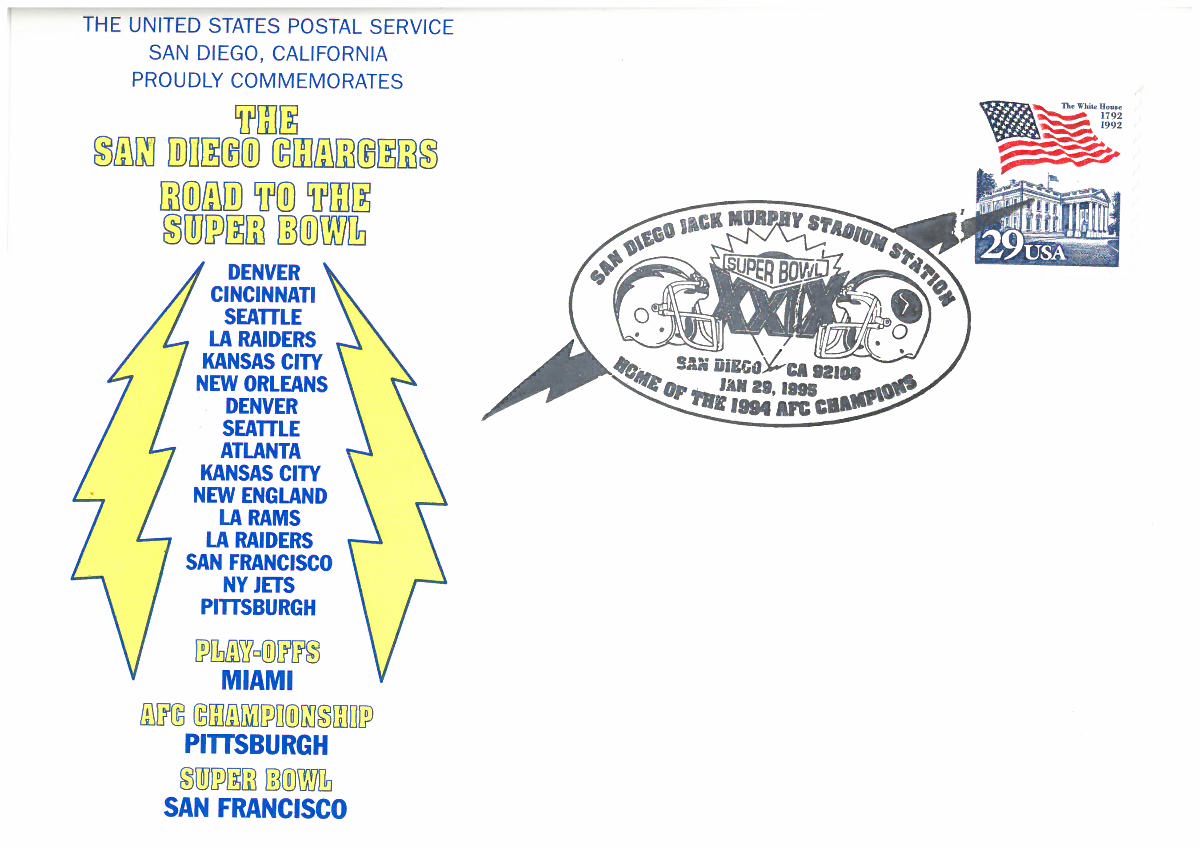
This past week, the San Diego Chargers, the football team I cheered for my entire life, announced that it’s packing its bags and moving to Los Angeles.  To many (including me), this sense of betrayal will mean the severing of all support or connection with that team.  But not everyone will.  Loyalty and identification are powerful things, feeling that you’re part of something bigger.   
What, I wonder then, would it take to sever one’s connection with your political party?  To put your country before your partisanship?  This year, we learned that for many millions of Republicans, electing a racist bully, an unapologetic lecher, an insecure authoritarian, and a profoundly selfish and un-Christian pathological liar and narcissist wasn’t enough to cut that cord.  Power trumped empathy and basic human decency.
I’m lucky.  I have a job I love in one of the most liberal districts in the country in a self-proclaimed sanctuary state.  But I worry for my country—not just for its institutions and the millions of lives who will be hurt and maligned by this new administration, but also for its larger sense of fairness, dignity and purpose.  I love my country, deeply, but the term “American Exceptionalism” is a bitter contradiction-in-terms when I see how susceptible it is to fear and bigotry and self-interest.
There’s absolutely no evidence to suggest that our new president is a good person.  He’s not a man of principle or character, just a cheat and vindictive opportunist.  And as president, he, like all presidents, will get a postage stamp when he dies.  What I’ve always liked about postage stamps is that they are meant to celebrate our culture, traditions, heroes, history.
But I can find no reason to celebrate today.
So now it’s a time for resolve and resistance.  Resist having our values further eroded.  Resist normalizing what was once horrid and unacceptable.  Resist complacency in the shadow of ignorance and spite.  Our country never stopped being great.  But can we as Americans, from the right and the left, make it exceptional again, rooted in compassion, wisdom, and generosity?  Yes we can.  

The kitten stamp from last year's Pets set is Scott #5111 and the spay/neuter stamp is #3670.  The Reagan stamp is #3897 and the US flag for veterans is #3331.  The White House and Capitol stamps are from 1950 (D.C.'s sesquicentennial) and are Scott #990 & 992 respectively.  The Child Labor Law stamp was part of the Celebrate the Century series, #3183o and the Kenilworth Park and Aquatic Gardens stamp is #5080j.  The two stamps from the Building a Nation set are Scott #4801d & e . 

Thursday, March 10, 2016

Desert Island 100

The challenge: Pick my favorite feature film each year from 1924-2015.  Add 8 more shorts spread out over that period to make an even 100.  Here's what I picked.  Links are to other blog entries on those films.  What would your list look like?

1924 Greed (von Stroheim)
1925 The Gold Rush (Chaplin)
1926 The General (Keaton/Bruckman)


1927 The Italian Straw Hat (Clair)
1928 The Wind (Sjostrom)
1929 Man with a Movie Camera (Vertov)
1930 The Blue Angel (Sternberg)
1931 M (Lang)
1932 I Was Born, But... (Ozu)
1933 Footlight Parade (Bacon)
1934 The Thin Man (Van Dyke)
1935 Bride of Frankenstein (Whale)

1936 The Crime of M. Lange (Renoir)
1937 Shall We Dance (Sandrich)
1938 Bringing Up Baby (Hawks)
1939 Only Angels Have Wings (Hawks)
1940 Pinocchio (Sharpsteen)
1941 The Lady Eve (Sturges)
1942 Casablanca (Curtiz)
1943 The Life and Death of Colonel Blimp (Powell/Pressburger)
1944 Meet Me in St. Louis (Minnelli)
1945 Children of Paradise (Carne)

1946 Belle et la Bete (Cocteau)
1947 Black Narcissus (Powell/Pressburger)
1948 Germany, Year Zero (Rossellini)
1949 Kind Hearts and Coronets (Hamer)
1950 Winchester '73 (A. Mann)

1951 On Dangerous Ground (N. Ray)
1952 Singin' in the Rain (Donen/Kelly)
1953 The Earrings of Madame de... (Ophuls)
1954 The Seven Samurai (Kurosawa)
1955 Night of the Hunter (Laughton)
1956 Forbidden Planet (Wilcox)
1957 Sweet Smell of Success (Mackendrick)
1958 Vertigo (Hitchcock)
1959 Some Like It Hot (Wilder)
1960 La Dolce Vita (Fellini)
1961 Last Year at Marienbad (Resnais)
1962 Cleo from 5 to 7 (Varda)
1963 The Leopard (Visconti)
1964 Dr. Strangelove, or How I Learned to Stop Worrying and Love the Bomb (Kubrick)
1965 Chimes at Midnight (Welles)
1966 The Battle of Algiers (Pontecorvo)
1967 Point Blank (Boorman)
1968 2001: A Space Odyssey (Kubrick)
1969 The Wild Bunch (Peckinpah)

1970 Days and Nights in the Forest (S. Ray)
1971 Walkabout (Roeg)
1972 The Bitter Tears of Petra van Kant (Fassbinder)
1973 The Spirit of the Beehive (Erice)
1974 Chinatown (Polanski)

1975 Monty Python and the Holy Grail (Gilliam/Jones)
1976 The Marquise of O (Rohmer)
1977 Close Encounters of the Third Kind (Spielberg)

1978 The Last Waltz (Scorsese)
1979 The Black Stallion (Ballard)
1980 The Empire Strikes Back (Kershner)
1981 Pennies from Heaven (Ross)
1982 Burden of Dreams (Blank)
1983 Zelig (Allen)
1984 The Terminator (Cameron)
1985 Come and See (Klimov)
1986 The Sacrifice (Tarkovsky)
1987 Wings of Desire (Wenders)

1988 Bull Durham (Shelton)
1989 Do the Right Thing (Lee)
1990 Miller's Crossing (Coen)
1991 The Double Life of Veronique (Kieslowski)
1992 The Last of the Mohicans (M. Mann)
1993 Groundhog Day (Ramis)
1994 Ed Wood (Burton)
1995 Underground (Kusturica)
1996 Lone Star (Sayles)
1997 A Taste of Cherry (Kiarostami)
1998 Out of Sight (Soderbergh)
1999 Topsy-Turvy (Leigh)
2000 In the Mood for Love (Wong)
2001 Mulholland Dr. (Lynch)
2002 Gerry (Van Sant)
2003 Master and Commander: The Far Side of the World (Weir)
2004 Eternal Sunshine of the Spotless Mind (Gondry)
2005 L'Enfant (Dardenne/Dardenne)
2006 Children of Men (Cuaron)
2007 Once (Carney)
2008 Man on Wire (Marsh)

2009 The White Ribbon (Haneke)
2010 Winter's Bone (Granick)
2011 The Tree of Life (Malick)
2012 Moonrise Kingdom (Anderson)
2013 Upstream Color (Carruth)
2014 Timbuktu (Sissako)
2015 Mustang (Erguven)

Shorts
1929 Un Chien Andalou (Bunuel)
1933 Snow White (Fleischer)
1949 Begone Dull Care (McLaren/Lambert)
1962 Cosmic Ray (Conner)
1968 Windy Day (Hubley/Hubley)
1993 The Wrong Trousers (Park)
2000 The Heart of the World (Maddin)
2013 Just Before Losing Everything (Legrand)

Here are the Scott #s for the stamps pictured:

Devil's Tower - 1084
Water conservation - 1150
Talking Pictures - 1727
Hudson's General - 2843
Frankenstein - 3170
Cinematography - 3772g
Luke Skywalker - 4143e
James Stewart - 4197
Wedding cake - 4398
William S. Hart - 4448
John Huston - 4671
Iron worker - 4801h
Circus clown - 4905
Martin Ramirez train - 4970


Wednesday, January 30, 2013

2012 Yearly Wrap


 The Film Directors issue, including John Huston, Scott # 4671


The Pixar issue, including Finding Nemo, Scott # 4679.  Aquarium stamp is # 2866.


Jose Ferrer, Scott # 4666, here with Humphrey Bogart, Scott # 3152


 Choreographers issue, including Bob Fosse, Scott # 4701


Edgar Rice Burroughs, Scott # 4702


Earthscapes issue, including Highway Interchange, Scott # 4710o


Baseball All-Stars issue, including Joe Dimaggio, Scott # 4697, here with Marilyn Monroe, # 2967

Wednesday, December 5, 2012

Overkill


Now here’s an example of the bad postmark being 100% my fault.  You may remember the Toy Story card I had discussed earlier.  I really loved this assembly, since the Gene Autry stamp and the earlier science fiction stamp matched Woody and Buzz Lightyear perfectly.


I was incredibly surprised when the USPS issued two sets of Pixar stamps, though.  And when the first set came out with a set of 5 that included Buzz but not Woody, I knew Woody would be in the subsequent year’s issue.  So, now was an opportunity to get both on the face of the postcard, too!
Big Mistake.  As you can see, what was previously a wonderful looking postcard now is now an ugly, cluttered mess.  Part of the reason is the trend of the USPS of having their illustrated postmarks be much wider and denser with the ink.  

But the larger failing was mine.  The card would’ve been much better with the two separate Pixar cancellations on the back of the card, but the thought of having them both on the front was too irresistible, and what resulted in the long run is a big old garbled mess.  You can still make the images out, but the impact of the first combo of stamps is now mostly lost.

Here’s an example of one issue that I did right.


When the Quilts of Gee’s Bend issue came out, this stamp worked uncannily well.  Using it was a no-brainer.  So when Sinatra came out two years later, where should I put it?  Logic dictated the front but I couldn’t think of anywhere it could go without losing the effect from the previous stamp.  So I did this instead:


Putting the Sinatra stamp on the back meant I could add the drug abuse stamp without it cluttering things up further (Otto Preminger’s 1955 film was one of the first major Hollywood productions to deal with the subject).  Later, when the Jazz stamp came out, I added it to the reverse, too.  
 
I’ve made other similar judgment calls on both sides, but while I’m glad I have a scan of what it looked like before, the Toy Story example is the one I still regret the most.  

Buzz and Woody are Scott #s  4555 and 4680 respectively.  Sinatra is Scott # 4265, the Prevent Drug Abuse stamp is # 1428, and the Jazz stamp # 4503.

Friday, March 2, 2012

2011 Yearly Wrap


Gregory Peck, Scott # 4526


Pixar issue, including WALL-E, Scott # 4557


Jazz, Scott # 4503, here with Bing Crosby, #2850

Saturday, December 24, 2011

A View from the Bridge

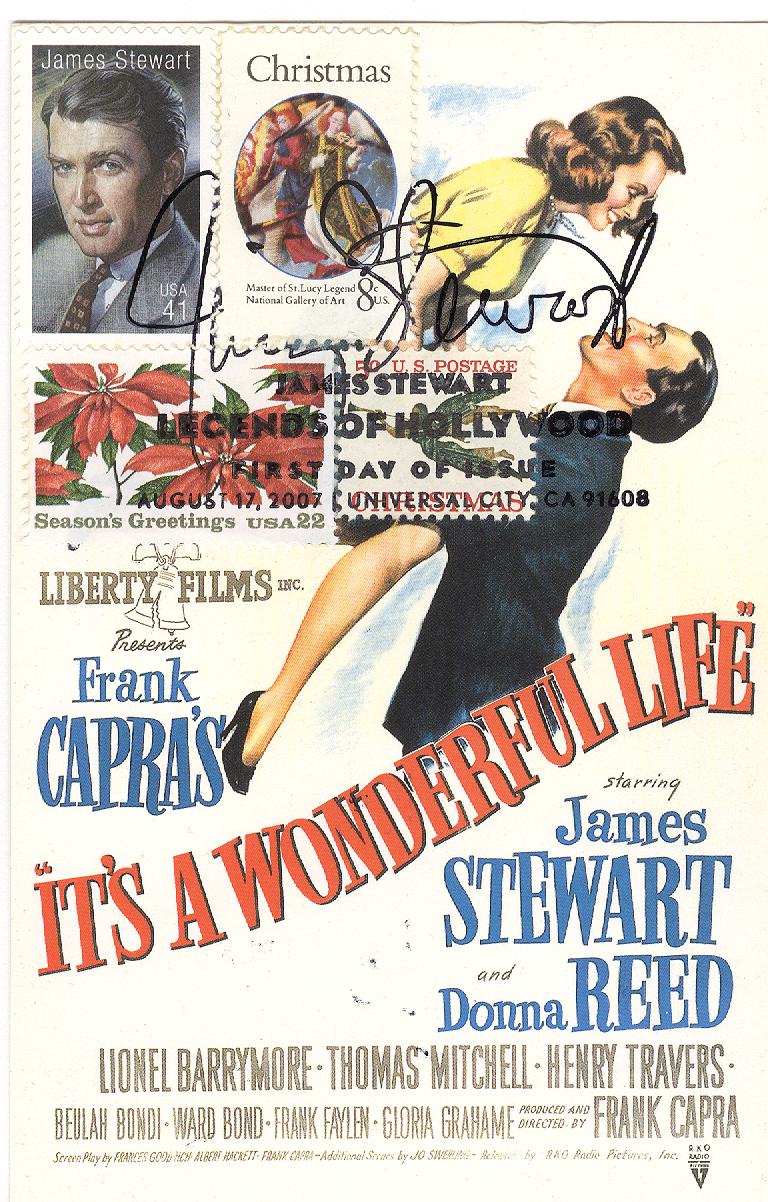
A holiday standard now, Frank Capra’s It’s a Wonderful Life (1946) is a film that’s easy to take for granted and even easier to underestimate. The idyllic small town life of Bedford Falls, the overly-cutesy courtship of George and Mary, the knee-jerk sentimentalism about human nature are what we’d come to expect from Capra. And while there are charming moments or marvelous little grace notes, it’s undeniable that he lays it on a bit thick, especially with Clarence’s running commentary.

But Jimmy Stewart may be America’s greatest actor, and Life is a film on the cusp of his career, since it revels in his effortless folksy charm, often parodied but never less-than-believable, but it also anticipates the darker Stewart who’d flourish in the 1950’s—the Stewart with disturbing pathologies (the Hitchcock films) or with the raw nerves of obsessive behavior (the brilliant Anthony Mann westerns). For it’s in the last half hour that Life really takes wing, with a fantasy element that submerges itself into unadulterated nightmare.


Much of Pottersville might seem pretty tame to us now. And I’ve known more than my fair share of librarians who laugh at Mary’s horrible fate without George (though it’s hard to imagine Donna Reed not ever landing another beau). But to have your world turned upside down in an instant, to have every memory and place and association called into question, to have your entire reality thoroughly upended (especially those things that you'd grown to love and cherish)—I can only imagine how horrible it must be. And Stewart sells it thoroughly. It's not a film I revisit often, but when I do, I am still surprised by the darkness at its center.

There are no shortage of Christmas stamps available, so when the Stewart release came out (Scott #4197), I tried to select some that had a very traditional feel to them and which matched the color scheme of the one-sheet pictured.

Angel (1965 – Scott #1276)
Virgin Mother (1972 – Scott #1471)
Poinsettia (1985 – Scott #2166)


As for the reverse side, I figured throwing some more Christmas stamps in would be fun, since I needed to add the Barrymores (Scott #2012; Lionel plays Mr. Potter) anyway.

Sleigh (1983 - Scott #1900)
Ornament (1987 – Scott #2368)
American Holly (1997 – Scott #3177)

This is in addition to the Tiomkin stamp (Scott #3340) that I piggybacked onto the First Day Cover of the American Filmmaking series (Screenwriting – Scott #3772a) back in 2003. Total face value of all the stamps pictured: $2.66 (and 2/10).

A film like Life invites one to examine the impact you’ve had on others’ lives—inadvertent or otherwise. How your actions cause ripples in the pond, ones that reverberate beyond your own awareness. George never made a name for himself outside of his town, never conquered the world. But his decency was profound, and so was his impact. He sometimes may feel trapped in his life, but he still has choices. He never embezzles money from the Building and Loan. He never cheats on Mary. He lives on his word, his integrity, and the community responds in kind when he needs them.

George could easily appear a plaster saint, a glib archetype of the Everyman Stewart is often best remembered for. But there are far worse things in this world than to be staid and boring and decent. Sometimes, the ripples you set off aren’t ripples, but waves that capsize the boats of others—not just in an alternate life, but in a real world nightmare of your own creation. To have a legacy where you know you’ve made someone’s life worse, not better—it’s a heavy, heavy thing.

Clarence tells George “No man is a failure who has friends.” I wish that were true. But like Zuzu’s petals, I have a buckeye in my pocket—one I’ve kept there for 15 years, reminding me often of those who mattered, but more recently of those I’ve damaged. Perhaps irreparably. For it was a wonderful life. But I’m no George Bailey. And while the future remains uncertain, it will be quite a while before those waves stop crashing.

Sunday, June 19, 2011

Polite Society


Although we're constantly overrun with inferior remakes these days, it's not a new phenomenon. This still has Frank Sinatra (Scott #4265) and Bing Crosby (Scott #2850) serenade each other in High Society (Walters, 1956), a musical revisitation of the superior The Philadelphia Story. While the original Cukor film is spritzy, it still has emotional weight. But High is just that: light as a feather, cute and charming but of no real consequence, with zero sexual chemistry and musical numbers, despite the involvement of such heavy-hitters, that evaporate as soon as you've heard them.

I’ve included the one sheet, which also has the stamps for Grace Kelly (Scott #2749); Cole Porter (Scott #2550),who wrote the entire score; and the Rhode Island stamp (Scott #3599) from the Greetings from America series, complete with sailboat, one of which is prominently featured in the film. Paired up with the Porter stamp is the Music stamp (Scott #3772d) from the American Filmmaking series, complete with Oscar silhouette on the postmark (Porter was nominated for his song “True Love”, which was also the name of the sailboat in the film).

You’ll also notice that the two Louis Armstrong stamps are slightly different from each other, with the lettering alternating between white and black (the difference being that one was sold individually, while the other was sold as part of a strip with other jazz legends). The Scott #’s are 2982 and 2984 respectively.

Thursday, January 20, 2011

2010 Yearly Wrap

 Katharine Hepburn, Scott #  4461


Cowboys of the Silver Screen issue, including Roy Rogers, Scott # 4446


Abstract Expressionsists issue, including Mark Rothko, Scott # 4444c

Sunday Funnies issue, including Archie, Scott # 4469


Wednesday, July 28, 2010

Plastics

Toy Story 3 is a triumph.

I, for one, had my reservations.  While I feel the original is about as good as animated films get, I’m one of those people out there who didn’t actually care for the second film very much.  Pixar has prided itself as a brand known for original thinking, but Toy Story 2 seemed larded with the easy type of meta-humor (Star Wars reference? Check; Star Trek reference? Check; etc.) which dates quickly and pulls me out of the film.  The movie has one show-stopper—the heartbreaking “When She Loved Me” flashback song—and plenty of funny energy, but the pervasive resorting to topical gags seemed more in the spirit of Family Guy (and that is not a compliment).

But Toy Story 3 plumbs emotional depths I wasn’t expecting, especially exploring the darker recesses of rejection, resentment, and petty tyrannies that resonate far beyond the playground politics of childhood.  Plus, the film has the courage of its convictions, taking us to the brink of a truly apocalyptic ending that is both terrifying and profoundly moving, while also providing us with one of the best deus ex machinas in recent memory, earning its stripes and never, ever feeling like a cheat.

But the one thing to which I’ve never been able to relate in these films is the emotional attachment Andy has to his toys.  They are not only springboards for his imagination; they are also his Friends, virtual proxies for a social life.  We see through the series the extent to which he personalizes that connection, having his toys as constant companions in his childhood, and caring about their fate practically into adulthood.

I guess that’s what I don’t get.  My toys were just my toys.  They weren’t confidantes, or buddies, or security blankets.  I didn’t invest them with larger personalities, didn’t attach emotional significance to them.  Did anyone?  I honestly don’t know.  I didn’t have a bad childhood by a long shot, but I did have a fairly isolated one.  I didn’t have many friends, rarely went to other people’s houses or got invited places, so I honestly don’t have a frame of reference on what other kids or families did.  My Dad was loving but logical.  An engineer, so empirical.  I never believed in Santa, never had a fantasy life indulged or a creative streak nurtured.

When my mom moved up to the Bay Area, selling the house we grew up in and Dad died in, she had an estate sale, which included all the stuff in my room, from my childhood.  Walking down memory lane that one last time, poring through artifacts, was fascinating but rarely sentimental.  Growing up, for me, was about ostracization, frustrated opportunities, and a singular awareness of how alone I was in the world.  

That’s why movies that are fueled by nostalgia, like Stand By Me or American Graffiti, do very little for me.  Because when it comes to that period of my life, I never look back with fondness or warmth.  It was just passing time until my Life could really start.  And maybe, in that sense, I’m not unusual either.  I just don’t know.

So for me, the first Toy Story (Lasseter, 1995) remains the best, because it doesn’t obsess about that relationship the way the other two films do.  That film is about self-actualization, coming to terms with who or what you are, on your own and in the community to which you’re tied.  It’s that sense of community that carries through all three films and serves as the vital backbone to the series (helped by a marvelous cast). 

As for the estate sale, I did sort through all my toys.  I don’t have any children (and likely never will), but I have two nephews, and I passed on a number of my old toys to them—not because I felt the toys deserved to be played with, but because I thought Josh and Caleb might get a lot of mileage out of them.  That’s the relationship I understand.


OK, maybe a few of the Star Wars action figures I kept.  As collectibles, you know.

Gene Autry (Scott # 4449)was part of the Cowboys of the Silver Screen series, while the flying spacemen (Scott # 2473) was part of a science fiction issue.  Yoda (Scott # 4205) was its own release, separate from the Star Wars issue earlier the same year, which included Boba Fett (Scott # 4143j)

Monday, March 1, 2010

2009 Yearly Wrap


Gary Cooper, Scott # 4421


Bob Hope, Scott # 4406


Classic Television sheet, including The Lone Ranger, Scott # 4414m


Wedding rings, Scott # 4397


The Simpsons, including Bart, Scott # 4401


50th Anniversary of Hawaii, Scott # 4415


Love stamps, including King of Hearts, Scott # 4404