Showing posts with label Hitchcock. Show all posts

Tuesday, April 25, 2017

2017 SFFILM & Cinequest Wrap


A big year for the newly branded SFFILM (formerly the San Francisco International Film Festival), which just celebrated its 60th anniversary.  Here are some thoughts and impressions of the terrific cross-section of their programs (20 features, 49 shorts) I was lucky to catch this year.

There were more archival films and live music performances than usual, including an unlikely merging of the two with a screening of George Lucas’s first film THX-1138 (the revised 2004 “Special Edition” re-release version, not the original 1971 version) accompanied by a hard-driving rock score from Asian Dub Foundation.  This meant that Walter Murch’s sophisticated sound design was inaudible (the entire film played with subtitles), but it helped play up the dystopic visuals, which still pack a wallop 40+ years later.  It’s still my former boss’s most mature movie and a fun one to revisit in the glories of the Castro Theater.  The Castro was also where a rare screening of Jerome Hiler’s experimental shorts (both old and new) occurred, also to live music from Will Oldham.

The Story of a Three-Day Pass (1968) was Melvin Van Peebles’s first film and that also enjoyed a rare archival screening.  Shot in France, it’s clearly a child of the Nouvelle Vague with its free-wheeling pacing and visual imagination, but also with what would be MVP’s familiar exploration of racial identity, brimming with wit and clear-eyed cynicism.  His next film would be his legendary Sweet Sweetback’s Baadasssss Song, and it was great fun seeing where that ballsy attitude originated.  Another standout retrospective screening was the Russian film A Long Happy Life (Shpalikov, 1967), also infused with a warm French sensibility, but in the classic tradition of Vigo or Pagnol and a lovely and poignant film I saw for the first time.

Since this was my first year visiting the Cinequest Film Festival in San Jose the month before (5 features, 58 shorts), I’ll also discuss some of my discoveries there, particularly since the new British drama Wilderness was a fitting companion to the Van Peebles film.  Both are about whirlwind interracial romances that take place in Europe around the same time (the late 60s).  And while it can’t completely avoid some narrative contrivances, the acting by the two leads (Katharine Davenport, James Barnes) is excellent and the eroticism is potent and very natural.  It’s sometimes hard to tell which festival features are destined for wider distribution but this one certainly deserves it.


Another one that does is the terrific Iranian thriller A Dragon Arrives!, part true-life mystery, part stylish 60s noir with some supernatural tensions, and part meta-examination of the melding of history and storytelling.  For those of us who love what the last couple of decades have brought us from that country via Kiarostami, Farhadi, and Makhmalbaf, this is a very, very different animal, but an exciting demonstration of western tropes taking root with Iranian themes and issues.

Festivals have often proven themselves a showcase for talented female filmmakers in ways that the studio and distribution worlds continue to fall short, and some of my favorite narrative films were directed by women (also not surprisingly, all international).  The best to these eyes was the Cinequest title Past Imperfect, grounded by a phenomenal performance by Evelyne Brochu about a woman who has her life turned upside down by having her son (formerly raised by family) thrust back into her life.  It’s a familiar premise, but handled with soulfulness and compassion, with an immense amount of gorgeous nighttime photography.

More wonderful female-helmed films included The Wedding Ring from Niger and The Wedding Plan (Burshtein) from Israel.  The latter is a very funny wry comedy in the spirit of Rohmer (one of my favorite directors) about a woman committed to a scheduled wedding for herself even though the groom is a complete mystery.  And the former is a beautiful, vivid tale of a woman living in Europe returning to her African homeland and navigating the tricky landscape of traditions around matrimony.  Both are warm, generous, and clear-eyed about making a stand in the face of cultural expectations—unapologetically feminist, with complex characters and conflicts.

There were also two quite lovely Latin American films that stood out.  The Winter is about a laborer in the Patagonian highlands who must take over managing a ranch from a seasoned veteran. Family Life is about a Chilean drifter who tries on a new identity during a housesitting gig.  While one has epic sweep with an eye for the isolation in landscape and the other is an urban drama with an immersive sexual immediacy, both are intimate meditations on the challenges of finding your place in the world.  And while it may have a few too many echoes with Brokeback Mountain, the English farm drama God’s Own Country, about a burgeoning rural, cross-cultural gay relationship, manages to meld sensibilities from both these films quite effectively, too.


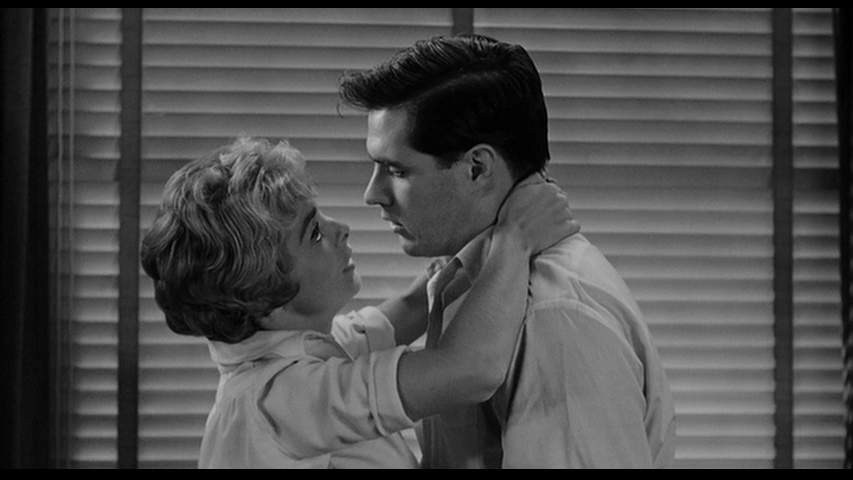
When it comes to documentaries, the high-profile standouts I saw were the two on filmmaking, 78/52 (Philippe), about the shower sequence in Psycho, and Score: A Film Music Documentary (Schrader).  And while both are ambitious, on a micro- and macro-level respectively, they’re also both incredibly frustrating works.   78/52 does an interesting job of deconstructing the sequence (cue Walter Murch again for analysis) and provides some helpful connective tissue between this legendary scene and both Hitchcock’s work and film history in general.  But it revels too much in Hitchcock’s reputation as an auteur and provocateur; it’s all adulation when deconstructing the mythology of the man 50+ years later would’ve been more incisive (I discussed Psycho previously on my blog here).

Even more troubling is the film music doc, which tries to be both an historical overview and a broad examination of the creative process.  The latter is certainly much more effective than the former (where significant talents get short shrift), but as interesting as it is to see composers collaborate with film directors or conduct orchestras recording sessions, the film is blind to the conspicuous lack of women and people of color in this role.  This is particularly noticeable because so many contemporary composers are interviewed or filmed working on projects, virtually all of them white dudes.  It makes the craft feel like a big boy’s club, and while there might be an element of truth to this in an industry which still has a serious gender and racial imbalance in certain disciplines, it goes completely without comment throughout the film.  Amidst the air of simplified celebration, it’s the elephant in the room, and a token Rachel Portman or Quincy Jones can’t change that.


Some more effective documentaries included the remarkable The Force, about the Police Department in Oakland (my home) and the history of controversies it’s instigated through violence and scandal.  It’s a very clever film, giving the impression that access means the OPD embraces a new sense of transparency, only to discover that ugly cultural traditions behind the blue wall still run deep.  Talking the talk and walking the walk are very different things, and it’s a great lesson on why mistrust in a community can be pervasive when abuse of power goes ignore or unchecked.  Even better is In Loco Parentis, a thoroughly charming doc about a British boarding school and the loving, committed teachers on the staff.  Both films take a Frederick Wiseman-like view of their subjects (no interviews, voiceover, or score), which works incredibly well in both cases.

Also worth noting were two docs from Cinequest about a very different group of doctors.  Memento Mori (Thompson) is about the incredible logistical challenges and devastating emotion one encounters in the field of organ donation.  With The Twinning Reaction (Shinseki), sets of identical twins separated in infancy through a shady adoption agency under the guise of “scientific research” are interviewed--some reunited with their sibling and some not, but all dealing with the heart-breaking repercussions of a needlessly cruel policy that persisted for decades.  Not without their flaws, both are still well worth checking out.


10 Favorite new feature films

1. Past Imperfect (Teirlinck; Belgium)+
2. The Winter (Torres; Argentina)*
3. In Loco Parentis (Chianain/Rane; Ireland)*
4. A Dragon Arrives! (Haghighi; Iran)*
5. The Wedding Ring (Keita; Niger)*
6. The Force (Nicks; US)*
7. Wilderness (Doherty; UK)+
8.  God’s Own Country (Lee; UK)*
9. Family Life (Jimenez/Scherson; Chile)*
10. That Trip We Took with Dad (Lazarescu; Romania)+


10 Favorite new short films

1. Bagatelle II (Hiler)*
2. Pearl (Osborne; Virtual Reality version)+
3. Modern Houses (Dixon)+
4. A Brief History of Princess X (Abrantes)*
5. The Rabbit Hunt (Bresnan)*
6. Russian Roulette (Aston)+
7. The John Show (Sokolow)+
8. Real Artists (Wood)+*
9. Summer Camp Island (Pott)*
10. No Other Way to Say It (Mason)+

* = SFFILM; + = Cinequest


The Alfred Hitchcock stamp is Scott #3226, Bernard Hermann (who is featured in both films docs I mentioned) is #3341 and Editing, part of the American Filmmaking issue, is #3772h.  The Star Wars stormtroopers are #4143o and the stamp for the Sport of the Gods one-sheet (part of the Black Cinema release) is #4337.  The Jack O’Lanterns from last year’s Halloween issue are #5138 & 5139 .  The Iranian Film Festival is a cache I picked up at Westpex, which has its annual convention in San Francisco this coming weekend.  Hope to see you there!

Sunday, October 25, 2015

A Wing and a Slayer

The scene is an Arizona hotel room and two lovers have just finished an afternoon tryst and are now engaged in a tense post-coital discussion, where she is tired of the secrecy in their relationship and he is preoccupied with his looming financial obligations.  As they slowly dress, they resolve to find a way to make it work.
Marion: “Oh Sam, let’s get married!”
[they kiss]
Sam: “Yeah.  And live with me in a storeroom behind a hardware store in Fairvale?  We’ll have lots of laughs.  Tell you what—when I send my ex-wife her alimony, you can lick the stamps.”
Marion: “I’ll lick the stamps.”
It’s the last time they’ll ever see each other.  And so begins the tale of Marion Crane and her fateful intersection with the now infamous Norman Bates.

Now, every cinephile has a special, highly personal list of films—films they understand as great, films whose importance they appreciate and whose influence on the art form and the culture is undeniable.  But films which they don’t like all that much.  Alfred Hitchcock’s 1960 Psycho is one of those films for me.  For I’ll readily admit that the film is remarkably made, and the vision of its director and the contributions of composer Bernard Herrmann, editor George Tomasini, opening credits maestro Saul Bass, and actors Anthony Perkins and Janet Leigh are all exemplary.  The evidence on the screen is without question and the status the film has in the horror genre and the classic film canon is well-deserved.
But the thing is, I just don’t find Psycho very scary or emotionally engaging.  It’s always been an academic exercise for me, whereas Hitch’s subsequent film, The Birds (1963) I find much more unnerving, provocative, subversive and terrifying.

I live in the Bay Area, where The Birds takes place (first in San Francisco, then north to Bodega Bay in Sonoma county).  My dad was born in Phoenix, where that lazy rendezvous occurs, and I’ve driven across the southwest several times, a route that Marion takes after stealing her employer’s money, so I feel like I have a personal connection to both landscapes depicted in the films.  Hitch always had a gift for setting, and each has an atmosphere that's very real and tangible, though very different.   But for me, it's in studying some of the deeper differences that perhaps best highlight why I prefer one so much more than the other.

Psycho rattles your cage but always keeps a certain moral polarity.  Marion may have made a poor decision (the theft) but is depicted as a fundamentally good and sympathetic person, as are beau Sam and sister Lila.  On the surface, Norman is meek and genial but ultimately, his murderous motives aren’t particularly complex: He is fundamentally disturbed, an Other with a mental schism that manifests in a tragic, divided self.  He lives outside civilization—first in a remote motel off the desert highway, and then in an institution for the insane, locked up and glibly reduced to a psychological diagnosis.
The Birds has greater complexities that get under your skin.  We first see Melanie (Tippi Hedren) and Mitch (Rod Taylor) flirting in a pet store off Union Square and they’re both attractive but a little off-putting.  It’s not a meet-cute.  The tension and chemistry crackle, and while we’re not sure which is more of a predator, both undeniably enjoy playing games.  And as the film continues, we watch them spar and tentatively feel each other out.  Of course, any romantic prospect goes unconsummated because by the time she’s tailed him to his home farther north, nature has started to rebel.  We don’t know why the birds attack; Hitchcock never explains it--though if you watch Melanie’s relationship with Mitch’s mother Lydia (Jessica Tandy), we’re given some clues.

But that all lives in the world of metaphor and symbolism.  In the meantime, the avian uprising takes its human toll, not in a few passers-by who check-in at the wrong establishment, but a full town under siege, with its population quickly devolving into panic and paranoia.  Psycho is about one unhinged individual well off the beaten path.  The Birds is about the end of the world.  Our world.  And while the shower scene in the former is a master class of cinematic construction, I know I would rather go that way than how poor Annie (Suzanne Pleshette) dies, being brutally pecked to death.  The most haunting shot in Psycho is that corkscrew camera move focusing on Marion’s lifeless eye, still fixed in a gaze of unbelieving horror.  It’s a tremendous, haunting moment.  But Farmer Fawcett in The Birds is the film’s first casualty and he has no eyes after the birds are done with him.  I find that far more nightmarish.
For me, the other thing I find frustrating about Psycho is that it peaks early, with that shower scene.  Everything after that for me is a slow decrescendo, an anti-climax.  We know the “twist” about Mother so there’s little sense of mystery building up to the mummified reveal, and while Anthony Perkins does a wonderful job in the role, Norman really is less a character and more the shell of a person co-opted by his dead mom long ago.  What we see of him is a front, a shadow of a victimized little boy, so when Marion dies, the most interesting person does, too.

But The Birds builds and builds and builds.  The schoolhouse.  The diner.  The sparrows through the chimney.  The gulls in the attic.  And just when you hope for a release valve, a return to normalcy, an explanation that sets things right, it never comes.  The birds have taken over.  Mitch and Melanie and the rest may depart their home, but they haven’t really escaped.  It’s one of Hitchcock’s darkest endings and certainly his most apocalyptic.  If the Earth ever wanted to fight back, we wouldn’t stand a chance.  For me, that’s an existential type of vulnerability far more resonant than being naked in the tub.
Hitchcock has always benefited from great composers over his career—most notably Herrmann but also Franz Waxman (Rebecca) and Miklos Rozsa (Spellbound), among others.  But The Birds has no score.  Instead, there’s only a daring aural soundscape that’s a cacophony of bird calls and shrieks—nothing tuneful, just din and chaos.  I think it shows an enormous amount of self-awareness and discipline for an artist like him to not fall back on familiar patterns and habits, and time and again, The Birds breaks the mold of what we’re accustomed to with Hitchcock.  It’s not a very funny film, as we’re often used to seeing in his work, but it is fantastic.
Of course, there are birds all over Psycho—the city of Phoenix, Marion CRANE, and all the examples of Norman’s taxidermy hobby.  They stay at silent attention in his parlor, ominous but stuffed.  It’s a strange pastime and a ghoulish one once we know his secret, but it’s also his most fascinating character detail.  The fact that these two films are back-to-back in Hitchcock’s career makes for a wonderful study in contrasts and an irresistible double bill.  

But for me, Psycho always remains largely a cold and analytic experience while The Birds continues to be a starkly visceral one, steeped in ambiguity and a perverse sense of wonder.  It’s the most cryptic of Hitchcock’s films, which is perhaps why it’s also one of his most satisfying.  Hitchcock was famous for being a control freak, meticulously mapping out every shot, leaving little to chance or spontaneity.  Most of his protagonists find themselves in a dark place, but through resourcefulness, creativity and luck, they figure out the truth and save the day.  The Birds is his most artistic expression of how easily we can become victims to randomness and powers far greater than ourselves which we can never control.  It is a masterpiece.
I don't know whether it's accidental that many of my favorite films of his take place in the Bay Area, starting with the sublime Vertigo (also SF and previously discussed here) and continuing with the exceptional Shadow of a Doubt (1943; filmed in Santa Rosa).  My mother had never visited Bodega Bay but she wanted to because of The Birds, so we recently went before she moved to her new home out east.  The schoolhouse is the most iconic location and instantly recognizable a half-century later, and while little else in the small town resembles the film, it's a beautiful area with some lovely views off the water. 

The Hitchcock stamp was Scott #3226.  If you look carefully at the color photo of him with the cigar, you’ll see that there’s a subtle die-cut in the stamp itself of his famous silhouette (in the upper left hand corner).  I can’t tell you how nerve-wracking it was to separate all these stamps when this Legends of Hollywood sheet was first issued, because the perforations were so close to that die-cut, and it was easy to have that inadvertently tear if you weren’t careful.

Hitchcock also has a stamp (Scott #4414o) from the Early TV Memories issue.  Alfred Hitchcock Presents aired from 1955-1962 so in the time frame of both of these productions.  The coastal bird stamps issued earlier this year are #4991-94.  The American kestrel is #3031, the ring-necked pheasant #3050, and the British Alfred Hitchcock stamp was issued in 1985. 

My 10 Favorite Hitchcock films

  1. Vertigo (1958)
  2. Strangers on a Train (1951)
  3. Shadow of a Doubt (1943)
  4. Notorious (1946)
  5. Rear Window (1954)
  6. The Birds (1963)
  7. North by Northwest (1959)
  8. The 39 Steps (1935)
  9. The Lady Vanishes (1938)
  10. Foreign Correspondent (1940)


Sunday, December 1, 2013

When we play our Charade

Charade (Donen, 1963) celebrates its 50th Anniversary this week, and over the years, it has earned a reputation, oft-repeated, as “the best Hitchcock film Hitchcock never made.”  Now, I love Charade, and not just because it’s the best postage stamp film ever.  It’s an irresistibly entertaining comedy-thriller, with wonderful Paris locations, great lines of dialogue, and a fizzy, playful tone, all fueled by incredible chemistry between Cary Grant & Audrey Hepburn (their only film together). 

But I’ve always hated that Hitchcock meme because it shows a fundamental failure to understand what the great Sir Alfred was all about.  For while Charade is enormous fun, it really isn’t about anything except thrills and laughs and clever reversals.  And while Hitch certainly employed all those things, he was far more reflective, and far more subversive.  His is the cinema of sex and psychology, of paranoia and pursuit, of fever dreams and salient nightmares.  His humor was darker, his action laced with malevolence.  He showed a real fear of institutions and a suspicion of normalcy, with his characters regularly haunted and hounded out of their routines.


Hitch lived with the moniker “The Master of Suspense”, which often served as a back-handed compliment, since it appreciated his technical craft while also relegating him to a genre hack, a niche and unserious talent.  He certainly made worse films than Charade, but I’m hard-pressed to think of many that were as lightweight.  Charade is a delicious soufflé.  But Hitch was filet mignon.  So “the best Hitchcock film Hitchcock never made” should reflect his artistry and pathology, not just his deceptive smoke & mirrors.  Something by Chabrol, perhaps.  Or Polanski or Suzuki.

But we’re here about stamps, and the statute of limitations on spoilers is why I can call this marvelous confection the greatest postage stamp movie in history—because the big twist of the film is the fact that postage stamps play an important role at all.  Throughout the film, the key characters, good and bad, are looking for a missing $250,000 and the only clues to its whereabouts are the contents of a travel bag, which are itemized several times in the film

Police inspector: “One wallet, containing four thousand francs; one agenda...; one ticket of passage to South America; one letter, stamped but unsealed...; one key, to your apartment; one comb; one fountain pen; one toothbrush; one tin of tooth powder.  That is all.”
Of course, we eventually learn that the envelope actually contains three incredibly rare and valuable stamps, a discreet and portable way to move the fortune.  I won’t discuss the specifics around the stamps in question (which were conceived especially for the movie), primarily because I couldn’t do it any better than this detailed and illuminating blog post about philatelic values and the real-life counterparts to this narrative McGuffin.  Definitely check it out.
But the movie is very clever about disguising what is ultimately a preposterous resolution.  Early in the film, our damsel in distress Reggie (Hepburn) has the following chat with Jean-Louis, the young son of her friend Sylvie:
JL: When you get your divorce, are you going back to America?
R: Well, don’t you want me to stay?
JL: Yes, of course, but if you went back and then wrote me a letter...
R: ...You could have the stamps!  I’ll get you some here, ok?
JL: OK
 
This is before she learns her husband is dead or about the money and the bag, and it’s a throwaway exchange but a nice way to seed the idea of stamps being important later on when Jean-Louis goes to the stamp mart (which is obliquely mentioned in the agenda).
Similarly, the film is coy about how it shows the envelope, mixing it in among the other assorted items and, when more closely inventoried by Reggie and her mysterious ally (Cary Grant), dismissed quickly out of hand.  More emphasis is placed on the contents of the envelope, an innocuous letter to her, than the envelope itself—a sly little head fake by screenwriter Peter Stone.   We only get two brief looks at the stamps before the big reveal, one when baddies James Coburn & Ned Glass examine the bag's contents, and another when Audrey & Cary revisit the clues.

"Everybody and his Aunt Lillian’s been through that bag, including me...I’ve been into it at least once a day.  Somebody would have seen it."
"It’s there, Reggie.  We’re looking at it right now.  Something on that bed is worth a quarter of a million dollars."
Of course, it defies credulity that the French police, a member of the US treasury department, and 3 criminals (not to mention our heroine) would not notice that something was unusual about 3 stamps on a single envelope for a domestic mailing, or that none of the stamps are French and all are from different countries!  But that’s the genius of a McGuffin, which is simply a vehicle to keep the plot moving.  And one of the beauties of Charade is that it has terrific pacing while also allowing lots of room to let the romance breathe.  It’s also a very funny movie without ever losing its sense of genuine menace, and Cary’s allegiances are always jumping back and forth (hero or villain?) believably.  And of course, the stamps are a great 11th-hour twist, but not the only one.

So approaching the climax, the final entry in her husband’s agenda brings Cary & Audrey to the Jardin des Champs Elysees.  They don’t know what they’re looking for so they split up and Cary tails the last remaining heavy, Tex (Coburn) as he wanders among a cluster of vending stalls.  Suddenly, both he and Tex have a wordless epiphany, punctuated by lots of quick close-ups of stamps.  


As they both return to grab the stamps from the travel bag, we return to Audrey still at the garden, who runs into Sylvie.
R: Sylvie! What are you doing here?
S: I’m waiting for Jean-Louis. 
R: Oh, what’s he up to?
S: He was so excited when he got the stamps you gave him this morning.  He said he’d never seen any like them.
R: I’m glad.  What’s all this?
S: The stamp market.  It’s there every Thursday afternoon.  That’s where Jean-Louis trades his stamps.
R: Good Lord, where is he?
S: What’s the matter, Cherie?
R: The stamps!  They’re worth a fortune!
Having gone to quite a number of philatelic conventions in my time, all the production design and displays in this sequence are very convincing, so I suspect the stamp mart is a real thing (though one I've never sought out in the 3 times I've traveled to Paris).


 When they finally find Jean-Louis, it’s too late:


R: (taking a bag of stamps from him): What’s this?
JL: A man gave me all those for only three.
The vendor has closed his stall, so they find him in what appears to be his home (with philatelic items scattered everywhere)


Stamp Vendor: I was expecting you.  I know you would come.  Look at them, madame.  Have you ever in your entire life seen anything so beautiful?
Reggie: I’m sorry, I don’t know anything about stamps.
SV: I know them as one knows his own face, though I had never seen them.  This one, a Swedish four shilling called Da Gula Fyraskillingen, printed in 1854.
R: What is it worth?
SV: Oh, the money is unimportant. 
R: I’m afraid it’s very important.
SV: Well, in your money, perhaps $85,000.
R: And the blue one?
SV: Oh, it’s called the Hawaiian Blue.  In 1894, the owner was murdered by a rival collector who was obsessed to own it.
R: And what is its value today?
SV: $65,000.

SV: Ah, the best for last.  Le chef d’oeuvre de la collection.  The masterpiece.  The most valuable stamp in the world.  It’s called the Gazette Maldave.  It was printed by hand on colored paper and marked with the initials of the printer.  Today, it has a value of $100,000.  I’m not a thief, madame.  I knew there was some mistake.
R:  You gave the boy a great many stamps in return.  Are they for sale now?
SV: Let me see, 350 European, 200 Asian, 175 American, 100 African and 12 Princess Grace commemorative.  Which comes to 10 Francs.  And don’t forget these. (hands her the stamps from the envelope)
R: Thank you.  I’m sorry.
SV: Oh, no.  For a few minutes they were mine.  That is enough.

I’ve always loved this exchange for a number of reasons.  It shows a stamp enthusiast who is passionate and learned, but also has enormous integrity.  It views stamp collecting as a portal into history, intrigue, and craftsmanship.  And the cheap bag of stamps is a very familiar fixture at stamp stores, showing that it’s a hobby that’s accessible to even the most modest amateur and not just a pastime for the effete and elite.  

One other thing about the value of the stamps (beyond what the link above breaks down): Nothing is said about how sticking the stamps on the envelope potentially devalued them.  $250K may be the cumulative sales price, but would the US be able to recoup the money now that the stamps are affixed to something?  Or will some intern have to soak the envelope in water to slide the stamps off and allow them to carefully dry separately again?


Some other details: The stamp vendor mentions a Princess Grace commemorative stamp, and in the stamp montage, you can actually see one (from Monaco).  Other stamps on display include pictures of Lincoln & FDR, Charles De Gaulle & Louis XIV, and the 1960 Winter Olympics (in Squaw Valley, CA).  No US stamps are depicted, but there are ones from France, the Congo, Madagascar, French West Africa and French Equatorial Africa.  Incredibly, on display is even one stamp I’ve used in my own hobbying, an Eiffel Tower stamp from 1939, which I used to supplement this one-sheet for The Lavender Hill Mob (which is also one of Audrey Hepburn’s earliest film appearances).


Another thing I love about Charade is that it’s a film that loves the City of Lights without indulging in the stereotypical Paris porn like so many American movies do (Exhibit A: Donen & Hepburn’s previous collaboration, the musical Funny Face).  There's some wonderful Parisian street scenes and plenty of atmosphere without relying on the cliche locations.  Even when it does feature a tourist spot like Notre Dame (also visible in that stamp screen shot), it’s as a self-referential joke.

Donen is one of my favorite directors and has always had a wonderful eye for movement in his legendary musicals, and that skillset serves him well here, in a thrilling rooftop fight between Cary and a hook-handed George Kennedy, and also in the climax under the stage of the Comédie-Française, a masterclass sequence of using sound and movement to enhance suspense.  All before that final surprise happy ending, and Cary's last line of the film: "Well, before we start that, may I have the stamps?"


Donen doesn’t have a stamp (yet), but Cary & Audrey both do.  They are Scott # 3692 and 3786 respectively.  The flavorful score is by Henry Mancini, whose stamp is Scott # 3839 (Charade is even mentioned on the stamp itself).  All 3 postmarks are on the reverse side of my one-sheet postcard that opened this article.  The Hitchcock stamp from the Legends of Hollywood series Is # 3226 and the one from the Golden Age of Television is # 4414o .  Obi-Wan Kenobi is Scott # 4143i from the Star Wars issue.